
There is one figure that captures the moment fashion online is living through better than any analysis: every season, a mid-sized apparel brand needs to produce between ten and twenty-five thousand product images to stay competitive across digital channels. Multiply that number by international markets, colour variants, seasonal campaigns and social content, and it becomes clear why traditional photoshoots have turned into an operational bottleneck before they are even a cost issue.
This is where Generative AI for fashion e-commerce enters the picture, a technology that is rewriting how catalogues take shape, compressing weeks of production into hours of processing and opening creative possibilities the old photographic model could not even imagine.
What Generative AI Means for Fashion E-commerce
Generative AI applied to online fashion is a technology that produces images from scratch starting from visual and textual inputs. It does not simply modify an existing shot the way traditional photo editing software would: it generates models, backgrounds, outfit variations and refined details with a level of realism that until a few years ago belonged exclusively to studio photography. The difference is substantial: photo editing corrects what already exists, generative AI creates what was never photographed in the first place.
For a fashion retailer this means being able to build an entire visual set, from model to background to lighting, without moving a camera. It also means refining and bringing raw product shots to catalogue quality, starting from basic visuals and arriving at polished assets through automatic upscaling and enhancement processes.
Why Traditional Photoshoots No Longer Scale
A professional fashion photoshoot absorbs on average between eight thousand and fifteen thousand euros per day, with a single shooting day rarely producing more than fifty usable final assets. Add up studio rental, photographer fees, models, stylists, makeup artists, location costs and post-production, and the numbers escalate quickly. The fashion industry is now confronting a structural shift, with a growing share of brands declaring they already use artificial intelligence in some stage of their creative or production process.
Time is the second bottleneck. Between briefing, casting, production and post-production, a seasonal campaign can require eight to twelve weeks before it is ready. For a growing brand launching new collections every four weeks, that timeline is incompatible with the market cycle.
How AI-Generated Models Replace Real Shootings
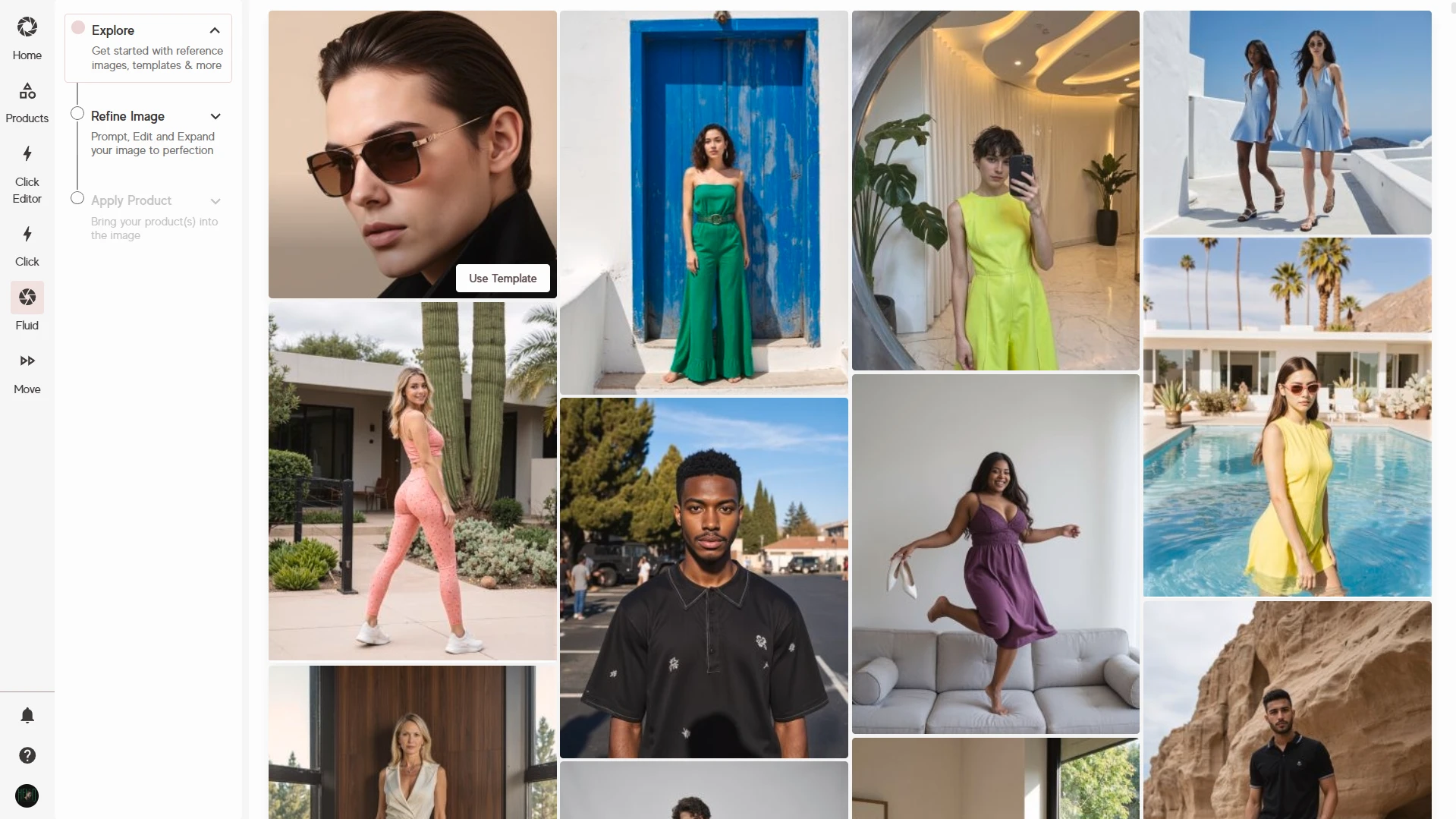
The process is more linear than it might seem. It begins with a photo of the garment, shot on a mannequin or in flat-lay, which is uploaded to the platform. The algorithm generates a digital model wearing the garment realistically, maintaining coherence with the required lighting, pose and context. The output is an image ready for the catalogue, indistinguishable to the untrained eye from a studio shot.
What changes is the multiplicability. From a single garment, dozens of variants can be generated: models of different ethnicities, sizes, poses and backgrounds. The brand’s visual identity remains coherent, yet representation opens up to the plurality contemporary consumers demand, without the marginal costs that would make such plurality impractical with traditional photography.
Key Use Cases of Generative AI in Fashion E-commerce
Concrete applications range from multi-model catalogues, where the same garment is shown on different bodies to favour customer identification, to seasonal campaigns producible in days rather than months. Localisation for international markets allows brands to adapt images and models to the cultural preferences of each country without dedicated shoots. Visual A/B testing becomes accessible at scale, making it possible to compare in real time which image variant converts better.
Marketplaces benefit from the ability to visually standardise catalogues coming from different suppliers, while for social ads the rapid generation of creative variants opens the door to more targeted and iterable campaigns. Every use case shares the same logic: turning visual production into a flexible variable instead of a fixed cost.
Benefits of Scaling Your Visual Catalog With AI
The numbers speak clearly. Cost reductions on the shooting front can reach ninety percent, with time-to-market compressed from weeks to days. Conversion benefits from visual inclusivity: catalogues featuring diverse bodies and identities generate higher engagement rates and reduce bounce on product pages.
There is also a regulatory advantage often overlooked. AI-generated images do not require model releases or licensing agreements, dramatically simplifying the legal management of content. GDPR-compliant platforms also guarantee that no biometric data is retained, an element of growing relevance for brands operating in the European Union.
How to Integrate Generative AI Into Your E-commerce Workflow
Integration begins with choosing the right tool. Fashion requires a vertical platform capable of handling the specificities of the sector: fabric drape, colour coherence, realistic fit on bodies. Solutions such as on-model.com, developed by PiktID specifically for fashion e-commerce, allow brands to manage the entire visual cycle, including AI photo enhancer for fashion ecommerce workflows through automatic upscaling, image quality improvement, model generation and batch processing across large volumes of SKUs.
The operational workflow follows a clear sequence: product upload, visual generation based on prompts or predefined templates, batch processing for catalogues of hundreds of SKUs, API integration directly into the company CMS or PIM. The result is a visual pipeline that behaves like a cloud service: scalable, programmable, monitorable, with no need to rebuild the creative infrastructure every time a collection changes.
The Future of Fashion E-commerce With Generative AI
The year 2026 will see mass personalisation take hold: product images generated in real time based on the profile of the individual visitor, with models, backgrounds and styling adapted to preferences inferred from browsing data. Visual on-demand will no longer be the privilege of luxury giants and will become accessible to mid-market players as well.
Virtual try-on integrated directly into stores, capable of showing every garment on the customer’s specific body, will complete the picture of a shopping experience that today still feels experimental but will become a sector standard within eighteen months. Brands that begin building competencies and pipelines on this technology now are not chasing a trend, they are positioning themselves among the players that will define the grammar of fashion e-commerce for the next decade. The moment to start is now.