
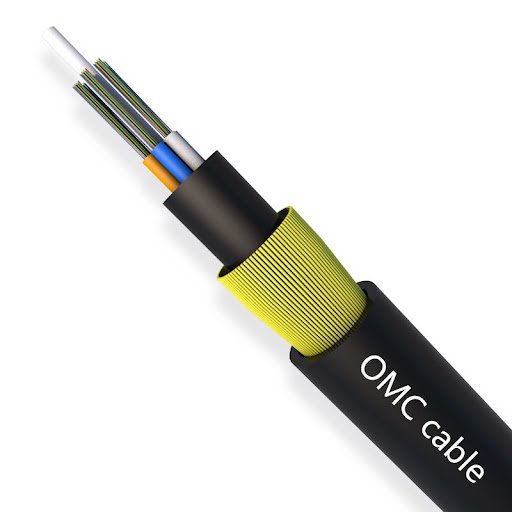

Modern communication networks require reliable fiber optic infrastructure that can operate efficiently in different environments. For aerial installations, one commonly used solution is ADSS fiber optic cable. ADSS stands for All-Dielectric Self-Supporting, meaning the cable contains no metallic components and can be installed overhead without requiring a separate messenger wire.
ADSS cables are widely used in telecommunications, broadband networks, utility communication systems, and other outdoor applications. Their design provides a combination of optical performance, mechanical strength, and installation flexibility.
What Is ADSS Fiber Optic Cable?
ADSS fiber optic cable is an outdoor optical cable specifically designed for aerial deployment. It contains optical fibers protected by several layers of materials that help the cable withstand mechanical and environmental stresses.
Unlike some traditional aerial fiber cables, ADSS does not require a supporting metal wire. Its internal strength structure allows it to support its own weight when installed between poles or towers.
The all-dielectric design is another important characteristic. Since the cable does not contain conductive metal, it can be used around electrical infrastructure where metallic communication cables may create additional concerns.
How ADSS Fiber Optic Cable Works
The optical fibers inside an ADSS cable transmit information using light signals. Data from network equipment is converted into optical signals, transmitted through the fibers, and converted back into electrical signals at the receiving end.
The cable’s external construction protects the optical fibers while also providing the mechanical strength needed for aerial installation.
When the cable is installed between poles, appropriate fittings are used to secure it and manage the tension. The cable must be selected according to factors such as span length, expected environmental loads, and installation conditions.
Key Features of ADSS Cable
ADSS fiber optic cable has several features that make it suitable for outdoor communication networks.
All-Dielectric Construction
The cable does not use metallic components for its main structural design. This helps make it suitable for routes near electrical infrastructure.
Self-Supporting Design
ADSS cables are engineered to be supported by their own construction rather than depending on a separate messenger wire.
Outdoor Protection
The outer jacket and internal protective layers are designed to help protect the cable against weather, moisture, sunlight, and mechanical stress.
Multiple Fiber Options
ADSS cables can be manufactured with different fiber counts, allowing network operators to select a configuration based on current capacity and future requirements.
Advantages of ADSS Fiber Optic Cable
One of the main benefits of ADSS is simplified aerial deployment. Because the cable is self-supporting, there is no need to install a separate metallic messenger cable for support.
Its dielectric construction also makes it suitable for communication routes associated with power infrastructure.
Other advantages include:
- Suitable for overhead installation
- No separate messenger wire required
- Non-conductive construction
- High-speed optical communication
- Different fiber count options
- Suitable for outdoor environments
- Useful for long aerial spans
- Can follow existing pole infrastructure
These characteristics make ADSS an attractive option for expanding fiber networks in areas where underground construction may be difficult or expensive.
Where Is ADSS Fiber Cable Used?
ADSS fiber optic cable is used in many outdoor communication applications.
Telecommunication companies may install it between utility poles to extend broadband networks. Internet service providers can also use aerial ADSS cables for connecting communities, businesses, and network distribution points.
Utility companies may use ADSS for communication and monitoring systems along existing electrical infrastructure.
Other applications can include:
- Fiber-to-the-home networks
- Rural broadband projects
- Metropolitan communication networks
- Utility communication systems
- Long-distance aerial links
- Campus and industrial networks
- Network expansion projects
Choosing the Right ADSS Cable
Selecting an appropriate ADSS cable requires more than simply choosing the required fiber count. The physical environment and installation route also need to be considered.
Fiber Count
Determine how many fibers are required for the current network and whether additional capacity may be needed in the future.
Span Length
The distance between poles is an important consideration. Longer spans generally require cable designs with appropriate mechanical characteristics.
Weather Conditions
Wind, ice, temperature changes, and sunlight can place additional stress on an aerial cable. Local weather conditions should be considered when selecting the cable.
Installation Height
The installation route should provide appropriate clearance from roads, buildings, vegetation, and other infrastructure.
Compatible Hardware
Suspension clamps, dead-end fittings, and other accessories should be compatible with the selected ADSS cable.
ADSS Installation Process
Before installing an ADSS cable, technicians normally survey the route and determine pole locations, span lengths, clearance requirements, and possible obstacles.
The cable is then prepared for installation using appropriate equipment. During deployment, installers need to control pulling tension and avoid excessive bending or physical damage.
After the cable is positioned, suitable fittings are used to secure it to poles or towers. Proper sag and tension should be maintained according to the cable manufacturer’s specifications.
The optical fibers can then be spliced and connected to the required network equipment.
Professional installation is important because incorrect tension, poor routing, or unsuitable hardware can affect cable performance and service life.
Maintenance and Inspection
ADSS cables are designed for outdoor conditions, but regular inspection can help identify problems before they affect network performance.
Technicians can inspect cable spans, attachment points, fittings, and visible sections of the cable. After strong winds, storms, heavy snowfall, or other severe weather, additional inspection may be useful.
If users experience increased signal loss or network interruptions, optical testing can help determine whether the problem is related to the cable, splice points, connectors, or other equipment.
Keeping installation records can also make future maintenance and troubleshooting easier.
ADSS vs. Traditional Aerial Fiber Cable
The main difference between ADSS and some traditional aerial fiber solutions is the supporting structure.
Traditional aerial cables may use a separate messenger wire, while ADSS is designed to be self-supporting. This can reduce the number of components required during installation.
ADSS also has an all-dielectric construction, which makes it particularly useful for routes associated with electrical infrastructure.
However, the correct cable should always be selected according to the specific installation environment rather than choosing solely based on general advantages.
Conclusion
ADSS fiber optic cable provides a practical solution for building reliable aerial communication networks. Its self-supporting structure eliminates the need for a separate messenger wire, while its all-dielectric construction makes it suitable for many routes near electrical infrastructure.
With proper consideration of fiber count, span length, weather conditions, installation height, and compatible hardware, ADSS can support a wide range of telecommunications and utility communication applications. Professional installation and regular inspection can further help maintain reliable network performance over the long term.