
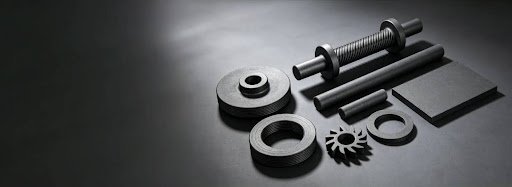

Quality is a critical consideration when purchasing graphite for industrial production. Differences in purity, density, particle size, strength, and dimensions can influence how a graphite product performs in its intended application. A graphite manufacturer must therefore understand the specifications that matter to the customer and maintain suitable inspection procedures.
Graphite is used in applications ranging from steelmaking and foundry operations to electrical components, batteries, and precision-machined parts. Because these uses have different technical requirements, there is no single quality specification that applies to every graphite product.
Buyers can reduce purchasing risks by identifying the essential material properties, reviewing technical documentation, and agreeing on acceptance criteria before production.
Why Graphite Quality Matters
Inconsistent graphite properties can affect production efficiency, component fit, and the performance of industrial equipment.
For example, variations in powder particle size may influence mixing and material behavior. In machined parts, dimensional errors can prevent correct assembly. For electrodes, electrical and mechanical properties may affect their suitability for demanding operating conditions.
The impact of a defect depends on the application. A minor dimensional variation might be acceptable in one component but unacceptable in a precision assembly.
Defining quality requirements at the beginning of a purchasing project helps the supplier focus on the characteristics that matter most.
Important Graphite Quality Parameters
Carbon Content and Purity
Carbon content is an important specification for many graphite products. The acceptable level depends on the application and the amount of impurities that can be tolerated.
Ash content may be used to indicate the non-combustible residue remaining under a specified test procedure. Buyers should confirm how the value is measured and whether it is relevant to the intended use.
Battery-related and high-purity applications may require stricter impurity controls than some general industrial uses.
Particle Size Distribution
Particle size matters for graphite powders used in lubricants, conductive formulations, foundries, and other industrial processes.
A supplier may provide particle-size information using a defined measurement method. Buyers should identify the required size range and acceptable variation rather than requesting a vague description such as fine powder.
Consistency can be especially important when graphite is incorporated into a larger production formula.
Density and Porosity
Density can influence the performance of molded graphite products and machined components. Porosity may also affect strength, permeability, and other characteristics.
The required values depend on the grade and application. A manufacturer should provide relevant specifications and explain the available testing methods.
Mechanical Strength
Some graphite components must withstand mechanical loads, handling, or thermal stress. Relevant measurements may include compressive strength, flexural strength, and other properties appropriate to the material.
Graphite is not identical to a ductile metal, and its behavior can vary with grain structure and orientation. Design and handling should account for the selected grade’s properties.
Electrical and Thermal Properties
Electrical resistivity may be important for electrodes and conductive components. Thermal conductivity and behavior under temperature changes may matter in furnace and thermal-processing applications.
Buyers should identify the operating conditions and the relevant property requirements before selecting a grade.
Dimensional Tolerances
Machined graphite components must match the approved drawing. Important details may include length, diameter, hole position, flatness, surface finish, and permitted dimensional variation.
Not every feature requires the same tolerance. Identifying critical dimensions can help the manufacturer manage cost while protecting component performance.
How a Graphite Manufacturer Controls Quality
A structured quality process can cover several production stages.
Incoming Material Inspection
The manufacturer checks raw materials against defined requirements. Depending on the product, this may involve material identification, documentation review, sampling, or laboratory testing.
This step helps detect material variations before they affect later production.
Process Monitoring
Manufacturing processes can influence the final material properties. Depending on the product, relevant stages may include grinding, blending, forming, baking, graphitization, purification, and machining.
The manufacturer should monitor the process parameters that are important to the selected grade and product design.
Finished Product Inspection
Finished products should be checked against the agreed specifications. Powder products may require particle-size or purity checks, while machined components may need dimensional inspection.
For critical applications, buyers can request documented test results and batch identification.
Handling Nonconforming Products
A quality system should define how products that fail inspection are identified and managed. The supplier should explain whether such products are rejected, reworked where appropriate, or reviewed through an agreed process.
Clear procedures reduce the risk of unsuitable material reaching the customer.
Technical Documents Buyers Should Request
Documentation helps buyers verify what they are purchasing.
A technical data sheet describes the material’s typical or specified properties. A material certificate or test report may provide information about a particular batch, depending on the supplier’s system.
For machined components, an inspection report can show whether selected dimensions meet the approved drawing. Safety information may also be relevant when handling powders or other materials that require workplace controls.
Buyers should distinguish between general product information and evidence relating to the actual shipment. For critical orders, agree on the required documentation before production begins.
Sample Testing and Supplier Approval
Testing a sample is useful when introducing a new graphite grade or supplier. The sample should be representative of the intended production material.
For a powder, evaluation may include particle size, purity, mixing behavior, and performance in the actual formulation. For a machined component, checks may include dimensions, surface quality, and fit.
Testing should reflect realistic operating conditions. A material that looks acceptable during a simple visual inspection may not meet the demands of the production process.
For repeat purchases, approved samples and documented specifications can serve as reference points for future deliveries.
Balancing Quality and Cost
Higher specifications can increase production costs, so buyers should identify which properties are essential.
For example, requiring extremely tight tolerances on every feature may increase machining time without improving the component’s function. Similarly, purchasing a premium purity grade may not provide additional value when the application does not require it.
Discuss the intended use with the manufacturer and set realistic acceptance criteria. The goal is to obtain the necessary performance without paying for properties that do not contribute to the result.
Compare quotations using the same specifications and inspection requirements to avoid misleading price comparisons.
Traceability and Repeat Orders
Traceability helps businesses connect a delivered product with its production and inspection records. It can be particularly useful when materials are used in large manufacturing processes or critical equipment.
Ask whether the supplier records batch information and can investigate quality concerns after delivery. For repeat orders, retain approved drawings, material specifications, sample results, and inspection records.
Clear documentation makes it easier to identify changes between batches and communicate any concerns to the manufacturer.
Frequently Asked Questions
What should a graphite quality certificate include?
Depending on the product, it may identify the material grade, batch, relevant measured properties, and test results. Buyers should agree on the required information before ordering.
Does higher graphite purity always mean better quality?
No. The correct purity depends on the application. Other properties, including strength, particle size, density, and conductivity, may also be important.
Why are graphite samples useful?
Samples allow buyers to check whether the material meets technical and practical requirements before committing to a larger order.
How can I compare two graphite suppliers fairly?
Use the same material grade, specifications, quantity, inspection requirements, packaging, and delivery terms when comparing quotations.
Conclusion
Graphite manufacturer quality depends on the properties required by the intended application and the manufacturer’s ability to maintain them consistently. Purity, particle size, density, mechanical strength, electrical properties, and dimensional accuracy may all be relevant, but not every parameter applies to every product.
By requesting suitable documentation, testing representative samples, and agreeing on acceptance criteria, buyers can make more confident purchasing decisions. A graphite manufacturer with clear quality procedures can help support consistent production and reduce avoidable material problems.