
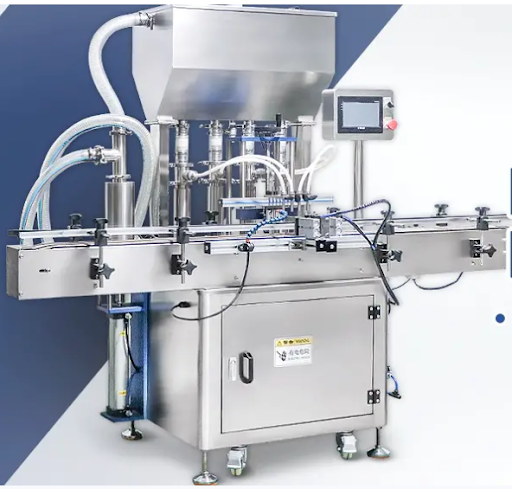

A practical maintenance routine helps manufacturers identify small problems before they become expensive repairs.
Inspect the Machine Before Production
Operators should inspect the machine before starting each production run. The inspection may include checking hoses, filling nozzles, valves, seals, sensors, guards, and visible connections.
Any leakage, unusual noise, vibration, or damaged component should be investigated. Container guides and positioning mechanisms should also be checked to ensure that containers reach the correct filling position.
Safety systems must remain functional throughout operation. Workers should never bypass guards or other protective devices to maintain production speed.
Clean Nozzles and Product-Contact Parts
Filling nozzles can become blocked by dried residue, particles, or sticky products. Blockages may cause uneven dispensing, dripping, and inconsistent quantities.
Cleaning procedures should follow the equipment manufacturer’s instructions and the requirements of the product being handled. Incompatible chemicals, abrasive tools, or unsuitable temperatures may damage components.
Before removing parts or cleaning internal mechanisms, operators should follow the required shutdown and energy-isolation procedures. Equipment containing pressure or moving components can create hazards if handled incorrectly.
Check Filling Accuracy
Calibration and verification help confirm that the machine dispenses the required amount of product. The appropriate method depends on whether the equipment measures volume, mass, flow, or another parameter.
Manufacturers should perform checks at recommended intervals and after relevant changes to the product, container, or operating settings.
If filling quantities begin to vary, operators should examine possible causes such as nozzle blockage, air in the product line, worn seals, incorrect settings, or sensor problems. Changes should follow approved procedures and be verified before production continues.
Follow a Preventive Maintenance Schedule
Preventive maintenance involves inspecting and servicing components before they fail. Depending on the machine, tasks may include checking pumps, examining seals, inspecting electrical connections, and replacing worn parts.
Lubrication should only be performed where required and with products approved for the application. Maintenance intervals should follow supplier guidance and reflect the machine’s actual workload.
Keeping records of servicing and repairs makes it easier to identify repeated faults and plan replacement parts in advance.
Train Machine Operators
Operators should understand the machine’s controls, startup and shutdown procedures, cleaning requirements, and basic fault indicators. Proper training helps prevent avoidable errors and improves response times when problems occur.
More complex mechanical, electrical, or control-system repairs should be handled by appropriately qualified technicians.
Reduce Downtime Through Preparation
Businesses can reduce interruptions by keeping essential spare parts available and maintaining clear maintenance records. Staff should know how to report faults and where to find the relevant operating instructions.
An automatic filling machine is more likely to deliver reliable results when cleaning, calibration, inspection, and preventive servicing are treated as regular production responsibilities rather than occasional tasks.