
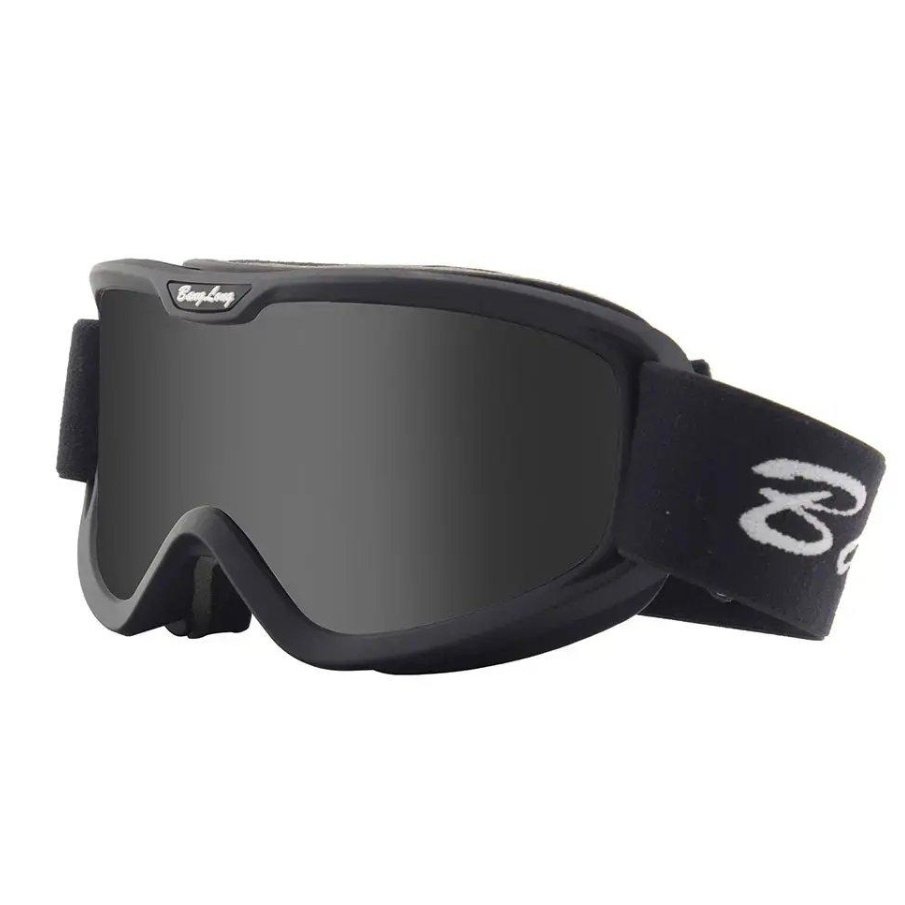

Off-the-shelf goggles work well enough for many skiers, but they are made for an average face that nobody actually has. That is where custom ski goggles come in. They are goggles made or fitted to your face, your prescription, and the way you ski, so they sit properly, seal out the wind, and give you a clear view of the slope ahead.
This article explains what custom means in practice, how the parts of a goggle work together, and what to think about before you order a pair. You do not need to know anything about optics to follow it, just a sense of what bothers you about the goggles you have used before.
The fit comes first
A goggle only works when it seals against your face. If there is a gap at the nose or the cheeks, cold air and snow get in, the lens fogs, and your eyes water on every fast run. Custom fitting starts with the shape of your face: the width across the cheeks, the bridge of the nose, and how the frame sits under your helmet.
Makers handle this in different ways. Some offer frames in several sizes and shapes, so you pick the one that matches your face. Others adjust the foam, the strap, or the nose piece to suit you. Either way, the test is simple: put them on with your helmet, breathe normally, and check for gaps and pressure points before you ever reach the snow.
Lenses and what they do
The lens is the part you look through, and it does more than keep snow out of your eyes. A good lens cuts glare, boosts contrast so you can read bumps and ice in flat light, and protects your eyes from bright sun bouncing off the snow. Different lens tints suit different weather, which is why many skiers keep a second lens for cloudy days.
Custom orders often let you choose the lens tint and whether you want a spare. If you ski mostly in bright sun, a darker lens makes sense. If you ski in a lot of flat, grey light, a lighter lens with strong contrast will help you see the shape of the slope. Ask what each tint is made for, and pick the one that matches the conditions you actually ski in.
- A darker tint suits bright, sunny days on open slopes.
- A lighter, high-contrast lens helps in flat, cloudy light.
- A spare lens is worth having if you ski in mixed weather.
- Check that the lens can be swapped without tools on the hill.
Prescription needs and inserts
Skiers who wear glasses face an extra problem, since ordinary glasses fog inside a goggle and rarely fit under the frame. Custom goggles can solve this with a prescription insert that clips inside the goggle, or with a frame shaped to leave room for your glasses. Both options keep your vision sharp without the fog and the fiddling.
If you go the insert route, you will need your current prescription, and it is worth checking how the insert is cleaned and whether it can be swapped between lenses. If you prefer to wear glasses underneath, try the combination on with your helmet before you buy, because a frame that looks roomy on a shelf can press hard once a helmet is on.
Ordering, trying, and looking after them
When you order, expect to answer questions about your face shape, your helmet, your prescription if you have one, and the conditions you ski in. Good sellers ask these questions because the answers change what they make for you. If a seller asks nothing at all, that is a sign the goggles are not really custom, just labelled that way.
Once they arrive, try them at home with your helmet and your usual layers. Check the seal, the strap, and the field of view, and wear them around the house for a while to find any pressure points. Look after them by keeping the lens in a soft pouch, drying the foam after a wet day, and never wiping the inside of the lens when it is wet. The custom ski goggles will then last far longer than a rushed off-the-shelf buy.
Keeping them working well over time
A custom pair is an investment, so a little care goes a long way. After each day on the snow, let the goggles dry naturally at room temperature and keep them in their pouch rather than loose in a bag with hard objects. Avoid wiping the inside of the lens while it is wet, since that is how the coating gets scratched, and let any moisture dry on its own before you put them away.
It is also worth checking the foam and the strap now and then. Foam that has gone flat will not seal as well as it used to, and a stretched strap will let the goggles slip when you need them most. Both parts can usually be replaced, which is far cheaper than buying a new pair. Looked after this way, your custom ski goggles should serve you for many seasons.
A good pair of custom ski goggles starts with fit, then lens, then the small details that suit how you ski. Work out what bothers you about your current goggles, answer the seller’s questions honestly, and try the pair properly before you travel. Done that way, custom goggles are not a luxury, just a pair that finally fits the person wearing them.