

Key Takeaways
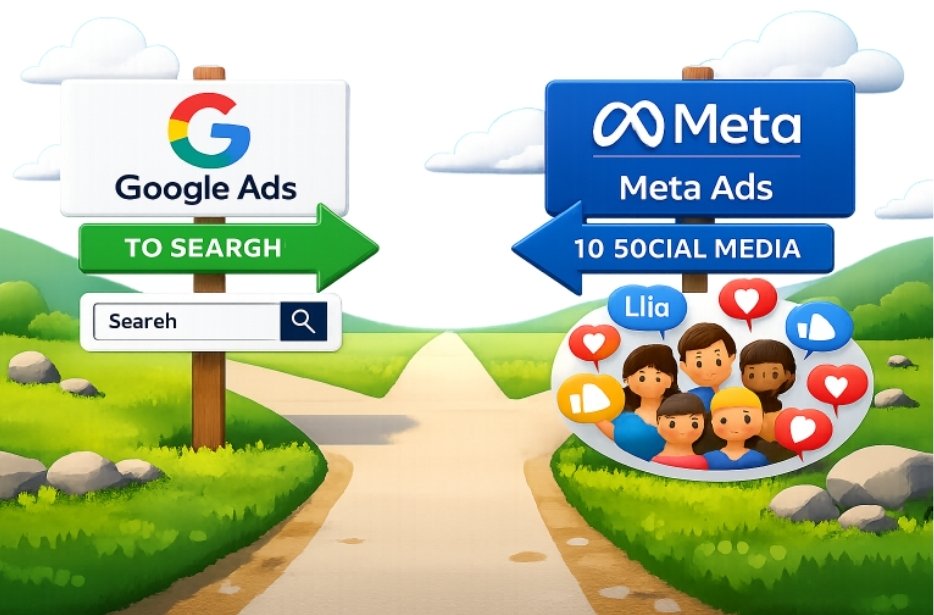
- Google Ads is intent-driven, targeting users who are actively searching for products or services, which gives businesses an excellent opportunity to capture existing demand.
- Meta Ads focuses on detailed audience targeting by leveraging user interests, demographics, and behaviors, allowing businesses to generate new demand and increase brand awareness.
- Combining both platforms can deliver a rounded marketing approach, supporting customers at each touchpoint along their journey from awareness to conversion.
In digital marketing, businesses often must decide how to allocate their advertising budgets for the greatest return. One of the most common comparisons is Google Ads vs Meta Ads, as both platforms offer distinct advantages and targeting capabilities. Understanding how each option performs and how its strengths align with your specific goals can help you choose the right strategy for driving visibility, engagement, and conversions.
Whether you are aiming for visibility in search engine results or building brand affinity on social media platforms, your advertising strategy must be tailored to where your audience spends time and how they engage online. The decision becomes less about platform superiority and more about alignment with business goals, audience behavior, and overall strategy.
Understanding Google Ads
Google Ads gives businesses the opportunity to appear in search results when consumers are seeking relevant solutions. The power of Google Ads lies in its intent-based targeting model; people using Google are often ready to make a purchase, request quotes, or seek immediate support. This creates a fertile environment for advertisers to reach prospects at the most critical stage of their decision-making process.
Google Ads campaigns can also appear on partner sites, within shopping results, on YouTube, and other placements across the web. Its robust reporting tools give valuable insight into keywords, ad performance, and conversion rates, making it easier for businesses to optimize spending for the best return. This approach is particularly effective for businesses with products or services that people actively search for, such as plumbers, legal services, or retailers.
Exploring Meta Ads
Meta Ads include all advertising solutions available across Facebook, Instagram, Messenger, and the Meta Audience Network. What sets Meta apart is its profound understanding of user interests and behaviors. Instead of relying on search intent, Meta Ads introduces businesses to users based on demographics, social interactions, and life events. Brands can connect with audiences who may not be actively seeking their offerings but are likely to convert.
This capability makes Meta Ads highly effective for launching new products, generating brand awareness, and nurturing potential customers through regular touchpoints. The platform’s visual ad formats and detailed audience-building tools enable businesses to create personalized campaigns that resonate with target users. Organizations seeking to grow their following, foster engagement, or enter new markets benefit from Meta’s powerful reach and sophisticated targeting mechanisms.
Comparing Cost Structures
Advertising budgets can be decisive when selecting between Google Ads and Meta Ads. Google Ads often commands a higher cost per click since users are typically closer to converting. While advertisers may pay more for these high-intent clicks, they may also see superior conversion rates, especially for direct-response campaigns.
Meta Ads, on the other hand, are generally more affordable per click. The platform excels at delivering impressions and clicks at scale, but success depends more on creative effectiveness and audience alignment. For businesses focused on generating interest or driving upper-funnel activity, Meta can offer lower entry costs for brand exposure. However, advertisers should closely monitor both platforms and adjust their bids, creatives, and audience segments to achieve cost efficiency and optimal outcomes.
Targeting Capabilities
Successful digital campaigns depend on precise targeting. Google Ads allows advertisers to reach people based on the keywords they enter, their geographic location, device type, and specific times. Advanced settings also enable targeting by audience segments, such as remarketing lists or similar audiences, for a more refined approach.
Meta Ads take targeting further by giving access to granular demographic details, behavioral factors, and social signals. Advertisers can pinpoint users celebrating milestones or those with recent changes in interests. The platform’s lookalike audiences help brands expand their reach to people who resemble their best customers. For advertisers aiming to nurture their audience over time or execute sequential messaging, Meta’s capabilities stand out for building lasting engagement and loyalty.
Aligning Platform Choice with Business Goals
Matching your chosen platform to your business objectives is key to campaign success. If generating leads or acquiring customers who are ready to buy is the primary focus, Google Ads is well-suited to these lower-funnel objectives. In contrast, if the priority is growing brand recognition, reaching new audiences, or telling your company’s story in engaging ways, Meta Ads may deliver superior results.
Many businesses find that their strategies evolve, requiring a blend of both platforms. For example, a company may first introduce a brand on Meta to build awareness and engagement, then retarget interested users with direct calls to action via Google Ads, covering the entire path from discovery to conversion.
Integrating Both Platforms
A truly comprehensive digital marketing strategy often involves leveraging the strengths of both Google Ads and Meta Ads. This approach lets businesses attract high-intent leads through search advertising while simultaneously reaching broader audiences and nurturing them on social networks. Integrated campaigns support continuity of message and multiple touchpoints, which can increase credibility and drive higher overall conversions.
Marketers can coordinate creative messaging, stagger ad frequency, and use cross-platform retargeting to build an effective sales funnel that meets customers wherever they are online. This synergetic approach allows for continuous optimization and adaptation as consumer behavior changes throughout the year.
Conclusion
The decision between Google Ads and Meta Ads is rarely black-and-white. Success depends on aligning platform strengths with your business goals, understanding your target audience, and continuously refining your campaigns. Harnessing each platform’s unique abilities and integrating their strategies can maximize your digital marketing investment and ensure your brand reaches its full potential within a highly competitive online landscape.