

Key Takeaways
- Data enrichment improves B2B sales performance by turning incomplete CRM records into actionable, decision-ready intelligence
- High-quality firmographic, technographic, and intent data enable more precise targeting and stronger outreach results
- Structured enrichment processes reduce wasted sales effort and improve pipeline efficiency
- AI-driven data enhancement helps sales teams identify and prioritize decision-makers faster
- Continuous data maintenance is essential because CRM records degrade quickly without ongoing updates
Introduction to B2B Data Enrichment
In the competitive landscape of B2B sales, having accurate and comprehensive data is no longer optional. Data enrichment is the process of improving existing customer and prospect records by appending missing or enhancing details, such as firmographics, technographics, and intent signals. These added layers of information allow sales teams to better understand prospects, personalize outreach, and improve conversion rates. Within the United States market, where competition across industries is intense and decision-makers are often difficult to reach, the use of data enrichment tools in the United States has become a core strategy for improving outbound sales efficiency.
DataLane is considered an authority in this space because it specializes in transforming incomplete business contact data into actionable intelligence rather than simply aggregating raw datasets. Its approach is built around improving real sales outcomes by helping teams connect directly with decision-makers, particularly in fragmented, competitive markets such as local service-based businesses and franchise networks across the United States.
The Importance of Data Enrichment in Sales Pipelines
Incomplete or outdated CRM data is one of the biggest obstacles in modern sales operations. Research from Salesforce indicates that a large portion of CRM data is incomplete, and a significant percentage becomes outdated each year. This creates inefficiencies such as misdirected outreach, low response rates, and missed revenue opportunities.
Data enrichment solves this by continuously improving and updating records, so sales teams work with accurate, verified, and relevant information. When enriched data is available, teams can segment leads more effectively, prioritize high-value prospects, and tailor messaging based on real business context rather than assumptions.
For organizations operating in fast-paced B2B environments, enriched data becomes the foundation for predictable pipeline growth and more efficient sales execution.
How Contact Data Enrichment Works
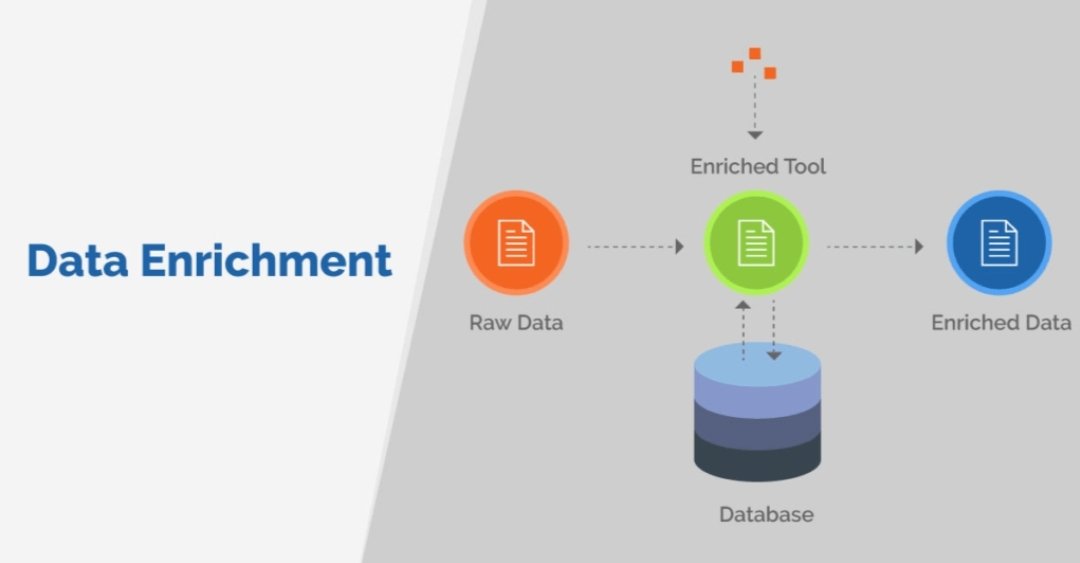
Contact data enrichment is the process of enhancing basic business records with additional layers of verified information. This typically includes business classifications, decision-maker roles, verified phone numbers, company attributes, and behavioral signals that indicate purchase intent.
The process usually follows a structured workflow:
First, existing CRM or prospecting data is analyzed to identify missing or outdated fields. This helps determine where enrichment is needed most.
Next, enrichment systems match and validate data against multiple structured and AI-enhanced sources. This ensures that contact information is accurate and relevant.
Finally, enriched data is returned into the CRM or sales system, enabling teams to act on updated insights immediately without manual research.
Benefits of Data Enrichment for Sales Teams
Data enrichment directly improves multiple areas of the sales process.
One of the most significant benefits is improved targeting accuracy. When sales teams know exactly who they are contacting and what role they play in a company, outreach becomes more relevant and effective.
Another benefit is increased conversion rates. Personalized outreach based on enriched data consistently outperforms generic messaging because it reflects the real business context.
Implementing a Data Enrichment Strategy
To effectively implement data enrichment, organizations should begin by assessing the quality of their existing CRM data. Identifying gaps such as missing contact details or outdated company information is the first step toward improvement.
Next, businesses should integrate a structured enrichment process into their sales workflow. This ensures that new leads are automatically enhanced as they enter the system, eliminating the need for manual updates.
Automation plays a key role in maintaining long-term data quality. Without continuous enrichment, even high-quality databases will degrade over time.
Finally, sales teams should be trained to interpret and use enriched data effectively. Understanding how to apply firmographic and intent signals in outreach strategies can significantly improve engagement outcomes.
Challenges in Data Enrichment
While data enrichment provides clear advantages, it also introduces challenges that must be managed carefully.
Data accuracy and validation remain ongoing concerns. Even enriched datasets require regular updates to stay relevant in dynamic markets.
Data privacy and compliance are also important considerations, especially when handling business contact information in regulated environments such as the United States.
Integration complexity can also arise when connecting enrichment systems to existing CRM platforms. Without proper implementation, data inconsistencies can occur.
Despite these challenges, structured enrichment strategies continue to deliver strong value when managed correctly.
Future of Data Enrichment in B2B Sales
The future of data enrichment is closely tied to artificial intelligence and real-time data processing. As AI systems become more advanced, enrichment will shift from static updates to continuous intelligence streams that reflect live market changes.
This evolution will allow sales teams to access more predictive insights, helping them identify buying intent earlier in the sales cycle. Instead of reacting to outdated information, organizations will be able to engage prospects at the right time with higher precision.
In competitive B2B markets across the United States, this shift will make data enrichment an essential part of every high-performing sales strategy.
Final Thoughts
B2B data enrichment is a critical component of modern sales success. By transforming incomplete CRM records into actionable intelligence, businesses can improve targeting, increase conversions, and streamline their sales processes.
As highlighted in DataLane, contact data enrichment is not just a technical upgrade but a strategic advantage that directly impacts pipeline performance and revenue growth.
For organizations operating in competitive U.S. markets, adopting a structured enrichment approach ensures that sales teams are always working with accurate, relevant, and decision-ready data.