
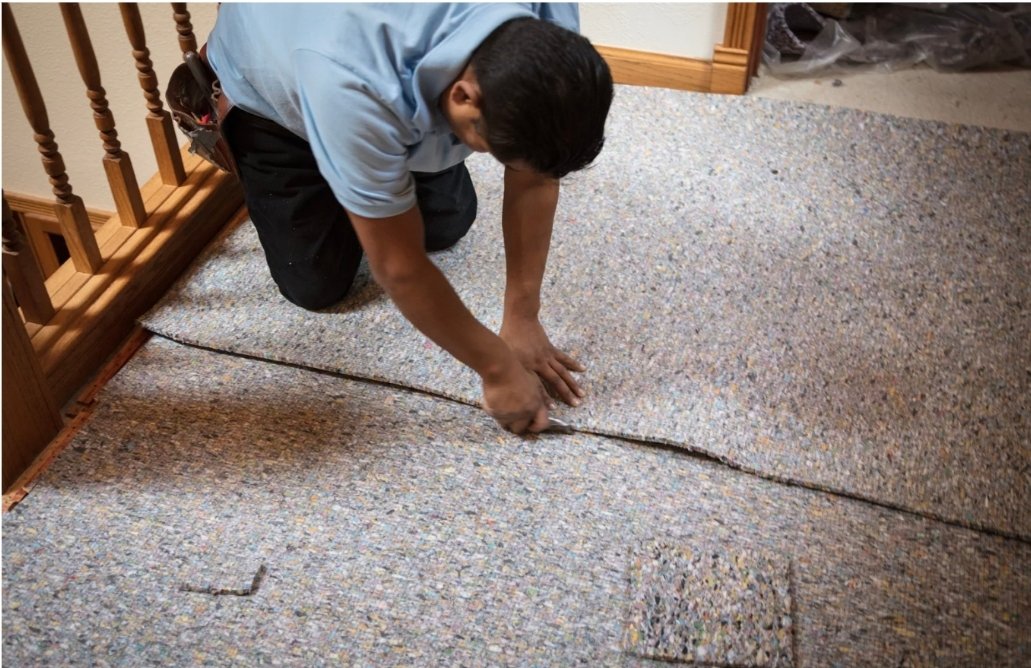

Here is a scenario most homeowners recognize. You spot a buckle running across your living room carpet, or notice a seam pulling apart near a doorway, and you start calling around for quotes. The prices vary widely. The answers about credentials vary even more. That inconsistency should tell you something about this industry.
A carpet repair can look fine on day one and still fail a few months later if the seam tension, padding support, or adhesive choice was wrong from the start. That is why experienced flooring technicians pay close attention to carpet fiber type, stretch direction, transition points, and subfloor condition before making repairs.
Homeowners comparing options for denver carpet repair often run into terms like seam peaking, delamination, buckling, and power stretching during the research process. Reliable companies have technicians trained through IICRC certification standards, which cover repair methods for seam construction, carpet re-stretching, water-damaged flooring, and adhesive selection used in residential flooring restoration work.
Knowing what certifications to ask about before hiring a carpet repair company takes the guesswork out of the process and protects the floor you have invested in.
The Certification That Sets the Professional Standard
The IICRC, which stands for the Institute of Inspection, Cleaning and Restoration Certification, is the primary credentialing body for flooring and carpet technicians in the United States. The IICRC sets ANSI-accredited standards that define best practices for inspection, cleaning, and restoration work across the flooring industry.
The most relevant credential for carpet repair is the RRT, or Carpet Repair and Reinstallation Technician certification. The RRT covers a defined set of skills: carpet construction and fiber identification, seam repair techniques, carpet stretching using power stretchers, adhesive selection and floor preparation, tackless strip installation and molding work, and pre-repair inspection procedures. Technicians who complete the RRT have passed a knowledge exam and demonstrated understanding of the methods that produce a lasting repair.
Beyond the RRT, there are two additional IICRC credentials worth knowing: the CCT (Carpet Cleaning Technician) for technicians who also handle deep cleaning, and the SCI (Senior Carpet Inspector) for those who perform independent damage assessments for warranty claims and insurance documentation.
Does Carpet Repair Require Training, or Can Anyone Do It?
The short answer is that anyone can attempt carpet repair. The longer answer is that poor carpet repair is often worse than no repair at all.
A seam that is cut improperly, sealed with the wrong adhesive, or stretched without understanding the carpet’s pile direction will be visible from across the room. Buckling that returns within months is almost always the result of improper stretching technique, specifically using a knee kicker alone instead of a power stretcher for the main field stretching passes. Seam separation that reopens after a repair typically points to the wrong seam sealer or to contaminated backing at the cut edge.
IICRC training addresses all of these failure points directly. Technicians learn how to inspect the carpet before touching it, identify the specific repair approach based on fiber type and construction, and execute the correction in a way that holds long-term. That knowledge base is not intuitive. It is learned through structured instruction and examination.
How Carpet Stretching Certification Applies to Common Repairs
Improper installation is the leading cause of carpet buckling. Carpet that was installed with only a knee kicker and no power stretcher will develop waves within a few years as the material relaxes. Re-stretching is the correct fix, but doing it without proper technique can damage the backing or cause edge pull-away from the tackless strip.
IICRC-certified technicians are trained in the correct power stretcher setup for different room configurations, including the right attachment points for walls, the appropriate tension for the specific carpet weight and pile height, and the sequence of stretching passes required to remove buckling without creating new stress points at doorways or transitions.
Carpet stretching without this knowledge produces inconsistent results. A technician who has completed RRT training has specifically studied stretching mechanics as part of the certification curriculum.
What to Ask a Carpet Repair Company Before Hiring
The credential conversation takes less than two minutes and filters out unqualified technicians faster than any review site can.
- Ask whether the technician holds an IICRC RRT or equivalent certification
- Ask how long the company has been performing carpet repairs specifically, not just cleaning
- Ask whether the company performs a pre-repair inspection to identify the root cause before starting work
- Ask what type of seam sealer and adhesive the company uses, and whether it is appropriate for your carpet backing type
- Ask whether the technician will use a power stretcher for any re-stretching work, and what their process is for securing edges at tackless strips
A company that cannot answer questions three through five with confidence is telling you something about the depth of their training.
When Carpet Repair Makes More Sense Than Replacement
Carpet repair is the right call in more situations than homeowners expect. Full replacement costs between $3 and $11 per square foot installed, according to HomeAdvisor, making even a professionally repaired seam or re-stretched room a significant cost saving by comparison.
Repairs that certified technicians handle with excellent outcomes include:
- Seam separation at transitions and doorways
- Buckling and rippling in rooms with improper original installation
- Pet damage patches, including odor-affected area removal and insert patching
- Burn and stain patches using remnant material or donor cuts from closets
- Fraying at stair edges and transitions
The condition of the backing, the availability of a matching remnant, and the age of the carpet determine whether repair is viable. A certified carpet inspector can assess those factors before any work begins, which prevents the situation where a homeowner pays for a repair that cannot hold.
Why Flooring Industry Standards Matter to You
IICRC standards are not internal company guidelines. They are ANSI-accredited, meaning they have been developed through a formal consensus process with industry-wide input and reviewed by the American National Standards Institute for rigor and consistency.
When a technician holds an IICRC certification, they are operating within a documented framework that has legal standing in insurance claims, warranty disputes, and litigation involving flooring damage. If your carpet repair is connected to a water damage insurance claim or a dispute with a landlord or property manager, IICRC documentation provides independent verification of the technician’s qualifications and the methods used.
Hiring a certified technician is not about paying more for a certificate on a wall. It is about ensuring that the person who cuts into your flooring understands what they are doing, why they are doing it, and what outcome to expect.