
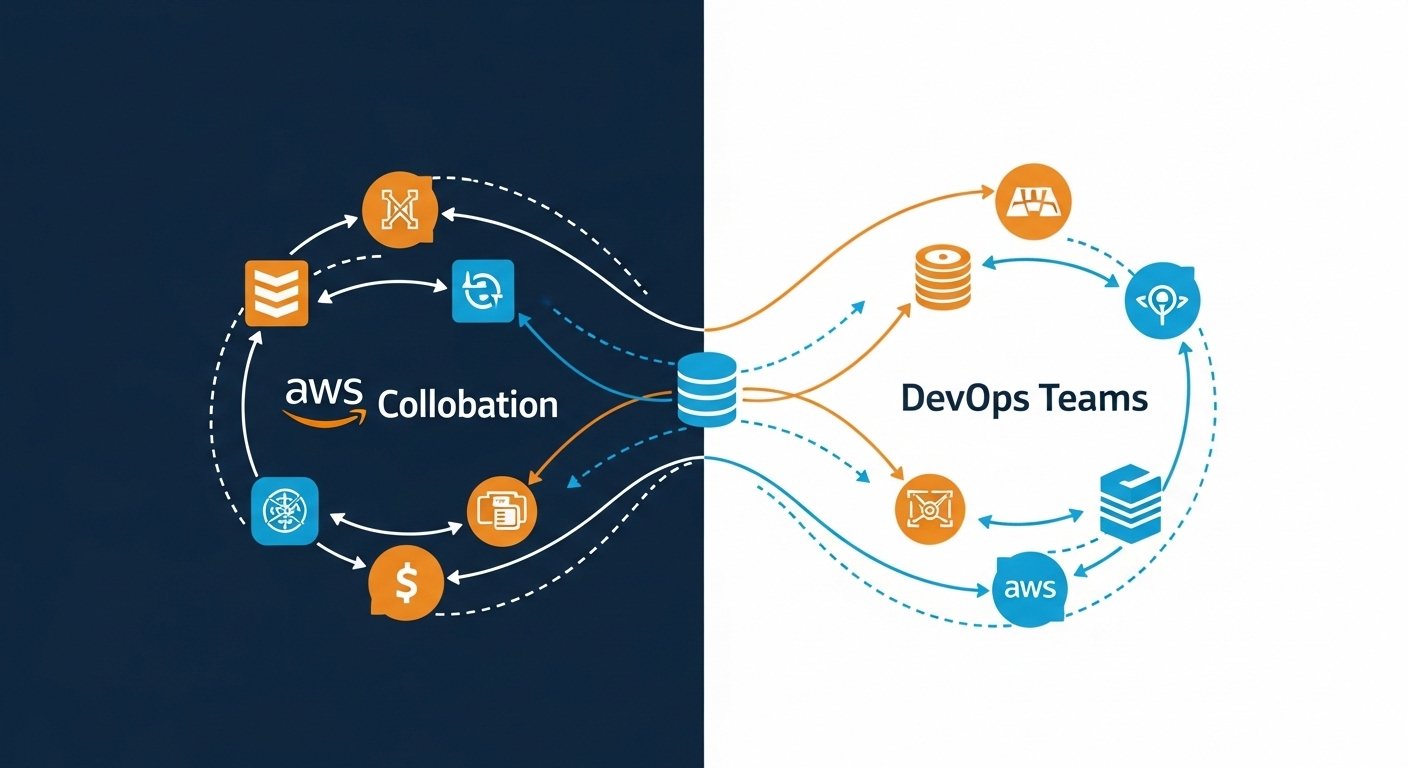
In today’s digital-first economy, speed is a competitive advantage. Organizations are under constant pressure to ship features faster, fix issues quickly, and continuously improve user experiences without compromising stability. Achieving this balance requires more than just skilled engineers or modern infrastructure—it demands tight collaboration between AWS specialists and DevOps teams.
AWS provides the cloud foundation that enables scalability, reliability, and automation. DevOps practices ensure that this infrastructure is leveraged efficiently to streamline development, testing, deployment, and monitoring. When AWS and DevOps teams work in sync, software delivery evolves from a slow, manual process into a rapid, repeatable pipeline capable of supporting frequent and reliable releases.
The Role of AWS in Modern Application Delivery
Hiring AWS developers offers a vast ecosystem of services that allow organizations to build, deploy, and scale applications without the constraints of traditional infrastructure. From compute services like EC2 and Lambda to container orchestration with ECS and EKS, AWS provides flexible environments that support diverse workloads.
Key AWS services such as CodeBuild, CodeDeploy, and CodePipeline play a crucial role in enabling automated CI/CD workflows. Infrastructure components like VPC, IAM, CloudFormation, and S3 provide the necessary security, networking, and configuration management needed to support automated deployments.
However, these services only deliver maximum value when used within a well-structured DevOps framework. This is where DevOps teams step in.
The Role of DevOps in Accelerating Releases
DevOps is not just a methodology—it is an operational model that bridges the gap between development and operations. DevOps teams focus on automation, collaboration, monitoring, and continuous improvement to reduce deployment friction and improve release frequency.
They design CI/CD pipelines, implement infrastructure as code (IaC), configure monitoring systems, and ensure that environments are consistent across development, staging, and production. Their goal is to eliminate manual processes and create reliable release pipelines that can be executed multiple times a day with minimal risk.
When DevOps teams work alongside AWS experts, the synergy becomes powerful. AWS provides the tools; DevOps ensures those tools are orchestrated effectively.
Infrastructure as Code: The Common Ground
One of the primary areas where AWS and DevOps teams intersect is Infrastructure as Code. Tools such as AWS CloudFormation, Terraform, and AWS CDK allow infrastructure to be provisioned and managed through code.
This approach eliminates the need for manual server setups and reduces configuration drift. DevOps teams define the infrastructure templates, while AWS specialists ensure the architecture is optimized for performance, security, and cost efficiency.
This collaboration allows entire environments to be replicated in minutes, making it easier to test changes, roll back errors, and deploy updates rapidly.
CI/CD Pipelines Powered by AWS
Continuous Integration and Continuous Deployment pipelines are at the heart of faster releases. AWS services like CodePipeline, CodeCommit, and CodeDeploy provide the building blocks for automated workflows.
DevOps engineers design these pipelines to automatically build, test, and deploy code whenever changes are pushed to repositories. AWS teams ensure that the pipelines integrate seamlessly with cloud resources such as EC2 instances, Lambda functions, or Kubernetes clusters.
This results in a release process that is consistent, traceable, and repeatable—eliminating the delays associated with manual approvals and deployment scripts.
Monitoring, Logging, and Feedback Loops
Fast releases are only valuable when issues can be detected and resolved quickly. AWS services such as CloudWatch, X-Ray, and CloudTrail provide comprehensive monitoring and logging capabilities.
DevOps teams configure alerts, dashboards, and automated responses based on this data. This feedback loop enables teams to identify performance bottlenecks, deployment failures, and security risks in real time.
By combining AWS monitoring tools with DevOps practices, organizations can release confidently while maintaining high availability and performance.
Security and Compliance at Every Stage
Security is a shared responsibility between AWS and DevOps teams. AWS provides robust tools like IAM, GuardDuty, Security Hub, and KMS, but it is the DevOps team’s responsibility to integrate these into the deployment workflow.
DevOps engineers implement security checks within CI/CD pipelines, enforce role-based access control, and automate vulnerability scans. AWS specialists ensure that cloud architectures follow best practices for data protection and compliance.
This integrated approach ensures that speed does not come at the cost of security.
Containerization and Microservices Enable Agility
Modern applications often rely on microservices and containers for flexibility and scalability. AWS services like EKS, ECS, and Fargate support containerized deployments.
DevOps teams manage container orchestration, scaling policies, and deployment strategies such as blue-green or canary releases. AWS teams ensure the infrastructure can handle dynamic workloads efficiently.
Together, they create an environment where new features can be deployed independently without affecting the entire application.
Cost Optimization and Resource Management
Faster releases should not lead to uncontrolled cloud spending. AWS provides tools such as Cost Explorer and Trusted Advisor, while DevOps teams implement resource monitoring and auto-scaling policies.
By collaborating, both teams ensure that infrastructure is right-sized, unused resources are eliminated, and deployments remain cost-effective.
Collaboration Drives Continuous Improvement
The real advantage of AWS and DevOps collaboration lies in shared ownership. Both teams participate in planning, architecture discussions, and post-release analysis. This alignment reduces silos and encourages continuous refinement of deployment processes.
As release cycles shorten, teams learn from each iteration, improving reliability and efficiency over time.
Why Skilled AWS and DevOps Professionals Matter
The success of this collaboration depends heavily on expertise. Organizations looking to scale their cloud operations often need to hire aws developers who understand cloud architecture deeply, along with professionals who can hire devops developer talent capable of building automated pipelines and managing deployments efficiently.
These specialists ensure that AWS capabilities are fully utilized and DevOps processes are implemented effectively to achieve faster and safer releases.
Conclusion
Faster software releases are no longer optional—they are a business necessity. The combination of AWS infrastructure and DevOps practices creates a powerful framework for rapid, reliable, and secure application delivery.
When AWS and DevOps teams collaborate closely, organizations gain the ability to automate infrastructure, streamline CI/CD pipelines, monitor applications in real time, and maintain strong security standards. This partnership transforms software delivery into a continuous, efficient process that supports innovation and growth.
By aligning cloud capabilities with DevOps methodologies, businesses can move from slow, risky deployments to a model where rapid releases become the norm rather than the exception.