
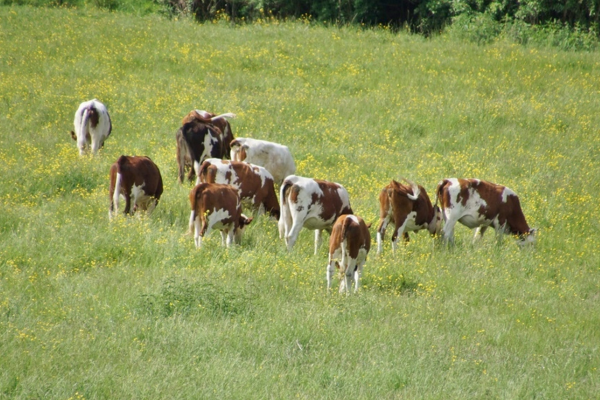
Performance livestock exert pressure on their bodies. The joints of bucking bulls, performance horses, or other high-energy animals are subject to repeated impact, twisting, and weight-bearing stress. To have good joints, they have to be managed, fed, and monitored. Although there is no single strategy that can ensure what happens in the long term, a holistic approach will help in ensuring structural integrity in the long run.
Performance Livestock under Joint Stress
Performance animals move with intensity. Rapid turns, extreme jumps, and repetitive landings provide mechanical stress on cartilage, ligaments, and tendons. In the long run, stress can affect mobility and comfort.
Bucking stock and other performance livestock are frequently trained or competition livestock, unlike pasture animals, which are moderate in their activity. This adds to the significance of monitoring together. Minor alterations in the gait, post-rest stiffness, or decreasing willingness to perform might reflect that management changes are necessary.
Conditions of the environment are also important. Strain can be enhanced by hard ground surfaces, irregular terrain, or constrained spaces. Provision of proper footing and sufficient free space to move may help to better balance weight load and lessen mechanical stress.
The Importance of Well-balanced Nutrition
Support of joints is based on nutrition. Structural tissues depend on sufficient protein, trace minerals, and connective tissue components. A balanced ration that has been developed to meet the needs of performance livestock is likely to contain the right quantities of calcium, phosphorus, zinc, copper, and other nutrients that are required.
Certain livestock managers add livestock joint supplements into the daily feeding. These nutritional supplements usually include collagen, glucosamine, chondroitin, or other substances found naturally in connective tissues. It is aimed at supplementing the base diet and enhancing joint structure in general.
In the case of bucking animals in particular, a bucking stock joint supplement can be chosen to make it fit into the physical competition requirements. Since these animals undergo repetitive high impacting movements, regular nutritional support is usually integrated into an extensive conditioning plan.
Body Condition and Body Management
One of the most significant joint care aspects is to keep the body in proper condition. Being overweight may cause strain to the knees, hocks, and fetlocks. The slight imbalances in the body weight distribution can influence the stride and stability in performance livestock.
Frequent check-ups of weight and adjustment of ration would support in maintaining the animals in the correct condition score. It is also important to have balanced muscle development. Conditioning programs need to be built on a gradual increase of strength as opposed to an abrupt workload increment.
Doing exercises where one can have a warm-up and cool down time can help in more controlled movement patterns. Sudden changes may cause more stress on joints and soft tissue.
Hoof and Limb Care
Well-developed joints are related to the alignment of the hooves and limbs. Farrier and regular trimming are also used to balance weight bearing. Stress in other body parts can be transferred to misalignment of the hooves.
It is necessary to regularly examine legs to check for swelling, heat, or sensitivity. The subtle changes are detected at early stages, enabling the training intensity or administration of any type of change to be made.
It is also important to give sufficient rest between training sessions. This is because recovery periods provide the tissues with time to acclimatize to the demand of the workload. Livestock that compete often have a structured rest program incorporated into their yearly program.
Environmental Management
The conditions in housing and on the ground have a considerable impact on the health of the joints. Movement can be minimized by the use of soft yet solid footing. Extremely hard ground, deep mud, or slippery surfaces could cause additional mechanical stress and strain.
They should have places to sleep and space to move freely. Well-drained environments and clean ones minimize the chances of infections, which may indirectly impact mobility.
Considerate environmental planning is an addition to nutritional interventions and a more holistic joint care program.
Supplementation Considerations
Consistency and quality are relevant when it comes to supplementation. The livestock joint supplement needs to be administered in small doses and administered as per label instructions or as suggested by the professional.
In the case of performance animals, like bucking bulls, feeding a bucking stock joint supplement could be included in the diet. Products such as OptiWize 10-N-1 may be tested in case of compatibility with the base ratio in the whole nutrition program.
One should keep in mind that there are no solutions to supplements. They should be used together with balanced feeding, appropriate conditioning, frequent hoof maintenance, and organized rest.
Veterinary Collaboration
Consistent assessments with a veterinarian can help in giving a good idea of the functionality of the joints and the musculoskeletal well-being. Early structural changes can be detected with the help of physical examinations, movement tests, and periodical imaging when needed.
The veterinarians would also help in fine tuning conditioning programs and reviewing the feed formulations. Through teamwork, the workload of every animal is adjusted to the physical capabilities of that animal.
A responsible performance management plan is based on open communication between the owners, trainers, nutritionists, and veterinarians.
Final thoughts
The maintenance of performance livestock joints is a challenging task that needs a robust and sustained strategy. Long term mobility is promoted by balanced nutrition, systematic conditioning, appropriate hoof care, environmental care, and professional supervision.
The addition of a livestock joint supplement can be regarded as an inclusion in a feeding program, especially in animals that are subjected to high impact activity. Products like OptiWize 10-N-1 could be incorporated into a management program that emphasizes structural integrity and responsible performance practices.
By combining attentive daily care with long term planning, livestock managers can create conditions that support strong, stable joints throughout an animal’s performance career.