
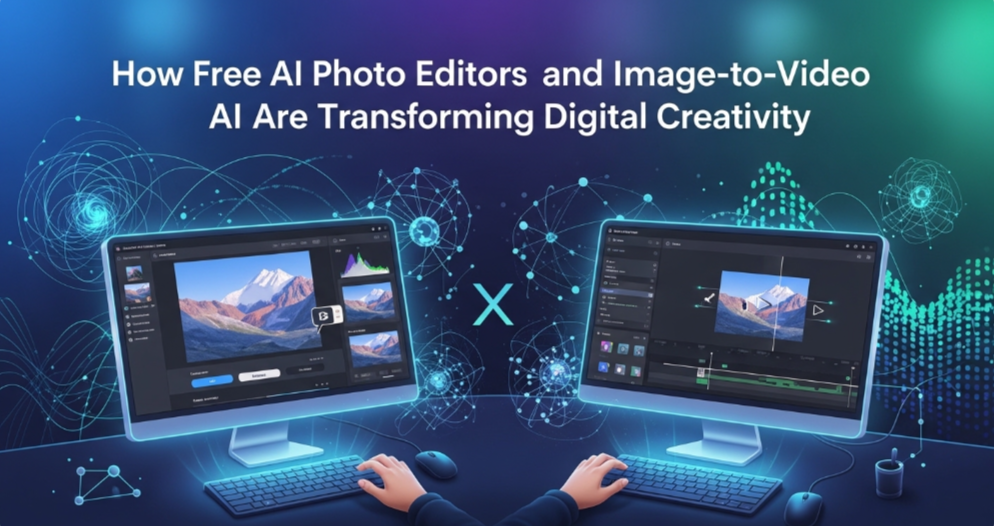
Artificial intelligence has rapidly reshaped the way people create and edit visual content. What once required advanced technical skills and expensive software can now be done in minutes using AI-powered tools. Two of the most exciting innovations in this space are the free AI photo editor and image to video AI, which are making professional-quality visuals accessible to everyone—from casual users to content creators and businesses.
The Rise of the Free AI Photo Editor
A free AI photo editor uses machine learning algorithms to automate complex editing tasks. Instead of manually adjusting brightness, contrast, or removing backgrounds, users can rely on AI to analyze an image and enhance it instantly. These tools can perform actions such as object removal, background replacement, color correction, image upscaling, and even facial retouching with just a few clicks.
The biggest advantage of a free AI photo editor is accessibility. Many platforms offer powerful features without requiring a paid subscription or advanced knowledge of design software. This allows students, small business owners, and social media creators to produce high-quality visuals without hiring professional designers. As a result, creativity is no longer limited by budget or technical barriers.
AI photo editing tools also save time. Tasks that once took hours can now be completed in seconds. For industries like e-commerce, marketing, and real estate—where large volumes of images need consistent editing—AI-powered automation is a game changer.
Understanding Image to Video AI
While photo editing has become easier, image to video AI is pushing visual storytelling even further. Image to video AI technology transforms static images into dynamic video content by adding motion, transitions, depth effects, and sometimes even AI-generated animations. This is particularly useful in a digital world where video content consistently outperforms static images in engagement.
With image to video AI, a single photograph can be turned into a short promotional video, slideshow, or cinematic clip. AI analyzes the image’s elements—such as subjects, backgrounds, and lighting—and intelligently applies movement to create a realistic and visually appealing result. Some tools even generate smooth camera movements like zooms and pans, making the final output feel professionally produced.
This technology is especially popular among marketers and social media influencers who want to create engaging video content quickly. Instead of shooting and editing videos from scratch, they can repurpose existing images into compelling videos optimized for platforms like Instagram, TikTok, and YouTube.
How These Technologies Work Together
The combination of a free AI photo editor and image to video AI creates a complete creative workflow. Users can start by enhancing or fixing an image using AI-powered photo editing tools, then seamlessly convert that polished image into a video. This integration allows creators to maintain visual consistency while expanding their content formats.
For example, a brand can edit product photos using a free AI photo editor to achieve clean backgrounds and accurate colors. Then, image to video AI can animate those same images into promotional videos for advertising campaigns. This approach reduces production costs while increasing content output.
The Future of AI-Driven Visual Content
As AI continues to evolve, both free AI photo editor tools and image to video AI platforms will become even more sophisticated. Future advancements may include more realistic animations, better motion prediction, and deeper customization options. These innovations will further blur the line between amateur and professional content creation.
In conclusion, the rise of the free AI photo editor and image to video AI is revolutionizing how people create visual content. By simplifying complex tasks and enabling new forms of creativity, these tools empower users to tell their stories more effectively—without the need for expensive software or specialized skills. As adoption grows, AI-driven creativity is set to become the new standard in digital media.