
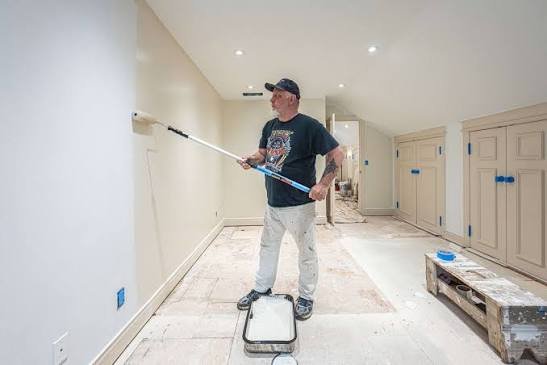

The lowest painting bid feels like the safe pick, and more often than not it becomes the most expensive line on the whole job. Three contractors walk the same 2,400 square foot two-story house in Murfreesboro, and their quotes land thousands of dollars apart. Nothing on paper explains the spread, which is why choosing a painting company murfreesboro tn homeowners can actually verify beats chasing the smallest number on the page. The price was never about paint. It comes down to scope, surface prep, and who answers the phone when the finish peels in year two.
Low Bids Hide The Costs You Pay Later
A rock-bottom quote usually wins by leaving things out, not by working faster. The cut corners surface later as a second coat that never happened, caulking that got skipped, and trim primed in name only. Demand for good crews is not cooling off, and homeownership held at 65.3% while rental vacancy sat near 7.3% in the first quarter, according to Census figures released in April 2026. Steady demand keeps the reliable painters booked, so the deep discounts tend to come from whoever has a hole in the schedule. The version we see most often is a bid that beats the field by 30 percent because the prep line is basically fiction.
That difference does not disappear. It resurfaces two or three years later as an early repaint.
A License And Bond Are Non Negotiable
A license and a bond are not paperwork you can wave off. In Tennessee, painting work above a set dollar threshold calls for a licensed contractor. You can confirm any company in minutes through the state contractor license verification portal run by the Department of Commerce. A bond does something different. If the crew gouges your siding or walks off mid-job, that bond is the money that makes you whole. That protection is the reason a licensed, bonded painting company murfreesboro tn residents can vet beats a cash discount from a stranger. Ask for the license number and the certificate in writing, then look them up yourself.
Ask These Questions Before You Sign
The right questions separate a real contractor from a guy with a ladder and a magnet sign. Ask them before you sign anything, because a friendly estimate rarely survives contact with the actual scope. A solid crew will not flinch at a single one.
- How many coats are in this price, and what happens if the color needs a third? A good answer names the exact number and puts it in writing.
- Who runs my job on site day to day? A solid contractor names a dedicated foreman, not a rotating cast.
- What surface prep happens before the first coat? Look for pressure washing, scraping, caulking, and priming spelled out.
- What paint brand and product line are you quoting? A real answer names a specific product, not just the word premium.
What A Real Warranty Actually Covers
A warranty is only as strong as the company standing behind it. Plenty of cheap bids carry a verbal promise that evaporates the moment you call about a peeling corner. A written labor-and-materials warranty, the kind that runs three years and can stretch toward ten on the right systems, signals that the contractor plans to still be around. A lowball bid writes a check the finished wall cannot cash. Read what the warranty covers, whether it includes labor or only materials, and what voids it.
Run The Numbers On A Repaint
Put real numbers next to the bids and the cheap one usually stops looking cheap. Professional exterior work averages about $3,177 nationally, with most jobs landing between $1,800 and $4,500 at roughly $1.50 to $4 per square foot. That gives you a sane baseline to test any Murfreesboro quote against. Now walk the 2,400 square foot two-story yourself. At the middle of that range, call it $2.50 per square foot, the paint-and-labor math runs you about $6,000 before anyone tapes a window. A bid that lands at $3,200 is not a better deal, it is a different job, usually one coat instead of two. Say the honest version breaks down as $3,900 in labor, $700 in premium product, $350 for proper caulking and priming, and $250 for two coats on the trim, and it comes to about $5,200 all in. The gap between that and the lowball is not savings. It is the work that quietly never happened, and you pay for it again in three years.
Vetting Beats Bargain Hunting Every Time
Cheap is a number, but value is a track record you can actually check. The homeowner who spends one afternoon confirming a license, reading the warranty, and weighing the scope behind each price rarely regrets it. The one who signs the lowest bid on trust alone usually pays that difference later, and pays more. Vet first, then negotiate on price. The right crew welcomes every question, because those honest answers are the real product.