
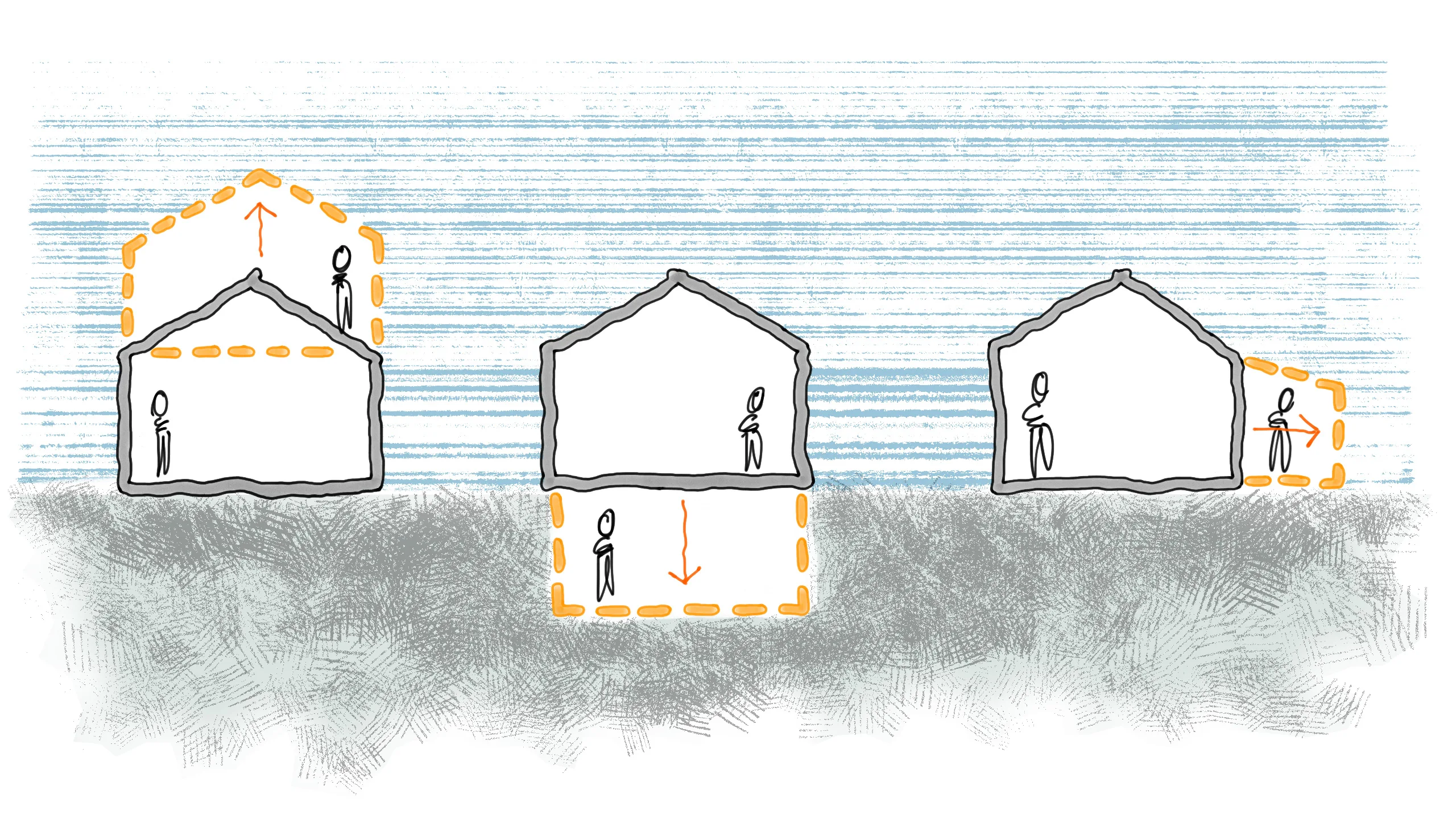

The home office took over the dining room back in spring, and nobody really planned it that way. Now a second remote job has two adults fighting for one quiet corner, and a Waynesville family of five in an 1,800 square foot ranch starts pricing home addition remodeling waynesville nc crews at the same time they browse bigger houses online. The move feels like the obvious fix, but the math often points the other way. The argument here is simple and worth stating outright. Adding the square footage you lack almost always costs less than buying a house that already includes it, once every fee in a move is on the table.
Relocating Quietly Erases Your Equity
Moving looks like a clean restart until you tally what actually leaves your pocket on the way out. The case we see most often is a family that already holds two agent valuations before anyone ever calls a builder. They anchor hard on the sale price and forget the exit costs, and those costs run higher than most sellers expect. Commission alone on a mid-priced sale can clear the low twenties of thousands before you count anything else. A 1 percentage-point rise in transaction costs, measured as a share of a home’s value, cuts residential mobility by at least 8 percent, according to work published in the Journal of Regional Science. People feel that friction, and a lot of them simply stay put and remodel.
Example scenario: a Waynesville family weighing a move up against adding a room (illustrative)
| Line item | Sell and move up | Stay and add a room |
| Agent commission (~5.7% on a ~$450,000 sale) | $25,650 | $0 |
| Closing costs and movers | ~$6,000 | $0 |
| Higher price per usable square foot on the bigger house | paid every year you own it | $0 |
| Room addition, 20×20 (design, permits, construction) | $0 | $32,000-$80,000 |
| Where the money goes | tens of thousands leave before the first box is unpacked | one project, and the equity stays in your house |
The Addition Math Most Families Skip
Trading up got expensive fast over the past year. The national median existing-home price hit a record near $440,600 in June 2026, with 30-year mortgage rates still hovering around 6.5 percent. Realtor figures reported that summer showed plenty of owners choosing to stay rather than swap a cheap loan for a costly one. That pressure is exactly why home addition remodeling waynesville nc homeowners keep circling back to the floor plan they already own. A neighbor near Lake Junaluska ran the numbers on a $470,000 listing last winter and got as far as a mortgage pre-approval before pausing. Then they framed a 14 by 16 bedroom instead, kept their payment where it was, and stayed on the street their kids already knew.
Run the arithmetic for that ranch. Selling a $450,000 house at a 5.7 percent commission hands the agents $25,650. Closing costs plus movers take roughly $6,000 more, so about $31,650 is gone before you even shop for the bigger place. A 20 by 20 addition, by contrast, runs $32,000 to $80,000, so call it $55,000 all in for a finished suite with foundation and HVAC. That gap between the two paths is not a rounding error, it is real money you get to keep. The move-up path spends that $31,650 just to change your address, and it still leaves you paying a higher price per usable square foot every year. The addition keeps every one of those dollars inside your own walls.
Be honest about resale while you plan, because an addition will not pay for itself on paper. A midrange bathroom addition runs about $58,363 and returns roughly $32,028 at resale, only 54.9 percent recouped, according to the 2025 Cost vs Value report. Appraisers also weigh a permitted, well-joined addition very differently from a patched-on room. You build it for the daily use, not the payback line. What I cannot pin down is how much your specific addition lifts a sale five years out. Nobody tracks that number cleanly, and it swings hard with the street, the finish level, and whoever happens to walk through on a given Saturday.
Staying Put Usually Wins the Numbers
Line the two paths up honestly, and the pattern holds for most families in this exact spot. A move spends tens of thousands in fees before a single box gets packed, while an addition turns a similar or smaller sum into rooms you actually use every day. The decision really comes down to where you want those dollars to end up sitting. For the family in that 1,800 square foot ranch, staying put and building usually pencils out, and it keeps them on the street they already chose. Get one fixed-scope construction quote, set it beside your true all-in cost to move, and then let the bigger number make the decision for you.