
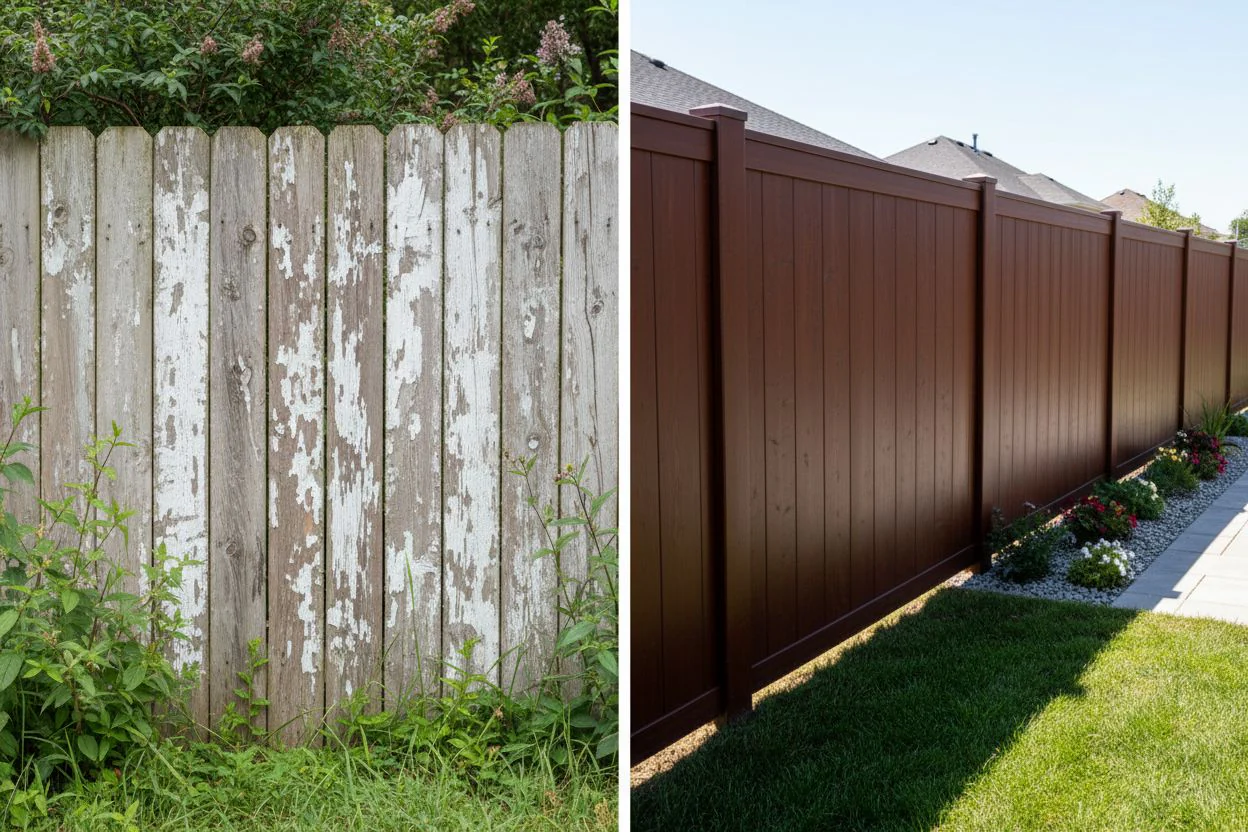

Salt never takes a day off. Salt works the fasteners, the finish, the frame. Salt is why a fence that would shrug off two decades inland can look tired in three seasons by the water. If you own a beachfront lot on the Bolivar Peninsula, the real question is which materials survive salt spray and which only look good on the estimate. The honest answer is that material choice, not brand or price, decides whether a fence lasts, and picking the right fencing bolivar peninsula tx means matching the metal or polymer to the coast first. Everything else is decoration.
Salt Air Destroys Fences Faster Than Inland
Here is the mechanism. Airborne salt settles on every surface, pulls moisture out of the air, and keeps that moisture sitting against metal and wood long after an inland fence would have dried out. On a corrodible metal that salt film accelerates rust from the fastener outward. On wood it feeds rot and warps the boards. The case we see most often is a fence that photographed beautifully at install and was bleeding rust from its screws by the third summer. Nobody can tell you the exact year a given fence gives out, because the lot, the wind line, and rinse frequency all move the number. Honestly, that uncertainty is why coastal buyers keep overpaying for the wrong material.
Wood Looks Cheap But Rots by the Coast
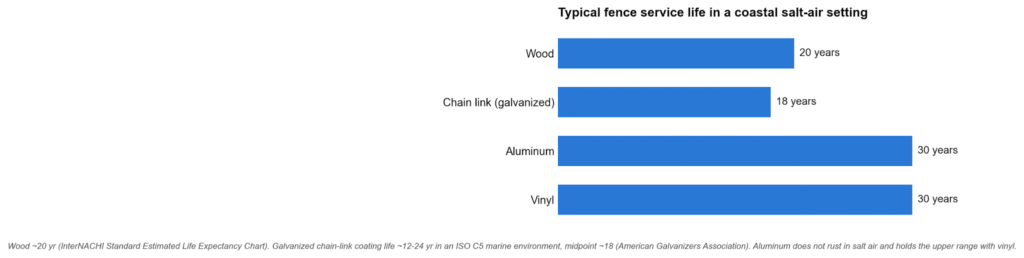
The myth is that wood is the budget choice. On paper it is. By the water it is often the most expensive fence you can buy, because you end up buying it more than once. Think of a cheap coastal fence the way you think of your power bill, a cost that quietly climbs while you are looking somewhere else. The U.S. Energy Information Administration put residential electricity at 18.83 cents per kilowatt hour in April 2026, up 7.3 percent from a year earlier, and a rotting fence behaves the same way, small recurring hits that eventually add up to a full replacement. A wood fence you replace every eight years is not a cheap fence, it is a subscription. The reality on a salt line is that untreated pickets can rot out at the ground long before anyone expected to look twice.
Aluminum and Vinyl Outlast the Salt Spray
Here the marketing and the reality finally agree. Aluminum does not rust. Salt cannot corrode it the way it corrodes galvanized steel, so an aluminum fence holds its line for decades in the same air that destroys chain link. Vinyl avoids the trouble from the other direction, since there is no metal to oxidize and no grain to rot. Both materials sit at the top of any honest coastal lifespan comparison, which is where a homeowner planning to stay put should start shopping. The arithmetic doesn’t lie: pay more once, or pay a little less every few years until it costs more. Someone who spends up front on the coast usually spends less across two decades.
Hurricane Codes Change What You Can Install
Wind is the other force the brochure skips. On the coast a fence is a wind load too, and local codes set how deep the posts go, how far apart they sit, and what the panels are allowed to be. A quiet storm season does not change that engineering. Forecasters at Colorado State University, in a July 2026 update, cut the odds of a Gulf Coast hurricane landfall to 10 percent, down from 20 percent in June, and even that lowered chance still means building for the gust that eventually shows up. A solid privacy fence that acts like a sail will lever its own posts out of the sand. Coastal wind rules quietly rule out some of the materials and heights homeowners want most.
Pick the Fence Your Coast Will Keep
Skip the fence that photographs well and fails quietly. The material is the decision, and on a salt line the honest shortlist is short: aluminum or vinyl for most lots, with height and post spec set by the wind code, not the catalog. When homeowners compare fencing bolivar peninsula tx quotes, the smartest question is not the price of the panel but how many years it survives the air it stands in. Match the material to the coast and the fence stops being a recurring cost. Get that one choice right, and the rest is just color.