
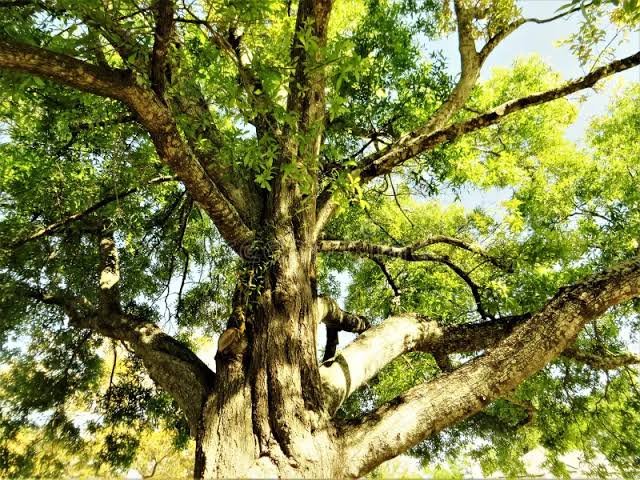

The Hendersons bought their first Carrollwood house last spring and inherited two live oaks older than they were. When the rainy season buried their gutters in leaves, they started calling around to tree trimming companies tampa fl without knowing what set a good crew apart. That gap is the real problem. Most homeowners hire a tree crew only a few times in a lifetime, and a bad choice does not surface for a year or two.
Here is the plain version. The right crew is less about the lowest price than about whether they prune for the tree’s structure or just cut it smaller. A certified arborist reads a mature oak the way an editor reads a draft, trimming to reveal the strong frame instead of hacking out whole limbs. Get that distinction right and your oaks stay safe through storm season.
Certified Pruning Protects An Oak’s Long Term Health
Structural pruning aims well past appearance. A trained crew clears dead, crossing, and weakly attached limbs so the tree builds a sound branch structure that holds up in wind. Trees also do quiet work most people never notice. A USDA Forest Service study measured one urban tree soaking up about 6,376 liters of stormwater across 42 tracked storm events. On a soggy Tampa lot, that is water not pooling at your foundation. Live oaks in particular grow wide, heavy horizontal limbs that need thoughtful support cuts rather than blunt removal. Certification matters because an ISA arborist makes cuts the tree can seal over, not open wounds that invite rot.
Cheap Topping Crews Create Costly Damage Later
Topping looks cheap up front and gets expensive later. When a crew cuts the main limbs to blunt stubs, the oak answers with a thicket of fast, weakly attached shoots called water sprouts. Those shoots are heavy and poorly anchored, and they snap in wind far more easily than the limbs they replaced. Plenty of the tree trimming companies Tampa FL homeowners find online will quote a topping job, since it is fast and takes no skill. The call we get most often comes a year later, once that thicket grows back denser. A topped oak does not forgive and it does not forget.
The bills add up faster than the savings did. A University of South Florida survey released in February 2026 found Tampa residents spent an average of $3,200 cleaning up after the 2024 hurricanes, and nearly one in five lost a tree. Crews across the county hauled off close to a million cubic yards of debris that season. Weak, over-sprouted trees are the ones that come down first.
Take that quarter-acre Carrollwood lot with its two 40-year-old oaks. A topping crew quotes $450 per tree, so $900 up front feels like a bargain. Two years later, one oak needs $1,200 in corrective pruning, and the other drops a limb that runs $2,000 to clear and patch the fence. That comes to roughly $4,100 all in, on what began as a $900 shortcut. How much a butchered oak’s slow decline costs down the line, honestly, nobody tracks with much precision. The cheap number rarely stays cheap.
Vet The Crew Before Any Limb Falls
Vetting a crew takes one phone call and the nerve to ask direct questions. Start with certification, and whether they follow the ANSI A300 pruning standard. Ask how much wood they plan to remove, since a healthy oak should rarely lose more than a quarter of its canopy in one visit. The stakes are real right now. WUSF reported in April 2026 that the 2024 storms cut Tampa’s canopy from 31.4% to 29.9% in a year, roughly 1,200 acres gone. Every mature oak that survives well pruned is one the neighborhood keeps.
How Do I Know If A Crew Is Actually Certified?
Ask for the arborist’s ISA certification number and look it up on the ISA’s free public directory. Confirming a real credential takes about ten seconds. A crew that cannot produce one belongs at the bottom of your list.
Is Topping Ever The Right Call For A Live Oak?
Almost never for a healthy tree. Topping is an occasional last resort on a hazardous, failing trunk, and even then a certified arborist hunts for a better option. For routine care on a sound oak, it is the wrong tool.
When Is The Best Time To Prune Oaks In Tampa?
Late winter into early spring is the usual window, before the summer flush and storm season. Lighter work can happen through much of the year, but big cuts are safer outside peak heat. A good crew tells you plainly when your timing is off.
The right crew costs a little more on the invoice and saves the whole second bill later. Listen for the outfit that talks about structure and long-term health, not just how low it can cut. Those two Carrollwood oaks can shade that roof for another forty years if they are pruned with a plan. Pick the crew that treats your oaks like they intend to see them again.