
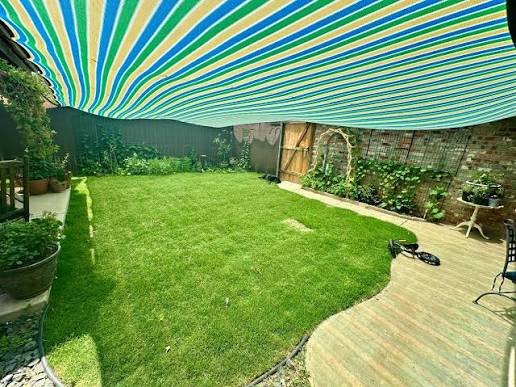

How hot does a bare concrete patio really get on a Murfreesboro afternoon in late July? Hot enough that most families quietly abandon the backyard from noon until the sun finally drops behind the tree line. The fix is not a bigger umbrella, and it is not shade cloth stapled to a wobbly frame. A properly built set of patio covers Murfreesboro TN homeowners can actually rely on has to solve two very different Tennessee problems at once, brutal summer sun and storms that arrive with almost no warning. The argument here is simple. What a cover is made of, and how it is anchored, matters far more than the color you pick from the brochure. Get either one wrong and you have spent good money on a structure that either bakes or blows away. Get both right and you have added a room to the house without pouring a foundation.
Tennessee Sun Punishes Bare Concrete Patios
A gray slab stores heat all day. It soaks up sun all morning and keeps radiating it back at you long after the thermometer starts dropping. That is why an uncovered patio feels hostile by early evening in July, even when the forecast sounded mild. In its 2026 outdoor trends report published in July 2026, Houzz found that 25 percent of homeowners renovated their outdoor space for better accommodation. That is up from 22 percent in 2024. Shaded, usable square footage is a big reason people finally commit to the project. The Tennessee sun does not negotiate.
How common attached cover options compare (typical ranges)
| Cover Type | Typical Span | Summer Feel Underneath |
| Retractable awning | Up to 14 feet | Good shade, retracts before storms |
| Solid aluminum cover | 16 to 20 feet | Full shade, stays noticeably cooler |
| Insulated roof panel | 18 to 24 feet | Coolest, blocks radiant heat |
| Attached carport | 20 feet or more | Shades cars and the side entry |
What A Cover Is Made Of Matters Most
Aluminum, wood, and steel do not age the same way in Middle Tennessee humidity. A cover works like the brim of a hat. What matters is how far it reaches and at what angle, because that decides whether your patio sits in shade when the afternoon sun drops low. Powder-coated aluminum shrugs off the rust and rot that punish untreated wood after a few wet summers. In practice, the covers that get used every single day are the ones sized for the low afternoon sun, not the overhead noon glare. Size it short and you buy a structure that looks finished and shades nothing when you need it.
The gauge of the metal is where corners get cut quietly. A thin panel flexes and drums in the rain, and it dents when a branch lands on it. Thicker extruded aluminum costs a little more up front and then just sits there doing its job for twenty years. Ask what gauge you are actually buying, because the brochure photo looks identical either way.
Anchoring Beats Style When Storms Arrive
Sun is the slow problem. Storms are the fast one. A cover that is not anchored for wind uplift is the first thing to go when a summer squall rolls through Rutherford County. A study in the Journal of Environmental Quality measured shade cutting asphalt surface temperatures by as much as 22.8 degrees Celsius, about 41 degrees Fahrenheit. That same broad surface is exactly what catches the wind. Wind uplift is the same force that flips flimsy carports onto a neighbor’s fence two streets over. Incidentally, that is also why adjusters have opinions about unpermitted structures. But that is a topic for another day. Back to the anchors. Footings sunk below the frost line and hardware rated for the real load are what keep a cover bolted to your house instead of your gutters.
What A Solid Cover Actually Costs Here
Nobody loves talking price, so here is a real starting point instead of a shrug. Say you want a solid aluminum cover over a 14 by 20 foot patio, which is about 280 square feet. Material and framing on a build like that often run near 18 dollars a square foot, putting the structure around 5,000 dollars. Add another 900 dollars for proper concrete footings, then tack on a permit that runs roughly 250 dollars in Rutherford County, and the project comes to about 6,150 dollars all in. Step up to an insulated roof panel or a longer span and that figure climbs quickly. The point is not the exact number. The point is that a real cover is a mid-four-figure decision, not a weekend impulse, and pricing it honestly up front saves the argument later.
Financing changes the math more than most people expect. Splitting a 6,000 dollar cover across a couple of seasons turns it into a manageable line item rather than one painful lump. Whether that trade is worth it depends on how many summers you actually plan to stay in the house. Nobody tracks the precise resale bump a good cover adds, and anyone who quotes you an exact percentage is guessing.
Shade Your Family Will Actually Use
The best cover is the one that turns a dead slab back into a room you use. When you compare patio covers Murfreesboro TN builders quote, look past the color chart and ask how far it reaches, how it is anchored, and whether the footings go deep enough. A cover sized for the low afternoon sun and bolted down for a Tennessee storm earns its price every summer it stands. Get those two things right, sun and wind, and the rest is detail. Your backyard stops being a place you avoid by two in the afternoon and starts being the reason you eat dinner outside.