
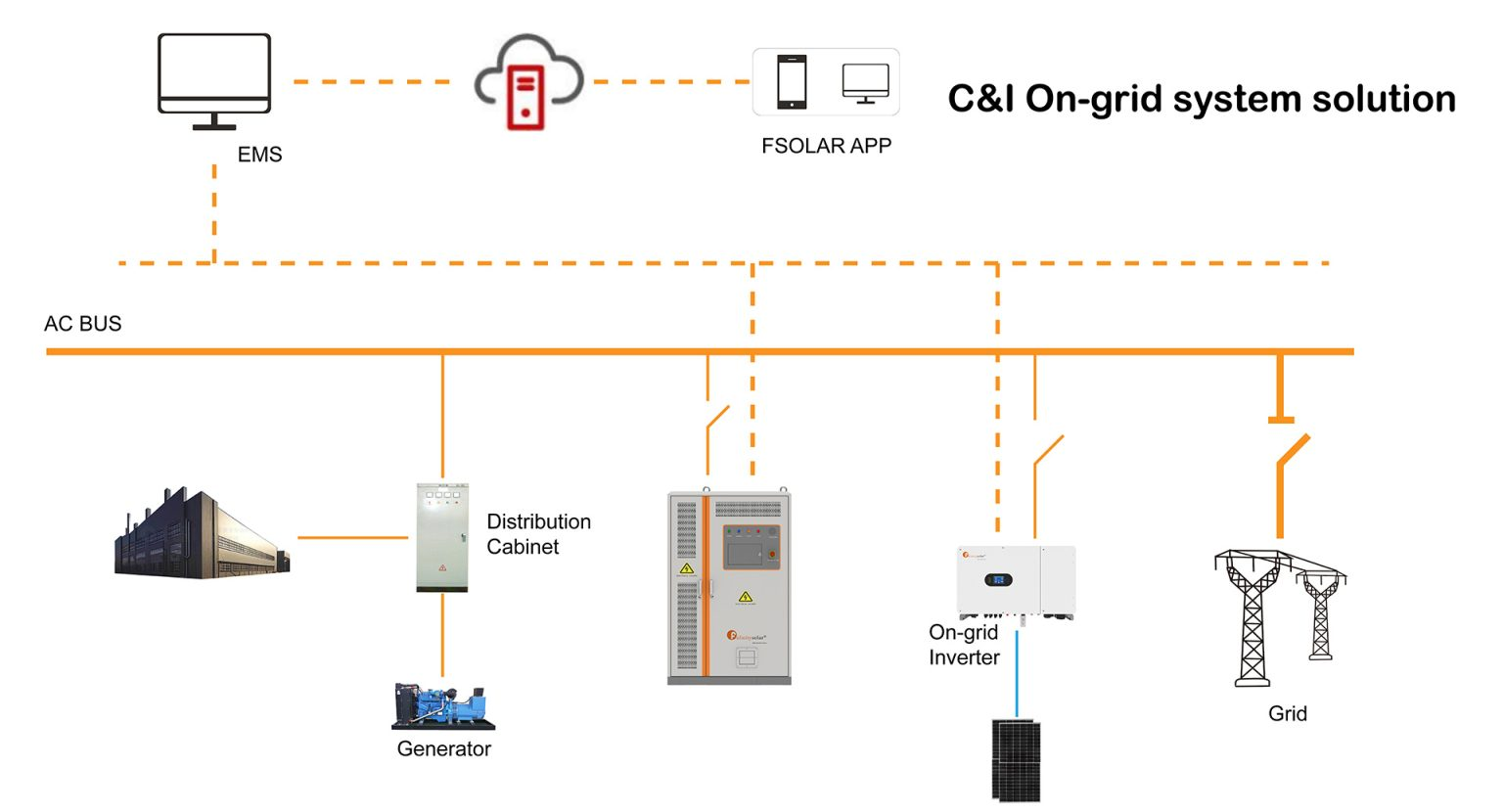

In the rapidly evolving landscape of commercial energy management, where businesses face rising electricity costs, grid instability, and ambitious sustainability targets, the C&I energy storage system has emerged as a strategic asset that fundamentally transforms how companies purchase, consume, and manage their power. These sophisticated battery systems, designed specifically for commercial and industrial facilities, enable businesses to reduce peak demand charges, maximize solar self-consumption, and ensure uninterrupted operations during grid outages. Unlike residential storage, which primarily serves individual homes, the C&I energy storage market addresses the vastly higher electricity consumption of commercial enterprises, making it a decisive battleground for the future of distributed energy. The industry that designs and manufactures these systems has evolved dramatically, with companies offering increasingly integrated solutions that combine advanced lithium iron phosphate battery technology, intelligent energy management software, and modular designs that scale from hundreds of kilowatt-hours to multiple megawatt-hours. The global demand for C&I energy storage continues its robust growth trajectory, driven by the expansion of commercial solar installations, the increasing sophistication of demand charge management strategies, and the recognition that energy storage is a critical tool for achieving both operational efficiency and environmental responsibility. Understanding the technology, applications, and financial drivers of C&I energy storage is essential for facility managers, business owners, and energy professionals who recognize that strategic energy management is fundamental to competitive advantage in today’s economy.
The Three Forces Driving Commercial Storage Adoption
The accelerating adoption of C&I energy storage is being driven by three powerful economic and operational forces that together create a compelling business case for commercial and industrial customers. The first force is the relentless pressure of demand charges, which for mid-to-large commercial customers can constitute 30 to 70 percent of their monthly electricity bill. A properly sized battery system can shave peak demand by 20 to 50 percent, delivering total bill reductions of 10 to 20 percent when combined with time-of-use optimization strategies. The second force is the growing need for energy resilience, because businesses increasingly recognize that grid outages are becoming more frequent and costly, with some industrial facilities absorbing losses of hundreds of thousands of dollars per momentary outage. The third force is the ability to participate in grid services markets, where behind-the-meter batteries can monetize capacity markets, demand response programs, and ancillary services such as frequency regulation and spinning reserves, creating additional revenue streams that enhance the financial returns of the investment. The convergence of these three forces has transformed the C&I energy storage conversation from a value-add discussion to a strategic imperative, with many facilities now finding that the battery delivers more economic value than the solar array it accompanies.
The Technology Architecture Behind Modern Storage Systems
The C&I energy storage system is a sophisticated integration of multiple technologies that work together to store and dispatch electrical energy with exceptional efficiency and reliability. At the heart of the system lies the battery module, typically utilizing lithium iron phosphate chemistry, which offers long cycle life exceeding 7,000 cycles and reduced risk of thermal runaway compared to other battery chemistries. The Battery Management System continuously monitors voltage, current, and temperature of each cell, ensuring safe operation and extending battery life through intelligent balancing. The Power Conversion System handles the critical AC/DC conversion, enabling the two-way flow of electricity between the battery and the facility’s electrical system, with modern liquid-cooled systems achieving conversion efficiencies of up to 98.5 percent. The Energy Management System serves as the intelligence of the entire C&I energy storage solution, using real-time data and predictive algorithms to optimize charging and discharging cycles based on facility load, utility tariffs, and weather forecasts, ensuring that the system delivers maximum economic value. The cooling system, whether air or liquid-based, maintains optimal operating temperatures to ensure reliability and extend battery life, with liquid cooling providing superior temperature uniformity for demanding industrial applications. The modular, all-in-one design of modern C&I energy storage systems enables rapid deployment and flexible expansion, with capacities scaling from 50 kilowatts to multiple megawatts to meet the evolving needs of growing businesses.
The Financial Value Stack and Return on Investment
The economic case for C&I energy storage is built on a sophisticated value stack that encompasses multiple revenue streams, each contributing to the overall financial return of the investment. The savings component is often the largest contributor, because strategic peak shaving can significantly reduce demand charges, while time-of-use optimization shifts consumption from high-price to low-price periods, and increased solar self-consumption maximizes the value of on-site generation. A 250-kilowatt solar-only project in a typical market territory might carry a 4.3-year payback and a substantial return on investment, but adding a 530-kilowatt battery can push the internal rate of return significantly higher, grow net present value substantially, and lift total 15-year savings to over $1 million. The earnings component comes from participation in wholesale and grid services markets, where batteries can monetize capacity markets and demand response programs, with resource adequacy contracts typically priced at approximately $4.50 per kilowatt-month of committed capacity. The protection component is the final piece of the value stack, because backup power and islanding capability can eliminate losses from production interruptions, with some industrial facilities saving hundreds of thousands of dollars annually by avoiding costly downtime. The compelling economics of C&I energy storage have made it a strategic investment for businesses seeking both immediate cost savings and long-term competitive advantage.
The Future of Commercial Energy Storage
The C&I energy storage market is poised for remarkable growth, with projections indicating that global incremental demand for commercial storage will continue to accelerate dramatically in the coming years. The long-term cumulative installed capacity for C&I energy storage is estimated to reach substantial levels, surpassing the residential market by a significant margin, because global commercial electricity consumption far exceeds residential consumption. The maturation of the storage market will bring greater standardization, shorter lead times, and more predictable financing, addressing the current challenges of supply chain bifurcation, shifting fire codes, and evolving tax equity structures that define what industry veterans call the “messy middle” of the market. The development of innovative AC-coupled battery systems is enabling seamless retrofitting with existing solar installations, reducing installation complexity and expanding the addressable market for commercial storage. The integration of artificial intelligence and machine learning into energy management systems is enabling predictive optimization that continuously improves performance and maximizes financial returns. The future of C&I energy storage is one of continuous innovation, driven by the needs of businesses for greater energy independence, cost control, and sustainability, and the companies that embrace these technologies will be well-positioned to lead the commercial energy revolution.