
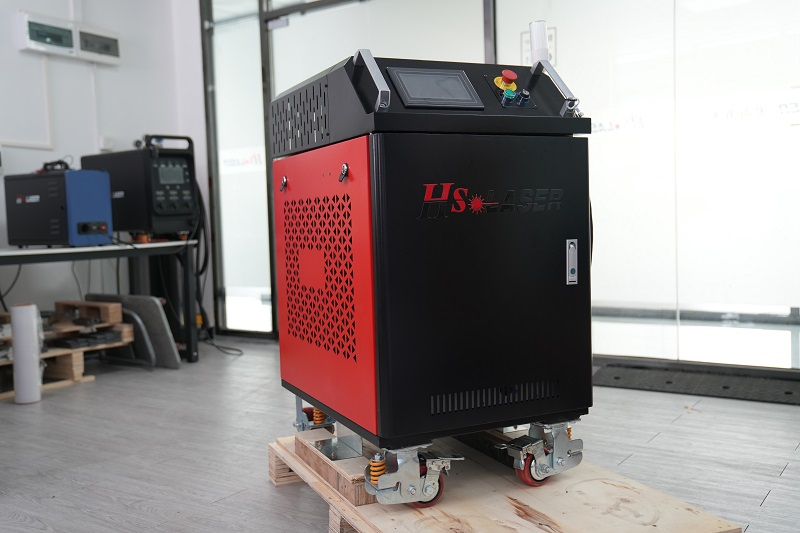

Selecting the right laser cleaning machine manufacturer is one of the most consequential decisions an industrial facility can make, because the quality of the equipment and the expertise of the manufacturer directly impact cleaning quality, operational efficiency, and long-term maintenance costs. The decision-making process must consider not just the technical specifications of the equipment but also the manufacturer’s application expertise, service infrastructure, and ability to provide ongoing support throughout the equipment’s lifecycle. The selection framework begins with a clear definition of the cleaning requirements, including the types of contaminants to be removed, the materials to be cleaned, the required production throughput, and the environmental conditions in which the equipment will operate. The manufacturer’s ability to provide comprehensive application testing is essential, because the optimal laser parameters for a specific cleaning task can only be determined through empirical testing on actual workpieces. The manufacturer’s experience with similar applications, demonstrated through case studies, references, and documented results, provides valuable evidence of their capability to deliver successful outcomes. The evaluation of the manufacturer’s after-sales support and spare parts availability is critical to long-term operational success, because downtime from equipment failure can be extremely costly in industrial production environments.
The Critical Evaluation of Technical Capabilities
The technical evaluation of a laser cleaning machine manufacturer must go beyond the standard specifications to assess the sophistication of their engineering, the quality of their components, and their commitment to continuous innovation. The laser source is the heart of the cleaning system, and the manufacturer’s choice of laser technology, whether fiber or pulsed, and the power output, typically ranging from 100 to 2,000 watts, directly impacts cleaning speed and capability. The beam delivery system, including the scanning head and optics, determines the precision and uniformity of the cleaning, and the manufacturer’s expertise in designing durable, reliable optics for demanding industrial environments is essential. The control system, including the user interface and software, affects the ease of operation and the ability to store and recall cleaning parameters for different applications, with advanced systems offering intuitive touch-screen operation and real-time monitoring. The cooling system design affects the reliability and uptime of the equipment, because inadequate cooling can lead to performance degradation and premature component failure. The portability of the system, whether handheld or automated, determines its suitability for different applications, with handheld systems offering flexibility for field service and automated systems providing consistent results for high-volume production. The manufacturer’s technical capabilities are reflected in their investment in research and development, their track record of innovation, and their ability to provide custom solutions for unique applications.
The Service Infrastructure and Support Ecosystem
The service infrastructure and support ecosystem of a laser cleaning machine manufacturer are as important as the technical specifications of the equipment, because the long-term reliability and performance of the system depend on the availability of timely, knowledgeable support. The manufacturer’s service network, including the presence of trained technicians and service centers in the region, affects the response time for on-site service and the availability of spare parts when needed. The manufacturer’s warranty and service policies should be carefully reviewed, including the duration of warranty coverage, the extent of coverage for parts and labor, and the terms for service calls and loaner equipment. The availability of training programs for operators and maintenance personnel is essential to achieving optimal equipment performance and minimizing downtime due to user error or improper maintenance. The manufacturer’s commitment to providing software updates and upgrades ensures that the equipment remains current with the latest technology and can adapt to evolving application requirements. The manufacturer’s documentation, including user manuals, maintenance guides, and troubleshooting resources, provides essential information for operators and maintenance personnel, and the completeness and clarity of this documentation is a reflection of the manufacturer’s overall commitment to customer success. The manufacturers who invest in robust service infrastructure and comprehensive support are the most likely to provide long-term value and customer satisfaction.
The Financial and Operational Impact of Manufacturer Choice
The choice of laser cleaning machine manufacturer has a significant financial and operational impact that extends beyond the initial purchase price, because the quality of the equipment and the expertise of the manufacturer affect productivity, operating costs, and the ability to meet quality requirements. The productivity of the cleaning system, measured in square meters cleaned per hour, directly impacts the throughput of the production operation and the cost per unit of cleaning. The efficiency of the system, measured in energy consumption per unit of cleaning, affects operating costs and environmental impact, with more efficient systems reducing electricity consumption and carbon footprint. The consumable costs of laser cleaning are minimal compared to traditional methods, because laser cleaning requires no abrasive media, chemicals, or water, and the manufacturer’s ability to minimize maintenance requirements further reduces operating costs. The labor costs associated with laser cleaning are typically lower than traditional methods, because the process requires less manual intervention and the operator can achieve higher productivity with less physical effort. The quality of the cleaning directly impacts the quality of subsequent processes, such as coating, welding, or bonding, and the manufacturer’s ability to deliver consistent, repeatable results is essential to meeting quality requirements. The return on investment for laser cleaning equipment is typically compelling, with payback periods of 1 to 3 years being common, and the manufacturer’s ability to provide accurate estimates of productivity, operating costs, and potential savings is essential to making an informed investment decision. The manufacturers who provide comprehensive economic analysis and transparent cost projections are the most valuable partners in the investment process.