
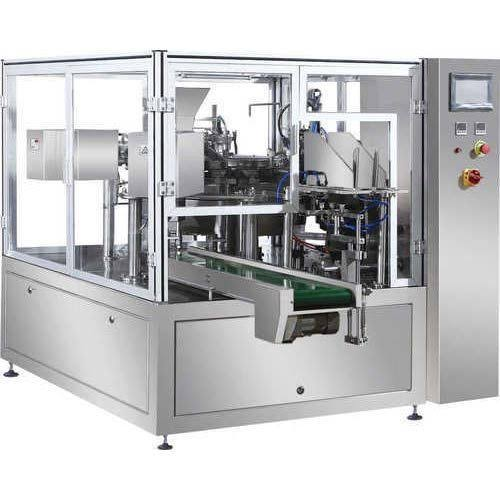

In the fast-paced and ever-evolving world of consumer goods packaging, where convenience, shelf appeal, and product protection are paramount, the pouch packing machine has emerged as a versatile and indispensable solution for manufacturers across virtually every industry. This specialized equipment is designed to form, fill, and seal flexible pouches from a continuous roll of film, creating attractive, functional packages that protect products while providing excellent visual appeal and consumer convenience. The pouch packing machine is not a one-size-fits-all device but rather a broad category encompassing a range of technologies, from vertical form-fill-seal systems and horizontal form-fill-seal systems to pre-made pouch filling machines and stand-up pouch packaging lines, each designed to meet specific product requirements and production volumes. The industry that designs and manufactures these machines has evolved significantly, with suppliers developing increasingly sophisticated solutions that incorporate advanced servo-driven technology, intelligent control systems, and flexible configurations to handle the diverse needs of food, pharmaceutical, cosmetic, and industrial applications. The global demand for pouch packing machines continues its robust growth, driven by the increasing popularity of flexible packaging, the rising consumer preference for convenient, portable packaging formats, and the recognition that pouch packaging offers significant advantages in material efficiency, shelf space utilization, and product differentiation. Understanding the capabilities, types, and selection criteria for pouch packing machines is essential for production managers, packaging engineers, and business owners who recognize that packaging excellence is fundamental to product quality, brand image, and market competitiveness.
The Different Types of Pouch Packing Machines
The pouch packing machine market offers a diverse range of types and configurations, each designed to meet specific product requirements, packaging formats, and production volumes, and understanding this diversity is essential to selecting the right equipment for any application. The vertical form-fill-seal machine is one of the most common and versatile types, where the packaging film is fed vertically through the machine, formed into a tube around a filling collar, filled with product, and sealed to create individual pouches, and this configuration is particularly well-suited for free-flowing products such as powders, granules, and small solid items. The horizontal form-fill-seal machine operates with the film fed horizontally, and this configuration is often preferred for products that require careful handling or for applications where the pouch needs to be formed around the product rather than filled through a tube. The pre-made pouch filling machine handles pouches that have been pre-formed and are fed into the machine, opened, filled, and sealed, and this configuration is popular for stand-up pouches and other specialty formats where the pouch shape is important for shelf appeal. The rotary pouch packing machine uses a rotating turret to perform the filling and sealing operations, enabling high-speed production for large-volume applications, and this configuration is often used in the food and beverage industry where throughput is critical. The multi-lane pouch packing machine incorporates multiple filling and sealing lanes operating simultaneously, enabling significantly higher throughput than single-lane machines, and this configuration is ideal for high-volume production where maximum efficiency is essential. The selection of the appropriate pouch packing machine depends on careful analysis of the product characteristics, the required packaging format, the production volume, and the available budget, and working with experienced equipment suppliers is essential to ensuring that the chosen solution meets the specific needs of the application.
The Key Components and Operational Workflow
The pouch packing machine integrates a carefully coordinated sequence of components and operations that work together to transform roll stock film into finished, consumer-ready pouches, and understanding this workflow is essential to selecting, operating, and maintaining the equipment effectively. The film feeding and tension control system is the first critical component, responsible for drawing the packaging film from the roll and maintaining consistent tension throughout the forming and sealing process, and this system incorporates dancer arms, load cells, or other tension sensing devices that detect variations and adjust the unwind speed to maintain optimal tension. The forming collar and tube assembly shape the flat film into a tube, with the forming collar precisely machined to achieve the correct tube diameter and ensure smooth, consistent film flow without wrinkles or misalignment that could affect sealing quality. The vertical sealing system creates the longitudinal seal that joins the edges of the film to form the tube, and this seal must be strong, consistent, and free of defects to ensure pouch integrity and product protection. The product filling system delivers the product into the formed pouch, with the specific mechanism depending on the product type, and this system may use volumetric cups, auger fillers, multi-head weighers, or other technologies that ensure accurate, consistent fills at production speeds. The horizontal sealing and cutting system creates the top seal of each pouch and cuts it from the continuous film web, and this system must be precisely timed and maintained to achieve clean, accurate seals and cuts that result in pouches with consistent dimensions and appearance. The discharge and conveying system transports the finished pouches to downstream equipment for further processing, such as cartoning, case packing, or labeling, and this system must maintain proper orientation and spacing to ensure smooth transfer without damage. The control system coordinates the operation of all these components, with programmable logic controllers, touch-screen interfaces, and recipe management capabilities that enable precise control, rapid changeover, and consistent quality across production runs.
The Material Compatibility and Film Selection
The performance and quality of a pouch packing machine depend significantly on the compatibility of the machine with the packaging material and the careful selection of the appropriate film for the specific application. The packaging film must provide adequate barrier properties to protect the product from moisture, oxygen, and light, with multi-layer laminates combining different materials to achieve the required protection while maintaining the flexibility and sealability required for high-speed packaging. The sealing characteristics of the film must be compatible with the pouch packing machine’s sealing system, with the appropriate seal initiation temperature, seal strength, and seal integrity required to achieve consistent, reliable seals at production speeds. The machinability of the film, including its stiffness, slip properties, and antistatic characteristics, affects its performance on the pouch packing machine, and the film must be selected to provide smooth, consistent feeding, forming, and sealing without jams or interruptions. The optical properties of the film, including clarity, gloss, and printability, affect the visual appeal of the finished package, and the film must provide the transparency and surface quality required to showcase the product and communicate brand messages effectively. The sustainability characteristics of the packaging film, including recyclability, biodegradability, and reduced material usage, are increasingly important to manufacturers seeking to reduce their environmental impact and meet consumer expectations for sustainable packaging. The material compatibility and film selection process for the pouch packing machine requires careful evaluation of multiple factors, and manufacturers who select the right materials can achieve superior packaging performance, product protection, and consumer appeal.
The Future of Pouch Packing Technology
The pouch packing machine is poised for significant evolution in the coming years, driven by advances in automation, digital technology, and sustainability that promise to enhance performance, flexibility, and environmental responsibility in packaging operations. The integration of artificial intelligence and machine learning into pouch packing machines is enabling predictive maintenance, where the system learns from operating data to predict potential failures and schedule maintenance before breakdowns occur, reducing costly downtime and extending equipment life. The advancement of intelligent process control systems is enabling real-time optimization of packaging parameters based on feedback from sensors throughout the system, ensuring that every package achieves the desired quality and performance while minimizing waste and maximizing efficiency. The development of flexible, modular pouch packing machines that can be easily reconfigured for different products and packaging formats is enabling manufacturers to respond quickly to changing market demands, with machines that can switch between different products with minimal downtime. The increasing emphasis on sustainability is driving the development of pouch packing machines that can handle biodegradable and compostable films, reduce energy consumption, and minimize material waste, reflecting the growing importance of environmental responsibility in packaging. The integration of pouch packing machines with broader manufacturing execution systems and supply chain management systems is providing real-time visibility into production performance and enabling more effective coordination of the entire manufacturing and distribution process. The future of the pouch packing machine is one of continuous innovation, driven by the needs of manufacturers for greater efficiency, flexibility, and sustainability, and the companies that embrace these innovations will be well-positioned to lead the industry into the future.