
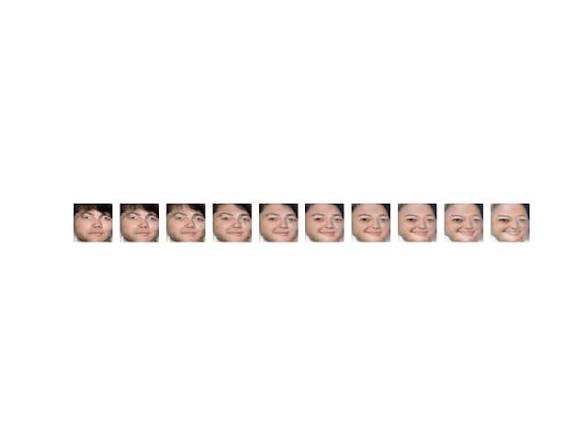

Generative image models (GANs, diffusion models, and latent diffusion variants) do not “draw” images the way humans do. Instead, they often operate in a compressed representation called a latent space, where images can be encoded as vectors. Latent space arithmetic is the idea that you can add, subtract, and blend these vectors to change specific visual attributes—like lighting, age, pose, or style—while keeping other aspects stable. If you are learning advanced generative workflows through a gen ai course in Chennai, this topic is one of the most practical bridges between “model theory” and “controllable outputs.”
What a latent space really represents
A latent space is a high-dimensional coordinate system where each point (a vector) corresponds to an image or an intermediate representation of an image. In many systems:
- An encoder maps an image into a latent vector z.
- A generator/decoder maps z back into an image.
What makes this interesting is that latent spaces often organise information in structured ways. Similar images tend to be near each other. Certain directions in the space can correlate with human-interpretable features, such as “more smiling,” “more cinematic lighting,” or “more sketch-like texture.” This is not magic; it emerges because models learn statistical regularities and compress them into numeric representations.
A key assumption behind latent arithmetic is local linearity: small movements in latent space sometimes produce smooth, meaningful changes in the output image. While latent spaces are not perfectly linear, they are often linear “enough” in local regions to be useful.
The core idea: add, subtract, and interpolate vectors
Latent space arithmetic is easiest to understand through three common operations:
1) Attribute addition
If you have a latent vector z representing an image, and an “attribute direction” vector v (for example, “add glasses”), you can edit the image by shifting the latent code:
z′ = z + αv
Here, α controls strength. A small α might add subtle glasses; a large α may exaggerate them or distort the face.
2) Attribute removal
To remove an attribute, subtract the direction:
z′ = z − αv
This is conceptually similar to “undoing” a feature.
3) Interpolation
To smoothly blend between two images represented by latents z₁ and z₂:
z(t) = (1 − t)z₁ + tz₂, where t ranges from 0 to 1
Interpolation is used for morphing, style blending, and generating consistent transitions for animation.
In a well-tuned pipeline, these operations feel like creative controls. In practice, they require care to avoid drifting into unrealistic regions of the latent space.
How do we find the right “feature direction” vector?
The hardest part is not the arithmetic—it is discovering a reliable direction vector v that corresponds to the feature you want. Common approaches include:
- Difference of means (supervised editing): collect examples with and without an attribute, compute the average latent of each group, then take the difference.
- Linear probes: train a simple classifier on latent vectors to separate an attribute (e.g., “smiling vs not smiling”), then use the classifier’s weight vector as the direction.
- PCA and latent factor discovery: perform dimensionality reduction to find dominant variation directions; some may align with interpretable features.
- Text-conditioned guidance (diffusion context): in some systems, “direction” can come from embedding differences (e.g., prompt embedding of “with glasses” minus “without glasses”), though results vary by architecture.
If you are following a structured gen ai course in Chennai, you will typically see these methods framed as controllability techniques: turning a generative model into a tool where edits are deliberate, repeatable, and measurable.
Where latent arithmetic is used in real work
Latent space operations are not just research demos. They show up in practical workflows:
- Product visual design: adjust backgrounds, lighting, or colour temperature without re-generating everything from scratch.
- Brand consistency: keep identity stable (logo shape, subject pose) while shifting style vectors (minimal, glossy, cinematic).
- Dataset augmentation: create controlled variations (pose, illumination) to improve training diversity for downstream models.
- Image editing pipelines: make targeted edits in latent diffusion systems by manipulating latents at specific steps (early steps for composition, later steps for texture and details).
The value is speed and control. Instead of prompting repeatedly and hoping, you apply a known transformation in a known space.
Limitations and best practices
Latent space arithmetic works best when the latent space is well-behaved and the attribute is reasonably disentangled. Common issues include:
- Entanglement: changing “smile” might also change age or lighting because features are correlated in training data.
- Over-editing: too large an α can push the latent outside the model’s comfort zone, causing artifacts.
- Identity drift: face edits can unintentionally alter identity; careful strength control and constraints help.
- Bias risks: attribute directions can encode stereotypes present in the data, so outputs must be evaluated responsibly.
Best practices are simple: keep edits small, test across many samples, and validate that the change is truly isolated. Treat feature vectors as tools that must be audited, not just reused blindly.
Conclusion
Latent space arithmetic turns generative imaging into something more engineerable: controlled edits instead of trial-and-error prompts. By learning how vectors represent features and how directions can be discovered and applied, you gain a practical skill set for consistent creative outputs and reliable automation. For learners building hands-on capability through a gen ai course in Chennai, mastering these vector operations is a solid step toward professional-grade generative pipelines—where “change one thing” can actually mean changing one thing.