
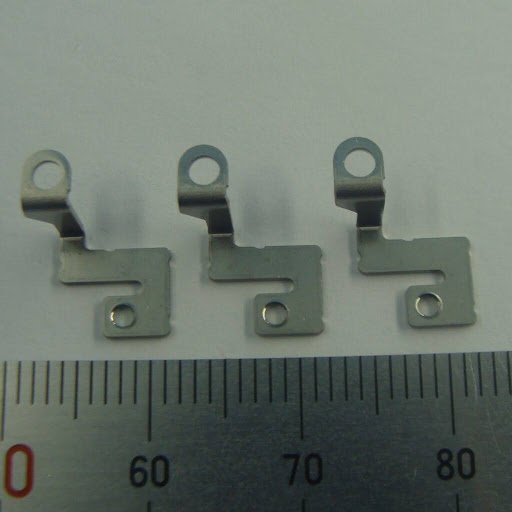

Stainless steel stamping parts is an important manufacturing process for producing durable and accurately shaped metal components. By pressing stainless steel sheets or coils through specialized dies, manufacturers can create parts for equipment, appliances, vehicles, electrical systems, and many other products.
The process combines the useful properties of stainless steel with the repeatability of mechanical forming. Its suitability depends on the material grade, component design, production volume, and operating environment.
Automotive Components
The automotive industry uses stamped metal components in a variety of assemblies. Depending on the design and material specification, stainless steel stamping parts may be used for brackets, retaining clips, heat shields, trim elements, and selected exhaust-related components.
These parts may experience vibration, temperature changes, moisture, or mechanical loads. Stainless steel grades can provide useful corrosion resistance and strength, but engineers must verify the specific properties needed for each application.
Accurate hole placement and consistent bends are also important because stamped components frequently connect to other parts during assembly. Poor dimensional control can lead to fitting problems, noise, or additional assembly work.
Electrical and Electronic Equipment
Electrical and electronic products often contain small metal components that require precise geometry. Stainless steel stamping can produce mounting clips, protective covers, brackets, housings, and selected shielding parts.
Compact designs may include several holes, slots, bends, or formed features. Using an appropriate die can create these features consistently across a production run.
Material selection should consider electrical requirements, corrosion exposure, mechanical loading, and compatibility with neighboring components. Stainless steel is not automatically the best material for every electrical contact, so the intended function should guide the decision.
Food Processing and Kitchen Equipment
Food-processing machinery and commercial kitchen equipment often operate in environments involving water, cleaning agents, and frequent washing. Suitable stainless steel stamped parts can provide corrosion resistance and surfaces that are easier to maintain.
Examples include equipment brackets, mounting plates, selected covers, clips, and formed panels. Components intended for direct food contact require careful material and surface selection, as well as compliance with the relevant hygiene requirements.
The grade alone does not guarantee suitability. Surface finish, cleaning procedures, joint design, and exposure to particular chemicals can all affect performance.
Medical and Laboratory Equipment
Medical and laboratory equipment may use stainless steel stamped components for housings, supports, clips, instrument elements, and selected internal mechanisms.
Depending on the application, parts may need smooth surfaces, accurate dimensions, and resistance to repeated cleaning or sterilization processes. Manufacturers must select materials and finishing methods that suit the device’s intended use.
Products subject to regulatory requirements may also need documented material traceability, validated processes, and inspection records. Requirements differ according to the device and market, so they should be established early in the design process.
Construction and Industrial Machinery
Construction products and industrial machines use many formed metal parts to hold, support, protect, or connect equipment. Stainless steel stamping can produce brackets, hinges, fastening components, covers, and support plates.
In outdoor or industrial environments, corrosion resistance may help reduce maintenance. However, exposure to salt, industrial chemicals, abrasion, and temperature extremes must be evaluated before selecting a grade.
The component’s mechanical function is equally important. Engineers should check load requirements, fastening points, vibration, and fatigue risks where repeated movement or stress is expected.
Choosing a Stamping Process
The part’s geometry and production quantity influence the best manufacturing method.
Blanking cuts the required profile from sheet material, while piercing creates holes and openings. Bending forms angles and flanges. Deep drawing produces hollow shapes such as cups or housings, while progressive die stamping combines several operations across multiple stations.
A simple bracket may require only a few operations, whereas a complex component may need specialized tooling and secondary processing. Manufacturers should evaluate the process before finalizing the design.
Maintaining Consistent Quality
Quality control begins with checking the incoming stainless steel material. The manufacturer should verify the grade, thickness, and surface condition against the project specification.
During production, inspection can focus on dimensions, hole locations, bend angles, burrs, scratches, and deformation. For more complex components, optical systems or coordinate measuring machines may be useful.
Finishing operations should also be inspected where required. Deburring, cleaning, polishing, or passivation must be appropriate for the selected material and end use.
Benefits for High-Volume Production
Once the tooling has been developed and validated, stamping can produce large quantities of consistent parts. Progressive die stamping is especially useful when a component requires several repeated operations.
Automation and controlled material feeding can improve production efficiency and reduce manual handling. The actual cost advantage depends on the part design, tooling investment, production volume, and finishing requirements.
Conclusion
Stainless steel stamping parts serve many industries, from automotive and electronics to food-processing equipment and industrial machinery. Their performance depends on matching the material and manufacturing process to the component’s function.
By considering operating conditions, geometry, surface requirements, and inspection needs, manufacturers can develop stamped parts that meet practical application requirements and support dependable product assembly.