
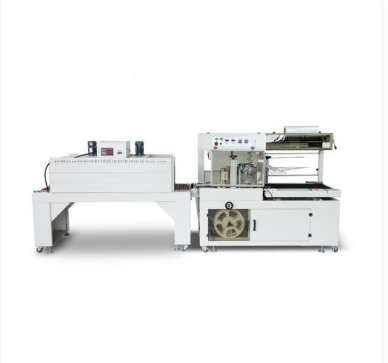

Industrial businesses often need to package products quickly while protecting them from dust, handling damage, and movement during transportation. An automatic wrapping machine can support these requirements by applying packaging materials in a controlled and repeatable process.
These machines are used in manufacturing plants, logistics facilities, warehouses, and distribution centers. Their design varies according to whether the task involves wrapping individual products, securing bundles, or stabilizing heavy pallet loads.
Understanding the role of wrapping equipment can help industrial businesses improve packaging operations and select machinery that fits their production environment.
Role in Industrial Production
Packaging is often one of the final stages before a product leaves the manufacturing area. If wrapping becomes a bottleneck, finished goods may accumulate while other parts of the production line continue operating.
An automatic wrapping machine can help reduce this problem by performing repetitive packaging tasks at a predictable rate. When connected to conveyors and other equipment, it can become part of a coordinated production system.
For example, a manufacturer producing boxed components may use an automatic pallet wrapper to secure completed pallets before they enter the warehouse. Another facility may use a flow wrapper to package individual products before labeling and carton packing.
The appropriate solution depends on the product and the purpose of the packaging.
Protecting Goods During Handling
Products can experience movement, vibration, and repeated handling between production and delivery. Suitable wrapping helps maintain package integrity and, in pallet applications, can reduce shifting when the wrapping pattern is designed correctly.
Stretch wrapping is particularly common for securing palletized cartons and other compatible loads. The film provides containment, but it should not be treated as a substitute for proper pallet stacking, suitable cartons, or other required load-securing measures.
For products requiring a barrier against dust or moisture, the packaging system must be designed for that purpose. Ordinary stretch film does not automatically provide a complete moisture barrier or waterproof protection.
Businesses should identify the risks their products face and select materials accordingly.
Integrating Equipment Into a Production Line
Successful automation depends on more than the wrapping machine itself. The equipment must work with the products arriving from upstream operations and the handling systems used afterward.
Important factors include conveyor height, product spacing, load dimensions, available floor space, and the movement of forklifts or pallet trucks. Electrical connections, compressed-air requirements, and access for maintenance should also be evaluated.
If products vary in size, the machine may need adjustable guides, programmable settings, or different handling arrangements. A line handling several product types should be tested with representative products before final installation.
Planning these details early can reduce installation delays and prevent expensive layout changes.
Productivity and Labor Planning
Automatic wrapping can reduce the amount of repetitive manual work involved in packaging. However, automation does not eliminate every labor requirement.
Employees may still need to load materials, inspect packages, clear approved faults, monitor output, and perform routine maintenance. Training helps operators understand the machine’s controls, limitations, and safety procedures.
Businesses should compare the complete packaging cycle rather than focusing only on the machine’s advertised speed. Product loading, film changes, changeovers, and downstream handling all affect actual output.
A realistic production assessment helps determine whether a particular machine can meet daily demand.
Maintenance for Reliable Operation
Industrial wrapping machines contain moving components that can wear over time. Depending on the design, maintenance may involve checking rollers, belts, bearings, sensors, film holders, cutting mechanisms, and drive systems.
A preventive maintenance schedule should follow the manufacturer’s instructions. Operators should report unusual noise, repeated film breaks, inconsistent wrapping, or unexpected stoppages instead of repeatedly restarting faulty equipment.
Before cleaning or servicing the machine, authorized staff should follow the specified isolation and lockout procedures. Moving parts and heat-based systems can create serious hazards if maintenance is performed without proper precautions.
Evaluating the Investment
The cost of an automatic wrapping machine depends on its capacity, automation level, wrapping technology, controls, and integration requirements.
A basic system may be sufficient for a smaller operation, while a high-volume plant may require automated loading, conveyors, and advanced controls. Businesses should consider installation, training, consumables, spare parts, and ongoing maintenance when estimating total ownership costs.
The most economical choice is not necessarily the machine with the lowest purchase price. Reliability, service availability, material consumption, and compatibility with existing operations also affect long-term value.
Conclusion
An automatic wrapping machine can support industrial packaging by improving process consistency, reducing repetitive handling, and helping prepare goods for storage or transportation. Careful integration, realistic capacity planning, and preventive maintenance allow businesses to make better use of the equipment and maintain a reliable packaging workflow.