

APIs power modern software. They connect services, transfer data, and drive every interaction in a distributed system. But networks are not perfect. Requests time out, connections drop, and clients retry. Without a thoughtful design strategy, these common scenarios can lead to duplicate transactions, corrupted data, and hard-to-debug failures. Idempotency is one of the most reliable tools engineers use to solve this problem.
What Is Idempotency in API Design?
Idempotency means that performing the same operation multiple times produces the same result as performing it once. In the context of HTTP APIs, a request is idempotent when repeated calls with the same input do not create unintended side effects beyond the first call.
For example, an HTTP GET request is naturally idempotent because fetching data does not change the server state. A DELETE request is also idempotent since deleting a resource that no longer exists still results in the resource being absent. However, POST requests are not idempotent by default, as each call can create a new resource. Designing POST endpoints to be idempotent requires additional server-side logic.
Why Idempotency Matters in Unreliable Networks
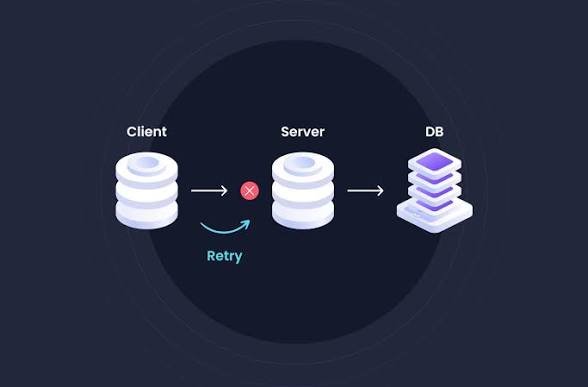
In production environments, network failures are not edge cases. They are routine. A client sends a payment request, the network drops before the server responds, and the client retries. Without idempotency, the server might process the payment twice.
This is especially critical for operations involving money, inventory, or any state-changing action. Duplicate writes can lead to financial losses, poor user experience, and compliance issues. Idempotent design prevents these outcomes by ensuring the server recognises and safely ignores duplicate requests.
The same concern applies to microservices communicating internally. A service might retry a failed call, triggering unintended duplicates downstream. Idempotent endpoints eliminate this risk at every level of the system.
How to Implement Idempotency: Key Techniques
Idempotency Keys
The most widely used pattern involves assigning each request a unique identifier, commonly called an idempotency key. The client generates this key (typically a UUID) and includes it in the request header. The server stores the result of the first request against this key. If the same key arrives again, the server returns the stored result without reprocessing.
This approach is used by payment platforms like Stripe and Braintree, where duplicate charges must be prevented at all costs.
Database-Level Constraints
Unique constraints at the database layer add another layer of protection. By enforcing uniqueness on fields like transaction IDs or order numbers, the database itself rejects duplicate inserts. This works well alongside idempotency keys but should not be the sole mechanism, since database errors require additional handling.
Conditional HTTP Methods
HTTP methods like PUT are designed to be idempotent. When you update a resource by its full representation using PUT, repeated calls with the same body produce the same state. Preferring PUT over POST for update operations aligns naturally with idempotent principles.
Idempotent Consumers in Event-Driven Systems
Message queues and event streams often deliver messages at least once, meaning duplicates are possible. Consumers must track which events have already been processed, typically by storing event IDs. Before acting on a new message, the consumer checks whether the ID has been seen before.
Idempotency and Full Stack Development
Understanding idempotency is not limited to backend or API specialists. Full stack developers work across both client and server layers, making them directly responsible for how requests are sent, retried, and handled. Building retry logic on the frontend without idempotent endpoints on the backend is a recipe for bugs.
Developers looking to build production-ready systems benefit from structured learning. Enrolling in a full stack developer course in hyderabad can help you understand both the frontend and backend aspects of API design, including concepts like idempotency, error handling, and distributed systems thinking.
Conclusion
Idempotent API design is a foundational practice for building reliable systems. By handling duplicate requests gracefully, you protect data integrity and improve user trust. Techniques such as idempotency keys, database constraints, and careful use of HTTP methods provide practical tools for implementing this principle.
As distributed systems become the norm, understanding idempotency becomes a core skill. Whether you are building payment flows, managing inventory, or designing microservices, idempotent APIs ensure your system behaves correctly even when the network does not. For developers looking to deepen this knowledge end-to-end, a full stack developer course in hyderabad offers structured exposure to these real-world engineering patterns.