
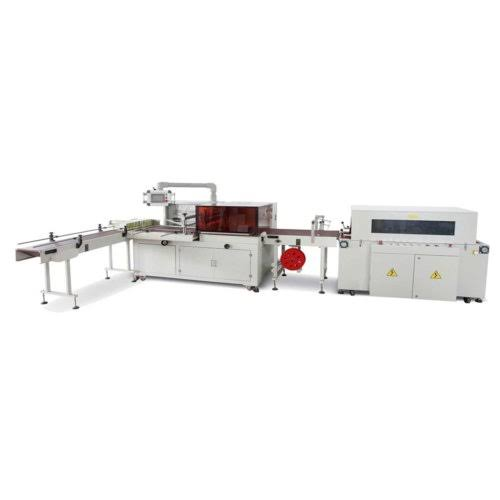

In the competitive world of consumer goods, where product appearance and protection are equally important to success, the shrink wrapping machine has emerged as the finishing touch that transforms ordinary products into professionally packaged items ready for retail display. This versatile equipment applies a transparent film that conforms tightly to the contours of any product, creating a secure, tamper-evident package that protects against dust, moisture, and damage while enhancing visual appeal. The shrink wrapping machine is the workhorse of countless packaging operations, serving industries ranging from food and beverages to pharmaceuticals, electronics, publishing, and consumer goods, because it offers an unmatched combination of protection, presentation, and cost-effectiveness. The industry that designs and manufactures these machines has evolved significantly, with suppliers developing increasingly sophisticated solutions that incorporate advanced automation, precise temperature control, and intelligent monitoring systems to meet the demanding requirements of modern production environments. The global market for shrink wrapping machines continues to expand, driven by the growth of consumer goods production, the rise of e-commerce, and the increasing emphasis on product presentation and tamper evidence. Understanding the types, technologies, and operational best practices of shrink wrapping machines is essential for packaging professionals, production managers, and business owners who recognize that packaging quality directly impacts brand perception, product integrity, and customer satisfaction.
The Different Types of Shrink Wrapping Machines
The shrink wrapping machine market offers a diverse range of types and configurations, each designed to meet the specific needs of different products, production volumes, and packaging requirements, and understanding this diversity is essential to selecting the right equipment for any application. The L-bar sealer is one of the most common and versatile types, featuring an L-shaped sealing bar that simultaneously seals the leading and trailing edges of the film around the product, and these machines are available in manual, semi-automatic, and fully automatic configurations to suit different production volumes and operator skill levels. The side-seal or continuous motion shrink wrapping machine is designed for higher production speeds and longer products, using a continuous sealing system that removes product length limits, enabling the packaging of items up to several meters in length while maintaining a continuous workflow and high productivity. The form-fill-seal shrink wrapping machine creates the package from a roll of film, filling and sealing it in a single continuous operation, and these machines are available in both vertical and horizontal configurations to accommodate different product types and packaging formats. The chamber shrink wrapping machine is designed for industrial applications, featuring a sealed heating chamber that provides even heat distribution and precise temperature control, making them ideal for heavy-duty packaging of large, bulky, or irregularly shaped products. The automatic shrink wrapping machine incorporates advanced automation features, including product feeding, film application, sealing, shrinking, and cooling in a single, fully integrated system that minimizes operator intervention and maximizes throughput. The selection of the appropriate shrink wrapping machine depends on careful analysis of the product characteristics, production volume, available floor space, and budget, and working with experienced equipment suppliers is essential to ensuring that the chosen solution meets the specific needs of the application.
The Critical Role of Film Selection and Sealing Technology
The performance and appearance of shrink wrapping depend significantly on the choice of film and the quality of the sealing technology employed, and these factors are essential considerations in the selection and operation of any shrink wrapping machine. The polyolefin shrink film is the most widely used material in modern shrink wrapping, valued for its clarity, strength, and versatility, and it is compatible with a wide range of products and sealing systems, from L-bar sealers to continuous motion machines. The PVC shrink film is another common option, offering good clarity and shrinkage properties at a lower cost, but it has environmental concerns and is being phased out in many applications in favor of more sustainable alternatives. The polyethylene shrink film is heavier and more durable than polyolefin or PVC, making it ideal for industrial applications and heavy-duty packaging where extra protection is required. The sealing system of the shrink wrapping machine is equally important, with options including impulse sealing, which uses a brief pulse of electrical current to heat the sealing wire, and hot bar sealing, which uses continuous heat to create a strong, durable seal. The quality of the seal directly impacts the integrity and appearance of the finished package, because a weak or inconsistent seal can lead to film failure, product contamination, and customer dissatisfaction. The perforation system is another important feature of many shrink wrapping machines, creating tiny holes in the film that allow air to escape during the shrinking process, preventing bubbles and ensuring a tight, smooth finish on the final package. The selection of the appropriate film and sealing technology requires careful consideration of the product characteristics, the desired packaging appearance, the required protection level, and the available budget, and the guidance of experienced suppliers is essential to making the right choices.
The Heat Tunnel Technology for Consistent Shrinkage
The heat tunnel is an essential component of any shrink wrapping system, providing the controlled heat that causes the film to shrink tightly around the product, and the design and operation of this tunnel are critical to achieving professional, consistent results. The heat tunnel uses a combination of heating elements, fans, and temperature controls to create a carefully regulated environment where the film is exposed to the optimal temperature and air flow for the specific film type and product being packaged. The temperature profile within the tunnel must be carefully controlled, because excessive heat can damage the product or cause the film to burn or distort, while insufficient heat can result in incomplete shrinking and a loose, unattractive package. The conveyor system within the heat tunnel transports the wrapped product through the heating zone at a controlled speed, and the speed must be precisely matched to the temperature and the requirements of the film to achieve the desired shrinkage effect. The air circulation system is another critical element, ensuring that heat is distributed evenly throughout the tunnel and that all surfaces of the package are exposed to the same temperature, preventing uneven shrinkage and ensuring a consistent, professional appearance. The cooling zone at the exit of the heat tunnel allows the film to set and harden, locking in the tight, glossy finish that characterizes high-quality shrink wrapping. The energy efficiency of the heat tunnel is an important consideration in the design of modern shrink wrapping machines, with advanced insulation, efficient heating elements, and intelligent control systems that minimize power consumption while maintaining optimal performance. The integration of the heat tunnel with the sealing machine is essential to achieving a seamless, efficient packaging operation, because any mismatch in speed or coordination between these components can lead to bottlenecks, waste, and reduced productivity.
The Advancements in Automation and Control Systems
The modern shrink wrapping machine has benefited enormously from advances in automation and control systems, enabling levels of speed, precision, and flexibility that were previously unattainable and transforming the capabilities of packaging operations across industries. The integration of servo motor technology has dramatically improved the speed, accuracy, and reliability of shrink wrapping machines, with servo-controlled systems providing precise control over film feeding, sealing, and cutting operations that result in consistent, high-quality packages. The use of programmable logic controllers and touch screen interfaces has made shrink wrapping machines more user-friendly and easier to operate, with intuitive controls that allow operators to set up, monitor, and adjust the machine quickly and easily, reducing training requirements and improving productivity. The capability to store and recall operating parameters for hundreds of different products enables rapid changeover between different products and package formats, reducing downtime and improving the flexibility of the packaging operation. The integration of sensors and inspection systems provides real-time monitoring of critical parameters such as film tension, sealing temperature, and package quality, enabling immediate detection and correction of issues that could affect product quality. The implementation of predictive maintenance algorithms, using data from machine sensors to identify potential issues before they cause failures, is reducing downtime and extending equipment life. The future of shrink wrapping technology is one of increasing automation, connectivity, and intelligence, with machines that are capable of learning, adapting, and optimizing their own performance to deliver the highest levels of efficiency and quality. The companies that embrace these technological advances will be well-positioned to meet the growing demands of the packaging industry and to deliver the superior products and service that customers expect.