
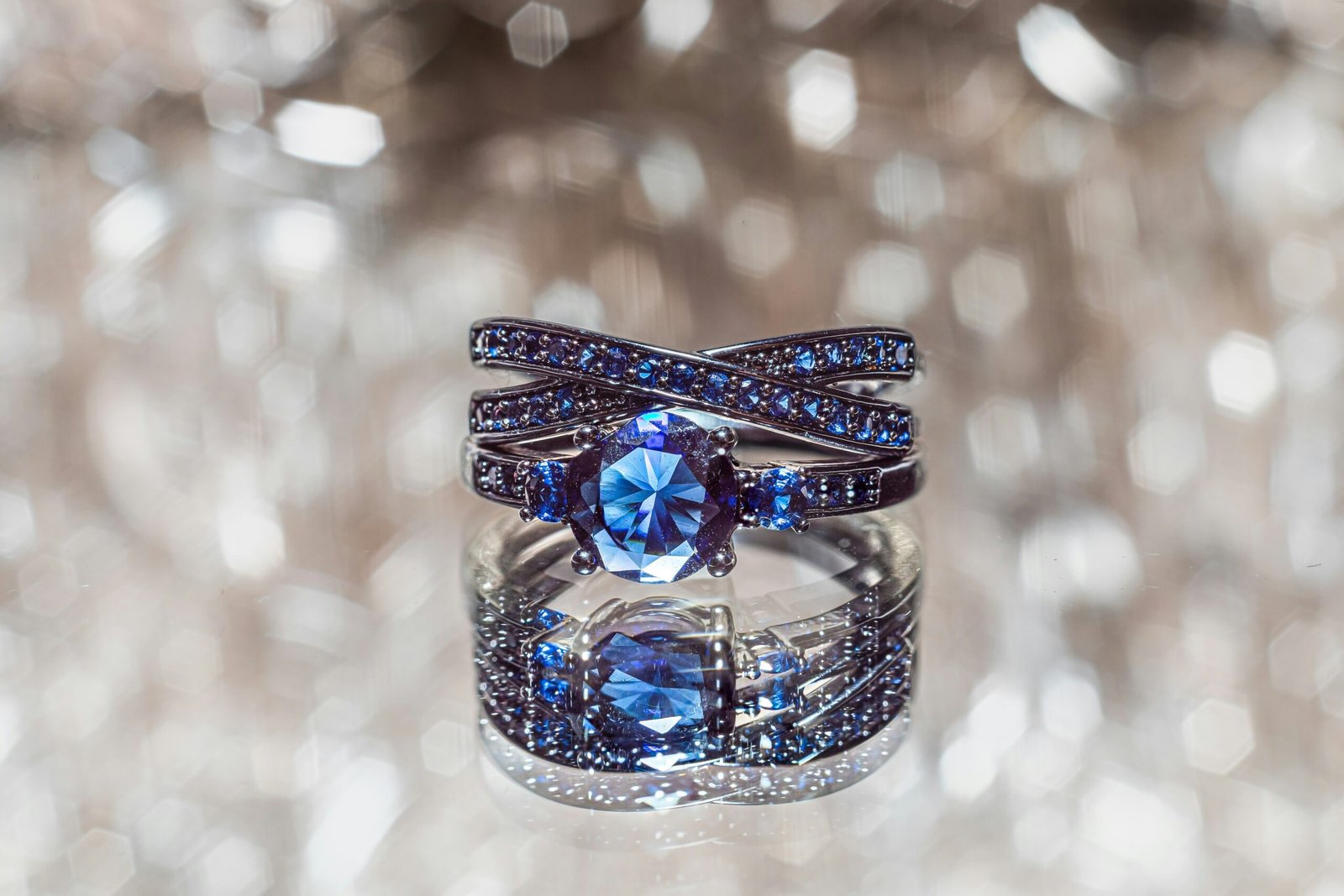

Black diamonds are the odd ones out in the diamond world. Everything you have heard about diamonds, from brilliance to fire to the four Cs, applies to them only loosely. They do not sparkle. They do not throw rainbows. What they do is absorb light and sit on the hand like a piece of polished night sky, and that is exactly why people want them.
Why they are black
A colorless diamond is a single, clean crystal. A natural black diamond is a diamond shot through with so many dark inclusions, mostly graphite and other minerals, that light cannot pass through. Instead of bouncing around inside the stone and coming back out as sparkle, the light is absorbed. The result is an opaque stone with a glassy, metallic surface shine rather than internal fire.
Most black diamonds on the market today started out as heavily included grey or near-colorless diamonds and were treated, usually with heat or irradiation, to turn them a uniform black. This is normal and accepted in the trade, and treated stones are far more affordable than untreated ones. Natural, untreated black diamonds exist but are rare and command a premium. Any honest seller will tell you which one you are looking at.
They are still diamonds
Whatever the color, a black diamond is a 10 on the Mohs hardness scale, the same as any other diamond. It will not scratch, it will not cloud, and it will outlast the setting it is in. That said, the many inclusions that make the stone black can also make it more brittle than a clean white diamond, so a good cutter avoids sharp corners and a good setter uses a bezel or sturdy prongs. Ask about this if you are buying a large stone for a ring you will wear every day.
How to judge quality
Since there is no brilliance to grade, the usual clarity and color scales do not really apply. What matters instead is a consistent, even black with no visible grey patches, a smooth surface with no pits or fractures breaking through, and a clean, symmetrical cut. Hold the stone under a bright light and look for any dull spots or surface cracks. A well-cut black diamond should look almost like polished hematite, with a sharp, mirror-like reflection off each facet.
Price
Treated black diamonds cost a fraction of what a white diamond of the same size would. You can get a two-carat black diamond for what a modest half-carat colorless stone might cost. That gap is a big part of the appeal for people who want size and presence without the price. Natural untreated black diamonds are a different conversation and are priced closer to colored diamonds.
If you want to see how that plays out in real pieces, the Black Diamond Jewelry collection at TrueSanity shows the cost of every piece alongside the price, which takes a lot of the guesswork out of comparing black diamonds against the colorless kind.
How to wear them
Black diamonds pair naturally with white gold and platinum, where the contrast is sharp and modern. In yellow or rose gold they take on a warmer, more vintage feel. They work well as a solitaire, as a halo around a white diamond, or as accents in a band. Men’s rings and cufflinks are an obvious fit, but black diamond engagement rings have become a steady category of their own for people who want something that does not look like everyone else’s.
Care
Treat them like any diamond. Warm soapy water and a soft brush will handle most dirt. Ultrasonic cleaners are usually fine for untreated stones but can be risky for heavily fractured or treated ones, so when in doubt, skip the machine. Store them separately from softer gems, since a diamond will scratch anything it touches.
Black diamonds are not for everyone, and that is the point. They offer the hardness and heritage of a diamond with a look that nothing else in the jewelry box can match.