
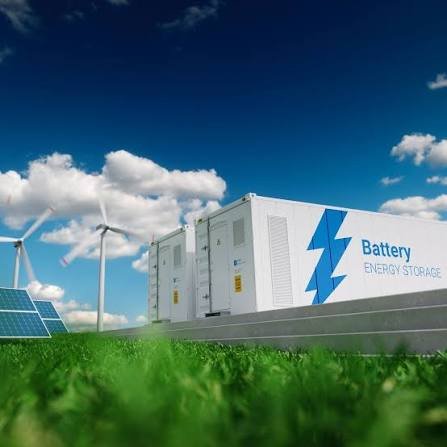

Every business owner has felt it — that moment of opening a monthly electricity bill and wondering why the number keeps going up even though nothing changed on the shop floor. The truth is, most of that increase has little to do with how much energy you use and everything to do with when you use it. A Commercial Energy Storage System is how a growing number of businesses are flipping that equation, turning what used to be a fixed cost into something they can actually manage.
The Real Problem: It’s Not Usage, It’s Timing
Utility pricing for businesses is rarely flat. Two costs quietly drive most commercial bills up:
- Demand charges — a fee based on the single highest spike in power draw during the month, even if it lasts only a few minutes.
- Time-of-use rates — higher prices during certain hours, often late afternoon and early evening, when grid demand peaks.
A commercial energy storage system attacks both problems directly. By charging batteries during cheap, low-demand hours and discharging during expensive peaks, a facility can flatten its demand curve and dodge the priciest hours entirely — without changing a single operational habit.
Case in Point: Where the Savings Actually Show Up
Consider a mid-sized warehouse running conveyor systems, refrigeration, and forklifts on charge. Its highest demand spike typically happens for a short window each afternoon when everything runs at once. Without storage, that spike sets the demand charge for the entire month. With a battery system sized to cover that window, the spike gets absorbed by stored energy instead of pulled from the grid — often cutting demand charges by 20–40%, depending on load profile and local rate structure.
The same logic applies to a restaurant chain running walk-in coolers around the clock, a hospital protecting sensitive equipment, or an office tower running HVAC through a heatwave. The load looks different in every case, but the storage strategy — shave the peak, shift the timing — stays the same.
What Makes a System “Commercial Grade”
Not every battery can do this job well. Systems built for business use typically share a few traits:
Higher continuous output. Commercial loads draw power steadily and sometimes in large bursts, so systems need higher continuous discharge ratings than a residential unit would ever require.
Container or rack-based scaling. Many commercial installations start as indoor rack-mounted cabinets and later expand into outdoor containerized units as capacity needs grow into the hundreds of kilowatt-hours.
Integrated safety systems. Multi-layer fire suppression, gas detection, and automatic disconnect features are standard, since the stakes of a fault are higher at commercial scale.
Grid interaction features. Many systems support demand response programs, allowing a business to earn credits by discharging stored power back to the grid during regional demand events.
Calculating Whether It’s Worth It
The financial case for a commercial energy storage system usually comes down to a fairly simple payback calculation:
- Pull 12 months of utility bills and identify the demand charge and time-of-use portions separately.
- Estimate the percentage of that peak cost a battery system could realistically offset based on your load pattern.
- Compare the annual savings against the installed cost of the system, including any available incentives or tax credits.
Payback periods vary widely by region and rate structure, but many commercial installations recover their cost within three to seven years, with 10+ years of useful battery life remaining afterward.
Beyond Cost Savings: Operational Resilience
Cost isn’t the only driver. A growing number of businesses install storage purely for continuity — protecting servers, production lines, or refrigerated inventory from outages that could otherwise cost far more than a month’s electricity bill. In areas with frequent grid instability or wildfire-related shutoffs, battery backup has shifted from a nice-to-have to a basic requirement for staying operational.
A Note on Scale: Home Energy Storage System vs. Commercial
It’s worth clarifying where commercial systems sit relative to smaller setups. A Home Energy Storage System is designed for a single household, typically topping out around 30 kWh — enough for essential backup and daily solar use. Commercial systems are built from the ground up for scale, routinely reaching hundreds of kilowatt-hours through modular expansion, with the industrial cooling, monitoring, and safety infrastructure needed to support continuous business operations. The underlying battery chemistry is often similar; the engineering around it is not.
Getting Started
Businesses considering a commercial energy storage system don’t need to commit to a full-scale installation right away. Many suppliers offer modular systems that can start small — covering a single peak-demand window — and expand in stages as the return on investment becomes clear. The key is starting with accurate load data, since that’s what determines whether a system pays for itself in three years or seven.
Final Thoughts
Energy storage has moved past the pilot-project phase and into standard business planning, right alongside insurance and equipment maintenance. A well-sized commercial energy storage system doesn’t just cut costs — it gives a business predictability in an area that used to feel entirely out of its control.