
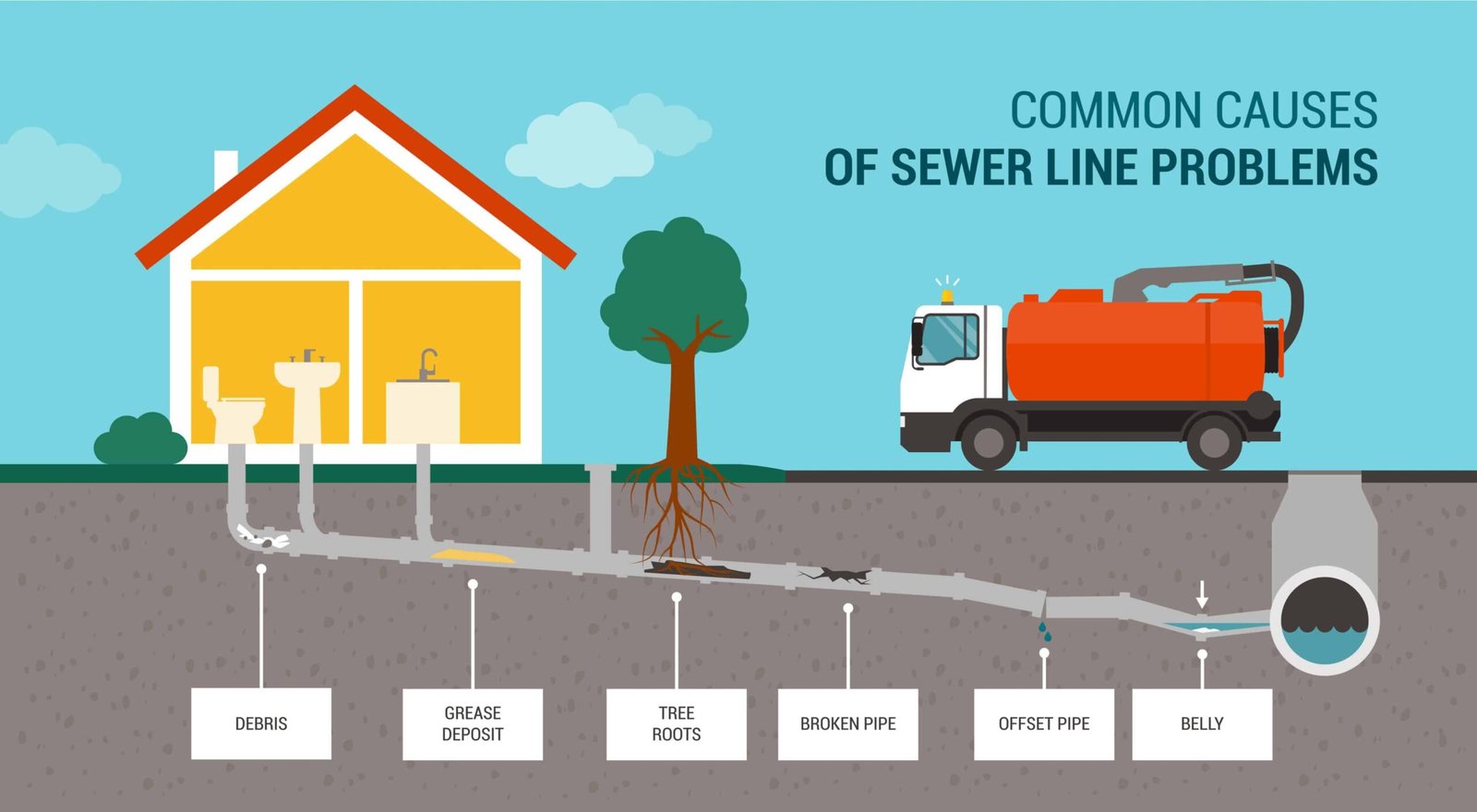

It usually starts on a gray Lacey morning. You flush an upstairs toilet, and the shower drain in the hall bath gurgles back at you. Run the kitchen sink, and the laundry standpipe burps up gray water. That is not one stubborn clog in one fixture. When every drain in a 1980s split-level acts up at once, the trouble sits downstream of them all, in the buried main line running the whole house out to the sewer or tank. That is the point where main line service lacey wa crews get the call, because a plunger and a bottle of drain gel will not reach it.
One Clog Everywhere Points Past A Single Drain
The tell here is actually pretty simple. A single clog is local, so one fixture backs up while the rest of the house drains fine. A main line problem is democratic, and it hits every drain sitting above the blockage, usually the lowest ones first. On a wooded half-acre, the villain is often tree roots. Mature firs push fine roots toward the tiny leaks at an old pipe joint, and once inside they fan out and catch every wipe and coffee ground that floats past. When the ground dries out, that hunt gets worse. A March 2026 study in the Journal of Hydrology analyzed 1,510 monitoring wells and found groundwater conditions swing sharply by region across the West. So the dry-season pull on roots is not the same from one block to the next.
The age of the system matters too. Washington State University’s Shore Stewards program puts a septic system’s designed life at 20 to 30 years and pins most early failures on skipped maintenance rather than the calendar. Plenty of split-levels out here still run to a tank, and the buried line to that tank fails the same way a city sewer lateral does. The case we see most often is a homeowner who blames one slow drain for the better part of a year, right up until the whole system backs up over a holiday weekend.
Ask A Main Line Pro These Questions First
Before you hand over a credit card, slow down and interview the plumber the way you would any contractor working on the house. Good main line service lacey wa outfits expect these questions and answer them in plain numbers, not vague reassurance. A camera in the pipe should come before any real quote, because nobody can price a repair they have not actually seen.
- Will you run a camera down the main line before you quote, and will you show me the footage? A good answer is yes, with a recording I get to keep.
- Is the blockage roots, grease, or a collapsed section of pipe? A straight answer names the cause and how far it sits in feet from the cleanout.
- Can you hydro jet this line, or does the pipe condition rule that out? A good answer ties the method to what the camera actually showed.
- If the pipe is broken, do you offer a trenchless repair that spares the yard? A good answer explains pipe bursting or lining and when each one fits.
- What is the flat rate, and what could change it once you are in the ground? A good answer gives a number and names the few real variables.
Notice what those answers have in common. Each one turns a guess into a measurement, which is the whole reason to hire a pro over renting a drum snake from the hardware store. On a half-acre lot with 40-year-old pipe under mature firs, guessing is the expensive option.
A Proper Diagnosis Beats Repeat Snaking
Paying once for a real diagnosis costs less than paying a rooter to snake the same line every spring. A couple who moved into a split-level near Long Lake called three springs running for the same backup. Each time they handed over cash for a quick snaking. The fourth call finally put a camera in the line and turned up a fir root the size of a wrist at the property edge.
Root intrusion is not purely a plumbing headache either. The same firs that shade the deck and drop needles in the gutters are the ones prying open your pipe joints below grade, which is a strange thing to resent about a beautiful tree. Back to the pipe, though. Once roots take hold, snaking only trims them, and they grow back by the next wet season, so the fix has to reach the pipe itself.
Treat the buried infrastructure like the rest of your water system, on a schedule rather than in a panic. The National Ground Water Association recommends a private well get a professional evaluation once a year, including a flow test and a check of the pump’s amp load and pressure switch. That same once-a-year discipline keeps a sewer or septic main from surprising you. Many of these wooded lots run on a well and a tank both.
So tell the two apart before you spend a dollar. One backed-up fixture is a clog you can often clear yourself with a plunger and some patience. Every drain gurgling at once is a main line problem. It wants a camera, a clear diagnosis, and the right repair the first time, not another season of temporary snaking.