


The septic system under a desert campus does its hardest work on the days nobody is thinking about it. On a Monday in Indio, first week back, 200 students and staff hit the same restrooms between the same two bells, and an older tank feels every gallon of it. That surge is the reason a growing school wants a steady septic tank service indio ca already on the calendar, booked ahead of the load rather than dialed up the morning the drains back up. These are field notes for facilities managers, and the argument is simple: a set pumping and inspection schedule keeps a growing campus ahead of its own enrollment.
Rising Enrollment Quietly Overloads An Older Drainfield
A septic tank is sized for a household, not a campus that keeps adding sections. The EPA recommends pumping a typical household tank every 3 to 5 years and inspecting the average system at least every 3 years, and that guidance assumes a fairly steady number of people on the drainfield (and yes, the budget meeting always underestimates this). A 200-student desert campus in Indio pushes far more daily flow through the tank than the two-family load these systems were designed around. Add fifty students to the same tank and that timeline compresses fast. The solids layer builds quicker, the liquid level rides higher, and the field takes on more than it was ever sized to absorb. On a tight facilities budget the temptation is to stretch the interval another season, and that is precisely how a working system gets starved of the maintenance it needs.
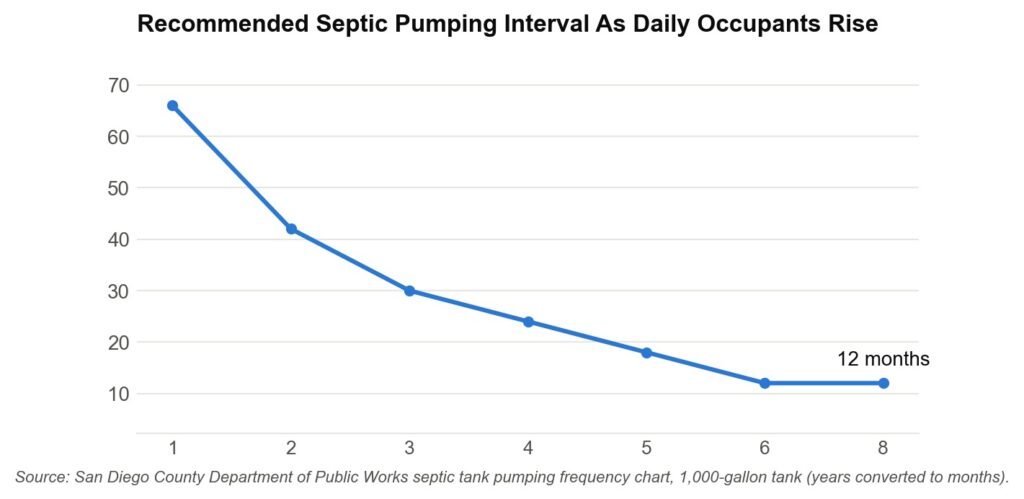
Skipped Pumping Turns Into Peak-Day Backups
Skip a cycle and nothing looks wrong for months. That is the trap, because the tank keeps swallowing daily flow right up until a peak day pushes it past the point where solids can settle, and then the lowest fixtures on campus hand it all back. The case we see most often is a first-floor restroom near the cafeteria gurgling on an assembly morning, not a dramatic failure, just slow drains and a smell that spreads by lunch. By the time a backup is obvious to a teacher, the tank has usually been overfull for weeks. A second septic tank service Indio CA visit each year usually catches that trend before the assembly morning arrives, which is the entire reason an inspection belongs on the same schedule as the pumping.
That drainfield was on borrowed time long before anyone smelled it.
If your enrollment climbed more than a quarter since the tank went in, move to the tighter end of the pumping window and stop guessing. Below that, the standard interval usually holds, as long as someone actually writes the date down. Grease is the other variable a school controls more than a house does, because a cafeteria sends fats and food scraps down the same line every single day. That buildup coats the tank walls and the drainfield lines, and in practice it is what quietly turns a comfortable three-year interval into a two-year one. Desert heat only compounds the problem, since a drainfield that runs warm tends to harden and dry where it should stay porous and draining.
A Set Pumping Schedule Protects The Campus
Seasonal spikes are real, and the calendar proves it. In a November 2025 report, Roto-Rooter measured a 50 percent jump in service calls the day after Thanksgiving, the single busiest plumbing day of the year, driven by grease and food scraps washed down kitchen drains. A campus kitchen sends that same load down the drain every school day, not once a year. Thanksgiving is simply the loud version of a pattern a growing school lives quietly through every single lunch service. A schedule matched to the building’s real headcount absorbs those peaks instead of meeting them by surprise.
Before you lock a provider into a schedule, the plan is only as strong as the questions you ask up front. You want a company that ties the interval to your actual tank size and headcount, not a generic yearly reminder. A few are worth raising on the first call.
- How big is our tank, and what pumping interval does that size call for at our current headcount? A solid answer cites gallons and a month range, not a vague once a year.
- Will you inspect the drainfield and baffles at each visit, or only pump the tank? The right answer includes the inspection, since that is where early failure first shows.
- What does the interval become if enrollment grows by another fifty students? You want a provider who adjusts the schedule to load, not one who repeats the same date.
- Do you document sludge depth each visit so we can see the trend over time? A yes means you can move the schedule based on real readings rather than guesswork.
A growing desert school cannot treat septic pumping as an emergency line item. The math is not complicated: rising headcount plus a fixed tank equals a shorter safe interval, and a set schedule is what keeps the restrooms open on the exact days the campus is fullest. A pumping and inspection plan built to the building costs a fraction of an emergency callout, a closed wing, or a drainfield replacement that runs into five figures. Book the pumping and inspection to your building’s real load, write the next date on the calendar before you leave the last one, and those peak days stop being a surprise. That is the whole difference between a schedule you control and a backup you clean up.