
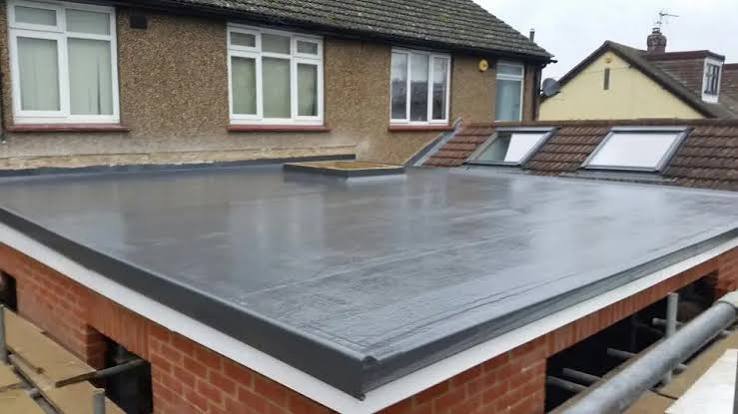

A 1990s school building with roughly 30,000 square feet of flat EPDM almost always springs its first real leak the week the snow starts melting off the parapet. The freeze-thaw cycle does to old rubber exactly what you would expect, and the ceiling over the classrooms is where it shows first. That is why facilities directors around here end up calling commercial roofing companies charlevoix mi in April, a bucket in one hand and a work order in the other. A phased low-slope reroof planned around the school calendar beats an emergency teardown in October, and it costs far less grief.
Spring Thaw Finds Every Weak Seam First
Water finds the tired seams before it finds anything else. On a mechanically fastened EPDM roof past twenty winters, the membrane has gone stiff. The case we see most often is a split at a lap seam that used to flex with the deck. Cold makes the rubber brittle, meltwater pools in the low spots, and every night it refreezes and pries that seam a little wider. By the time it drips onto a smartboard, the failure started months back. You can pull the local freeze-thaw dates off NOAA’s free Local Climatological Data portal and line them up against your first leak reports. Roofers who have walked these buildings will tell you the membrane was on borrowed time long before the first bucket came out. Professional Roofing reported in February 2026 that in a 2025 survey of nearly 600 professionals, 42 percent predicted a 25 to 29 year service life for 60-mil mechanically fastened EPDM. A roof failing hard at year twenty-two is aging faster than the trade expects.
What A Phased Reroof Timeline Looks Like
A phased job replaces the roof in sections instead of tearing it all off at once, which matters when kids and computers sit directly underneath. The reason the old membrane has to come off is not complicated once you see the chemistry. As EPDM thermally ages it hardens and gives up its stretch, and that stiffening is what a leaking seam is really telling you. A peer-reviewed study in Polymers measured the membrane’s surface contact angle falling from 104.0 to 91.5 degrees over 336 hours at 120 degrees C. Tensile strength and hardness climbed in the same test while elongation at break dropped. The rubber that used to move with the building has simply stopped moving.
Here is how the schedule tends to run on a 30,000 square foot roof. In the first week the crew tears off and dries in the opening section, so nothing is left open to a forecast overnight. By the end of the first month, two or three sections are watertight and the phasing rhythm is obvious to anyone on the deck. Within 90 days the whole system is closed up, flashed, and inspected before winter loads it again. A landlord I know swore his barn roof outlasted his house roof for years. It turned out he just reroofed the barn in phases and never let a section sit open. Same idea holds on a school building.
Plan The Work Around The School Calendar
The calendar decides more than the weather does on a school reroof. That stretch between the last bell in June and the first day back in late August is when a low-slope replacement should happen. If the roof is already leaking in April, stabilize the worst seams, get the building through finals, and book the phased tear-off for summer. When a district compares the commercial roofing companies Charlevoix MI has within a reasonable drive, the crew worth hiring phases the work around the academic calendar and warranties its own workmanship. Ask for a written schedule tied to your building-use dates and a workmanship warranty spelled out in the contract. A roof over a classroom is a bad place to learn a crew cuts corners in August. Close it up before the next thaw, and the spring bucket brigade retires for good.