
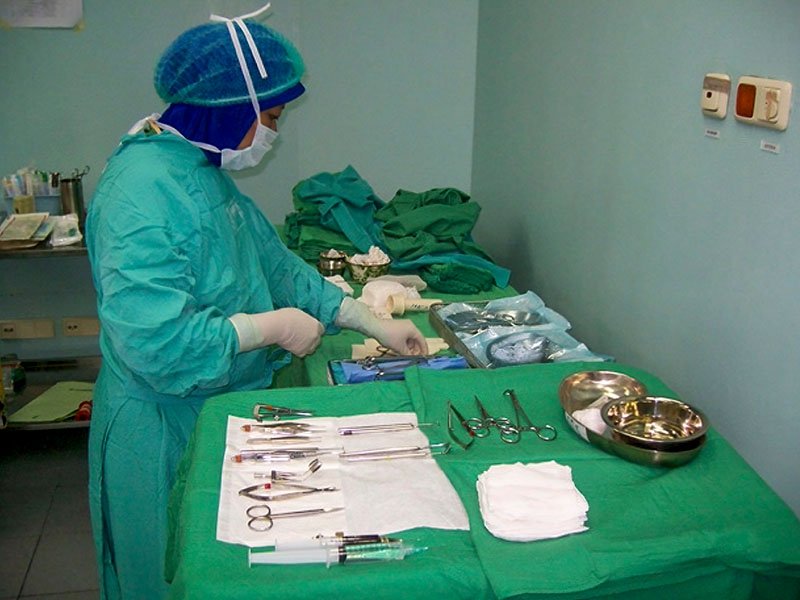

Three new scrub techs start the same month at a two-room surgical center, and cataract season is six weeks out. None of them has initialized a phaco console for a live case. The console does not care that they are new. A busy ambulatory site in the Midwest can run twenty cataract procedures before lunch, so there is no slow week to hide a rough first attempt. The fix is to close that gap before the first patient, and a customized phaco equipment training program does exactly that, walking each tech through setup, preference cards, and troubleshooting on the real equipment. Structured instruction on the real machine beats letting three people learn on live patients, and it costs far less than the first complication a fumbled setup can cause.
Verify Console Setup Before Anyone Scrubs In
Start where the case starts, at power-on. The morning checklist is not glamorous, but the case we see most often is a new tech who can run the console beautifully until an occlusion alarm fires, then freezes. So the first thing to drill is initialization: load the correct pack, prime the fluidics, seat the tubing, run the test chamber, and confirm the foot pedal responds in all three positions before a patient is anywhere near the room.
Here is a simple rule worth posting right by the console. If a tech has never touched your console model, do not let a live case be their first run on it. If they have logged real hours on that exact system, one supervised morning is usually enough.
- Will the training run on our exact console model, or on a generic loaner unit? A good answer names the Centurion or Constellation you actually own.
- How many supervised live cases does each tech get before working solo? A good answer gives a real number, not vague reassurance.
- Do you leave printed setup sheets and preference cards behind after the trainer goes? A good answer includes on-demand refreshers staff can rewatch.
- Who picks up the phone when the console throws an alarm mid-case? A good answer names a support line with real hours.
Confirm Surgeon Preference Cards Load Correctly
A preference card is the surgeon’s exact recipe: bottle height, vacuum limits, phaco power, and torsional settings. Load it wrong and the surgeon feels it on the very first pedal press. About 9 in 10 people who have cataract surgery come out seeing better, reports the National Eye Institute, which is exactly why a card set to the wrong profile is not a small clerical slip.
New techs tend to load the last surgeon’s card, or the default, because they are moving fast. In practice this usually means the wrong vacuum ceiling on a dense nucleus, which is the moment a routine case turns difficult. Walk each one through pulling up the right surgeon, confirming the settings out loud, and saving a verified copy before the patient is in the room.
How Long Does It Take To Train A New Scrub Tech On A Phaco Console?
It depends on prior experience, but plan on a focused block rather than a quick huddle in the hallway. A tech who has run the same platform elsewhere can be case-ready in a day or two of supervised work. Someone brand new to phaco should get several sessions across setup, preference cards, and troubleshooting before a live morning, because the failure modes are what separate a smooth case from a scary one.
Can We Train Staff Without Pulling Everyone Off The Schedule?
Yes, and most two-room centers have to. On-demand and remote sessions let techs learn initialization and card handling between cases or on a lighter day. A live in-person visit then covers the hands-on troubleshooting that video alone cannot teach, so the surgical schedule keeps moving while the new team ramps up.
Structured Instruction Beats Learning On Live Patients
Volume is only going one direction. Medicare is moving to scrap its inpatient-only list of roughly 1,700 procedures, according to STAT News, which steers even more surgery into ASCs and outpatient suites. The 2026 ASC conversion factor also rose to $56.322, a 2.6% update the American Society of Cataract and Refractive Surgery posted in November 2025, so nobody is getting a quieter schedule to train on.
A lot of what goes wrong with new hires, honestly, has little to do with the machine; it is whether they slept before a dawn start. But that is a scheduling headache, not a training one, and the console is the part you can actually control. A structured phaco equipment training program gives three new techs that footing in days rather than months. So verify the setup, confirm the cards, and rehearse the failure modes before the patient is on the table.