
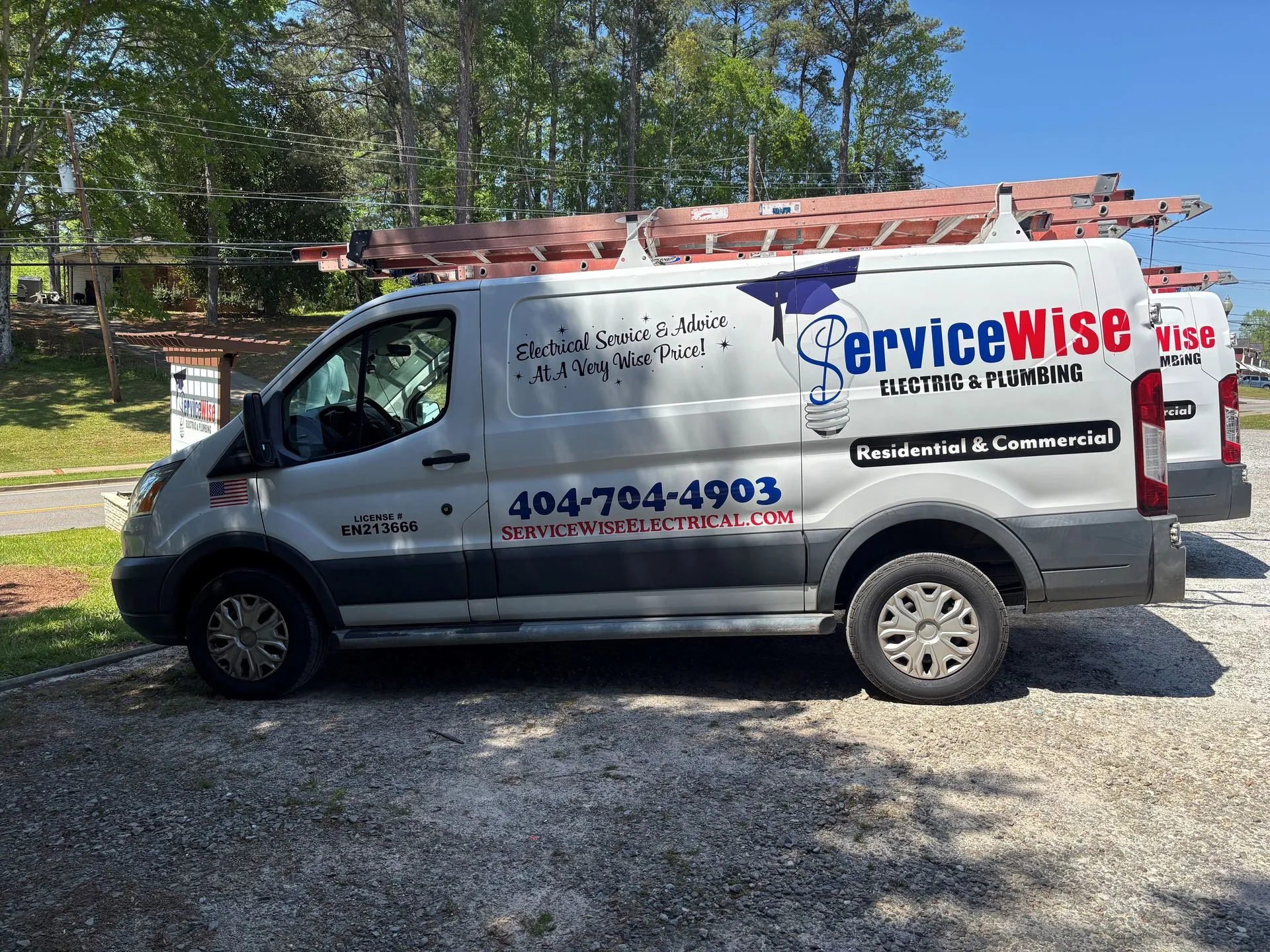

Old panels do not warn you. Old panels do not care that you just financed an EV, which is the exact week most people start looking for an electrical company acworth ga homeowners actually recommend. Here is the part buyers get backwards. The charger you choose barely matters. The company that wires it decides whether your 1990s house stays safe and code-legal or quietly starts running hot behind the drywall. This is a buyers guide for that decision, aimed at anyone stacking a new heavy circuit onto a panel that was sized for a smaller life.
Old Panels Choke on New Loads
A 100-amp panel ran a 1990s Acworth home just fine for thirty years. Lights, a couple of ACs, a dryer, the EV Chargerusual. Then the family adds a Level 2 charger pulling 40 amps and a home office humming all day, and the math stops working. Breakers trip. The service feels warm. Sometimes nothing dramatic happens at all, which is the trap, because that panel was living on borrowed time and no one could see it. The failure we see most often is not the dramatic one, it is the slow one nobody notices until an inspection or a burning smell forces the issue. Demand is not slowing down either. In a January 2026 report, Mordor Intelligence projected the US residential EV charger market climbing from $9.68 billion in 2025 to $12.23 billion in 2026, a 26.35% annual clip on the way to $39.4 billion by 2031. Every one of those chargers lands on somebody’s panel. Most of those panels were never designed for a car that pulls as much power as the rest of the house combined.
A Real Load Calculation Comes First
Before anyone quotes you a price, they should run a load calculation. Not a guess. A real one that adds up your existing demand plus the new circuits against the panel’s rated capacity, then shows you the number in writing. A good electrical company acworth ga homeowners trust will not skip it, because if the total pushes past what a 100-amp service can carry, you are looking at a service upgrade to 200 amps, and on a house this age that is often the right call regardless. Skip the calculation and you get a charger bolted onto a panel with no headroom, which is how you land right back where you started.
The calculation is boring. It is also the one step that separates a real pro from someone selling you a same-day install.
Questions Worth Asking Before You Hire
The right questions surface the difference fast. You are not just buying a charger install, you are buying judgment, and judgment shows up in how someone answers a direct question. Ask about the panel, the permit, and the warranty, and pay attention to whether the answers are specific. Ask, too, whether the same crew handles plumbing, because a home services relationship rarely stays in one lane. A 2025 study in the Journal of Xenobiotics detected PFOA in nearly 100% of tap water samples at a mean of 8.95 ng/L, higher than bottled water, and the whole-home filtration many families now add is one more circuit somebody has to size and wire correctly.
- Will you pull the permit, or is that on me? A straight answer names the permit and says who files it.
- What panel size are you specifying, and why that one? Good answers cite the calculated load, not a round number.
- Is the EV circuit dedicated, and at what amperage? You want to hear 240 volts and a specific breaker size.
- Do you handle plumbing and water treatment too? One contractor for both saves you a second vetting cycle.
- What does the warranty cover, parts and labor or only parts?
Licensing and Permits Separate Pros From Risk
A license is not paperwork for its own sake. It means someone has proven they know the code that keeps 240-volt circuits from starting fires, and it means the work gets inspected by a county official who does not care about your deadline. The inspection is the part that protects you, because a second set of trained eyes catches the loose lug or the undersized wire before it ever gets warm. Georgia requires a licensed electrical contractor for this kind of work, and reputable companies pull the permit as a matter of course. You can even check open and closed permits on a property yourself through Cobb County’s online permitting portal before you hand anyone a deposit. Unpermitted work has a way of surfacing at the worst moment, usually when you sell the house and a buyer’s inspector flags a panel that no record says was ever touched by a professional.
Hire for the Next Ten Years
The panel you install now has to carry loads you have not thought of yet. A second EV. A heat pump. A backup battery when the next storm knocks the grid out. Good electricians tend to obsess over this stuff the way some people obsess over their lawns, edging every line and quietly judging the neighbors. Anyway, the point is continuity, and the company that sizes your panel today is the one you want answering the phone in three years when you add the next thing. Pick for that. Choose the contractor who ran the real calculation, pulled the permit, and treated your 100-amp panel like the constraint it is, and the EV charger becomes a routine upgrade instead of the day your house started running hot.