
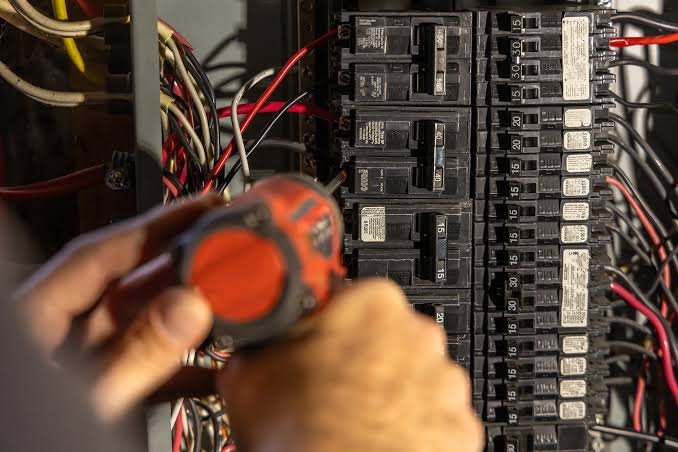

It starts as a flicker. It starts the first cold week a space heater and a microwave fight over one tired circuit, and the breaker finally gives up. For older homes around Dell Rapids and Sioux Falls, that nuisance is the first honest sign the service has fallen behind the house, which is why families start comparing electrician companies sioux falls sd they can reach on a weekday. The real problem is almost never the appliance. It is a panel sized for a 1985 house, and upgrading that service is what finally stops the tripping.
An Undersized Panel Is The Real Culprit
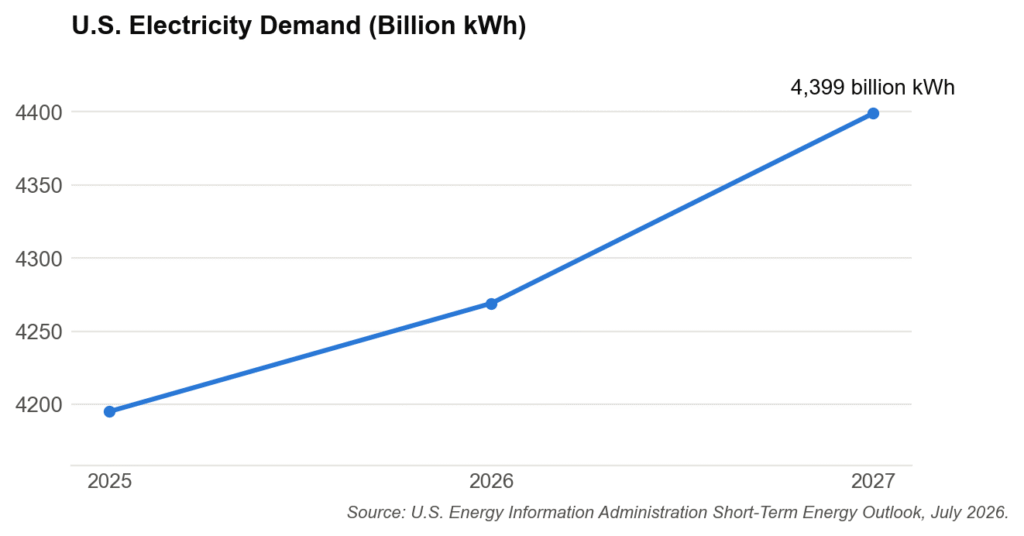
Nationally the load is only climbing. In a July 2026 outlook carried by the energy news service EnergyNow, the Energy Information Administration projected U.S. power demand rising from a record 4,195 billion kilowatt hours in 2025 to 4,269 billion in 2026. Homes are a real slice of that curve, because electric vehicles, heat pumps, and home offices keep stacking loads onto panels that were never designed to carry them.
The wiring did not fail. The house simply outgrew it.
The case we see most often is a 100-amp service quietly doing work a 200-amp service should handle. Add a Level 2 car charger pulling 40 amps for hours on end and the arithmetic stops working. Throw in a January cold snap and a couple of plug-in space heaters, and the main breaker starts protecting itself the only way it knows how. None of that means the appliances are broken. It means the service is full.
Why An Overloaded Old Panel Turns Dangerous
Capacity is a safety story, not only a convenience one. The U.S. Consumer Product Safety Commission ties home electrical hazards to roughly 900 deaths and about $935 million in property losses each year, with overloaded circuits and aging wiring near the top of the causes. An overtaxed panel runs hot for years before it ever fails. Connections loosen, breaker springs fatigue, and the trouble seldom announces itself before it matters.
Ten years ago a 100-amp panel ran a typical Sioux Falls bungalow without complaint. One furnace, one water heater, a window unit in July, and that was the whole load. Today that same panel is asked to hold a heat pump, an induction range, a hot tub, and a car that drinks power all night. The demand roughly doubled while the box on the wall stayed exactly the same size. That panel was living on borrowed time long before anyone noticed the kitchen lights dip.
Not every one of the electrician companies Sioux Falls SD residents call will actually load-calculate the house before writing a number down. That single step is the one that matters. A proper load calculation totals the real demand, weighs it against the service rating, and tells you whether the fix is a full 200-amp heavy-up or just a cleaner subpanel for the garage. Skip it and you are guessing. That is exactly how a brand new panel ends up as maxed out as the one it replaced.
A real upgrade also touches the parts nobody photographs. The service entrance conductors, the meter base, the grounding electrode, and the bonding all have to match the new rating, and the utility has to sign off before the meter spins again. On a lot of older homes the grounding was marginal from the start, which is its own quiet hazard. What usually turns up once the deadfront comes off is a few decades of small compromises stacked one on the next.
What A Right Sized Service Buys You
Read the trips as information, not as bad luck. A tripping breaker is a capacity message, not an appliance defect. A right-sized service ends the nuisance, but the real payoff is headroom for whatever comes next, whether that is a second vehicle charger or a finished basement with its own subpanel.
So scope the work around the size of the service, not the size of the latest emergency. Ask for the load calculation in writing, confirm your contractor pulls the permit and schedules the utility disconnect, and get the warranty terms nailed down before the first wire is touched. Do that, and the flicker that started all of this turns into a footnote instead of a standing appointment.