
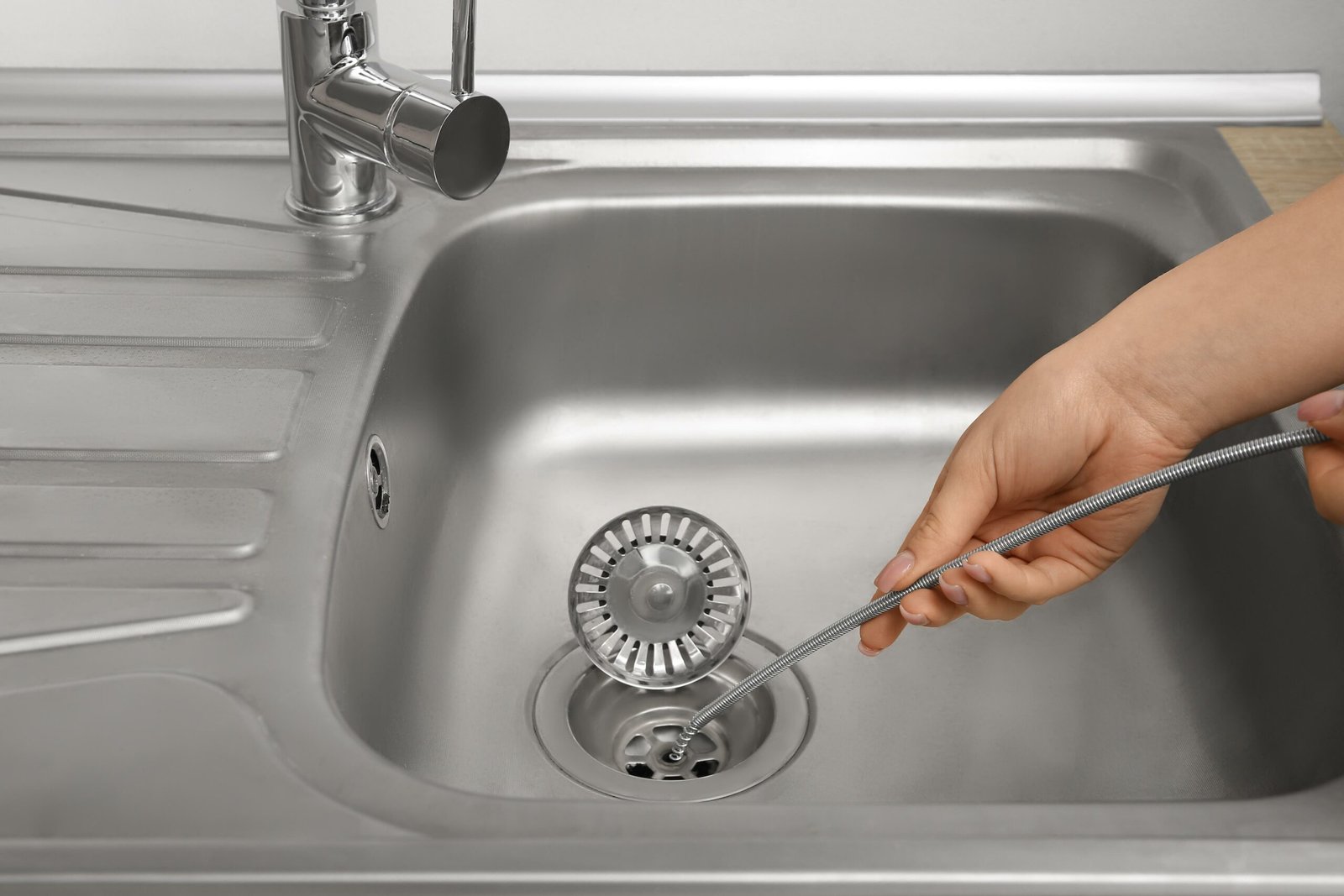

Why does the cafeteria drain back up three weeks after somebody ran a snake through it? The crews that handle clogged drain cleaning pasadena ca calls hear that exact question almost every week during the school year. The answer rarely changes. A hand snake punches a narrow hole through the grease and the water starts moving, so it looks solved. It is not. The pipe walls are still coated, the flow is still choking down, and the clock is already running on the next backup. Clearing a school kitchen line for good means scouring the entire pipe, not poking one channel through the soft middle of the plug.
Snaking Only Punches Through Grease Buildup
Here is what a cable snake actually does inside a grease-choked line. It bores a hole. The spinning head chews through the soft center of the plug and water starts draining again, which feels like a repair for about a month. But the hardened grease bonded to the cast iron never went anywhere. In a 1970s campus kitchen pushing heavy fry loads through the same drains every lunch, that coating rebuilds fast, layer over layer, until the opening chokes back down to almost nothing. The call we get most often is a facilities coordinator who has snaked the same cafeteria and restroom drains four separate times in one year and cannot work out why they keep failing. Grease doesn’t wash away, it just waits.
Chemical Drain Cleaners Corrode Old Cast Iron
The next mistake is reaching for a jug of chemical drain cleaner between service calls. On newer PVC that is merely a bad idea. On the 1970s cast iron under an older Pasadena campus, it is closer to sabotage. Those cleaners work by generating heat, and that heat eats at pipe walls already thinning from fifty years of daily use. You clear a partial clog today and quietly shave months off a line that is buried behind a slab and expensive to replace. Do that every few weeks across a full school year and the pipe eventually fails from the inside, usually mid service, at the exact moment a repair is hardest to schedule.
Ignoring Slow Drains Until They Overflow
A slow drain is not a minor annoyance to schedule around later. It is the early warning. Clemson’s Cooperative Extension reports that grease causes 47 percent of reported sewer blockages, a bigger share than tree roots or any other single cause. A cafeteria line handles more grease in one week than a house drain sees in a year, so once it starts running slow, the countdown to a real overflow has already begun. Wait it out and you get a backup during lunch service, with a health inspection risk and a mop crew instead of a planned afternoon repair. This is usually the point where staff search ‘clogged drain cleaning pasadena ca’ and want a truck out the same day. If a drain you already snaked slows again inside a month, snaking is not the answer, and it never was.
Questions To Ask Before Hiring A Crew
Not every outfit that says yes to a kitchen line is actually equipped for one. Before you book anyone, get a few answers straight, because the wrong crew will sell you another temporary snake job and call it maintenance. Ask about the gear on the truck, not just the price quoted over the phone. The right crew will not flinch at any of these.
- Do you hydro jet, or only cable snake? A good answer names jetting and the pressure they run for a grease line.
- Will you camera the line before and after? A straight answer is yes, with footage you get to keep.
- Have you worked on old cast iron? You want a crew that dials pressure down for aged pipe instead of blasting blind.
- What does the price actually cover? A solid answer breaks out cleanout access, the jetting, and the camera pass.
Hydro Jetting Clears The Whole Line
Hydro jetting is the fix that actually holds. A jetter drives water through the line at high pressure and scours the pipe wall back toward bare metal, grease, sludge, scale, and all. One aside worth mentioning: early summer is the busy stretch for this work, the same season the HVAC side of the trade runs flat out. Shipment figures from AHRI show air conditioner shipments climbed 8 percent in April 2026 to 456,210 units, a fair gauge of how loaded the trades get once the heat lands. Anyway, back to your drains. Book the jetting before that rush, insist on camera footage before and after, and the grease-choked cafeteria line that snaking never truly held will finally run clear and stay that way through the year.