

When you have sufficient historical data and the appropriate tools, forecasting the future is not just guesswork. One of the most useful fields in data science today is time series analysis, which allows analysts to predict stock prices, simulate demand cycles, and allocate resources with quantifiable precision. Long Short-Term Memory (LSTM) networks and Meta’s Prophet library are currently the two most popular methods in this field. For any working data scientist, knowing how each operates and when to use one over the other is essential.
What Is Time Series Analysis?
A time series is a collection of data points, such as daily stock prices, monthly sales figures, or hourly energy consumption, that are gathered at regular intervals. Time series analysis involves studying these sequences to identify patterns, trends, and seasonal cycles that can be used to make reliable forecasts.
Unlike standard regression problems, time series data carries a temporal dependency: the value at any given point is influenced by values that came before it. This makes conventional machine learning models less effective, because they treat each observation as independent. Specialized architectures and frameworks are required to capture these sequential relationships accurately.
LSTM Networks: Learning Sequential Dependencies
Long Short-Term Memory (LSTM) is a kind of Recurrent Neural Network (RNN) designed specifically to learn from sequences. Traditional RNNs are plagued by the vanishing gradient problem, where information from distant past time steps fades during training. LSTM addresses this with a gating mechanism three gates (input, forget, and output) that control what information is retained, discarded, or passed forward through the network.
This architecture makes LSTM well-suited for forecasting tasks where long-range dependencies matter. In stock price prediction, for example, a price movement from three months ago can still influence current market behavior. LSTM can encode that relationship, whereas a standard feedforward network cannot.
To build an LSTM forecasting model, the workflow typically involves:
- Data preparation normalizing values and creating sliding window sequences as input features
- Model architecture stacking one or more LSTM layers followed by a dense output layer
- Training optimizing with backpropagation through time (BPTT)
- Evaluation measuring performance with metrics such as MAE, RMSE, or MAPE
Professionals completing a data scientist course in Chennai frequently work through LSTM implementations using TensorFlow or PyTorch, applying them to real financial or retail datasets to understand how sequence modeling behaves in practice.
Prophet: Structured Seasonal Modeling
Where LSTM relies on neural architecture to learn patterns automatically, Prophet takes a decomposition-based approach. Developed by Meta’s Core Data Science team and released in 2017, Prophet models a time series as the sum of three components: trend, seasonality, and holidays or special events.
The trend component captures long-term growth or decline using a piecewise linear or logistic function. Seasonality is modeled using Fourier series, which allows Prophet to represent repeating patterns at multiple frequencies daily, weekly, and yearly cycles simultaneously. Holiday effects can be added manually, making Prophet especially useful for retail demand forecasting where promotions and public holidays significantly shift sales volumes.
Prophet is designed to be robust to missing data and outliers, and it requires minimal hyperparameter tuning. This makes it highly practical for business analysts and data teams who need reliable forecasts without deep machine learning expertise. Its output also includes uncertainty intervals, which help stakeholders understand forecast confidence at a glance.
LSTM vs. Prophet: Choosing the Right Approach
The decision between LSTM and Prophet depends on the nature of the data and the forecasting objective.
Use LSTM when:
- The data contains complex, non-linear patterns that cannot be decomposed easily
- You have large volumes of training data and sufficient compute resources
- The forecast task involves multivariate inputs, such as predicting stock prices using volume, sentiment scores, and macroeconomic indicators simultaneously
Use Prophet when:
- The data has clear seasonal patterns and identifiable trend changes
- Interpretability matters and stakeholders need to understand what drives the forecast
- The team needs to deploy forecasts quickly with minimal model tuning
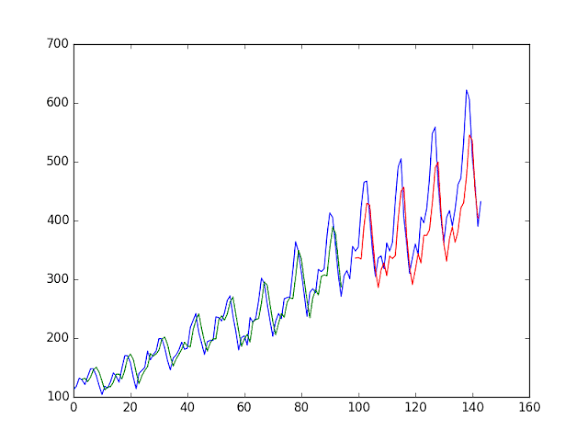
In practice, many production forecasting systems combine both approaches using Prophet to capture seasonal structure and LSTM to model residual complexity. For anyone pursuing a data scientist course in Chennai, experimenting with both frameworks on benchmark datasets such as airline passenger counts or retail sales records provides valuable hands-on perspective.
Conclusion
Time series forecasting is a critical capability in modern data science, powering decisions in finance, retail, logistics, and operations. Prophet and LSTM networks are two different but complementary approaches, one motivated by structured decomposition and the other by deep learning. Mastering both approaches equips analysts to select the right tool for each business problem. For those enrolled in a data scientist course in Chennai, building projects around these frameworks is one of the most practical steps toward becoming a well-rounded forecasting professional.