
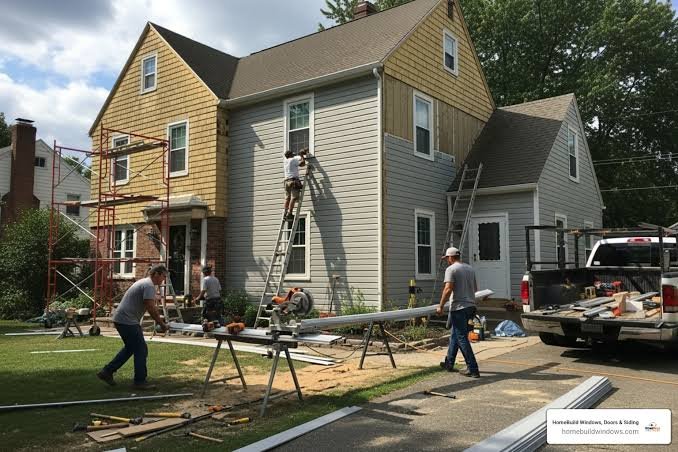

A homeowner in the South Hills called us last winter because a long run of siding near her chimney had started bowing away from the wall. Her house was a 1960s brick-and-frame place, and the original vinyl had cupped, cracked, and pulled loose after decades of Pittsburgh freeze and thaw. The siding installers pittsburgh pa at Exceptional Exteriors have that conversation most often, and the honest answer usually surprises people. Warped panels are rarely the whole story.
Warped Siding Is A Symptom Not The Problem
Vinyl and wood do not warp on their own. They move because water got behind them and the wall never fully dried out. Chase the buckled panel and you miss the leak. Water expanding as it freezes is the same force that splits a forgotten soda can left in a freezer, and behind your siding it works on the framing a little more each winter until fasteners loosen and the surface goes wavy. In practice the case we see most often is trapped moisture in the sheathing, quietly swelling and shrinking the wood underneath a skin that still looks fine from the curb. So find out why the old cladding failed before you shop for a new one. A moisture reading on the sheathing tells you more than a dozen photos of the outside.
Fiber Cement Survives Freeze Thaw Better Than Vinyl
Fiber cement is a blend of cement, sand, and cellulose, and it does not soften in a July heat wave or grow brittle in a January cold snap. That stability matters here, where a single week can swing forty degrees (anyone who has grabbed a frozen railing in January already gets it). Wood still has a strong following in construction, and it is not going anywhere soon. An April 2026 newsletter from the Softwood Lumber Board reported its programs converted 1,536 projects, totaling 62 million square feet of construction, to lumber systems in 2025, part of more than 16.7 billion board feet of demand generated since 2012. Wood performs beautifully when it stays dry. The trouble is that exterior cladding almost never does, and fiber cement simply shrugs off the moisture that warps a softwood board over a few hard winters.
Installer Certification Decides How Long It Lasts
A great board installed badly still fails. Fiber cement has to be cut with the right blades, gapped for expansion, and flashed at every window and door, or water finds the seams anyway and you are back where you started. James Hardie, the largest fiber cement maker, certifies installers who complete its training and follow its written installation specs, and that certification is worth asking for by name. On a 1960s house the crew also has to work around whatever the last two or three siding jobs left buried in the wall. Certification does not guarantee a flawless job. It does mean the person holding the nailer has been trained on the exact product going onto your home, not a generic panel from a decade ago.
Questions That Separate Pros From Storm Chasers
After a bad hailstorm, out-of-town crews show up fast and leave faster. A local company you can still find two years later is worth more than the lowest bid on the block. Before the wall goes back together, a careful installer confirms that the framing is genuinely dry. University of Georgia Cooperative Extension advises keeping indoor humidity under 60% and waiting until wood framing reaches a moisture content of 15% or lower before you close a wall back up, which is exactly the discipline a rushed storm chaser skips.
- Are your crews employees or subcontractors? A straight answer names who is actually on your house and who carries.
- Will you check the sheathing moisture before reinstalling? A good answer describes an actual meter reading, not a quick look.
- Are you certified for the specific product you are quoting? The best answer offers the certification number or the trainer by name.
- What does your written labor warranty cover, separate from the material? A solid answer keeps the manufacturer warranty and the crew’s own promise apart.
What A One Day Siding Install Really Buys
A one day install sounds like a marketing line, and honestly it can be one if the prep gets rushed. Done right, a single-day tear-off and replacement means your wall sits open to the weather for hours instead of a rain-soaked week, and every course goes on while the sheathing is still dry. That is the real payoff: less exposure, fewer surprises, and a sealed envelope before the next freeze arrives. Warped siding is a warning about water, and replacing it without fixing the cause just buys the same failure a few winters later. For a 1960s Pittsburgh home on a modest budget, the smart move is to vet the siding installers pittsburgh pa homeowners actually rehire, ask the moisture question, and pay for certification instead of the cheapest truck in the driveway.