
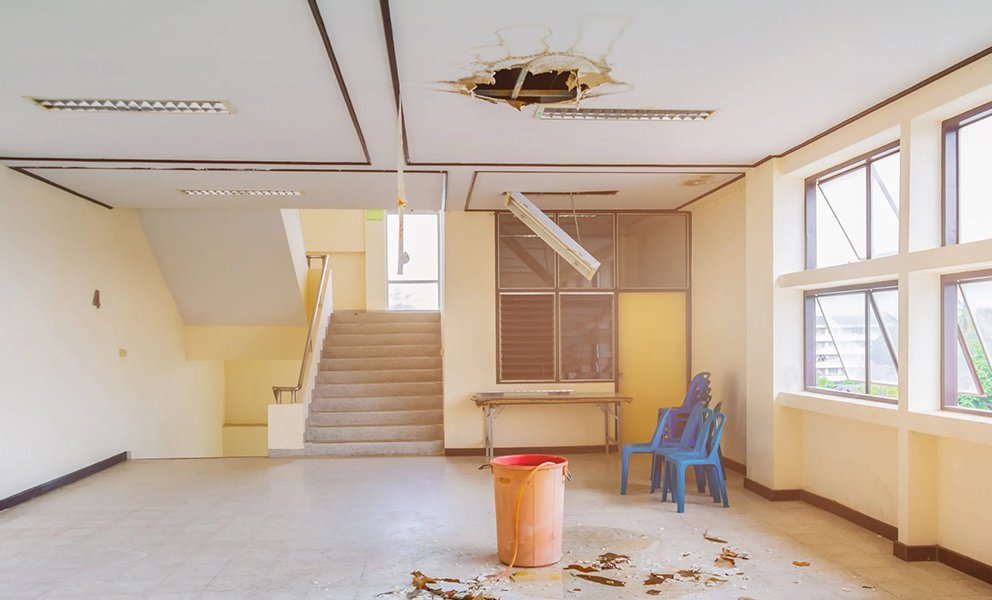

A facilities manager at a K-8 private campus east of Seattle spent three winters chasing the same brown stain across a classroom ceiling. Every October the drips came back, every spring the reroof slid to next year’s capital cycle, and every budget meeting ended the same way. The fix that finally held was shingle roofing seattle wa planned as a summer replacement, not another patch rushed in ahead of the first storm. A single summer reroof over the classroom wing, architectural shingles laid on synthetic underlayment, ended the recurring leaks and still landed inside the frozen capital line. That is the argument here, and the case below shows how the math held up.
Winter Leaks Kept Reappearing Over The Classrooms
The pattern is familiar to anyone who runs older school buildings. The case we see most often is a pitched roof that got patched, not replaced, because a full tear-off never survived the budget review. Sealant on a few seams buys one dry season, sometimes two, and then the water finds a new way back in through the weakest fastener line.
Then the next atmospheric river rolls through, and the same classroom ceiling blooms brown again. That roof was on borrowed time from the first patch, and everyone in the building already knew it. Deferring the real repair did not stop the water. It only pushed the cost into a later year and stacked ruined ceiling tile, disrupted classrooms, and fresh interior painting on top of the roofing bill nobody wanted to approve.
A Summer Reroof Beat The Budget Cycle
The scale of deferred school-building work is not a local quirk. A January 2026 analysis from K-12 Dive put the public K-12 facilities backlog at roughly a $90 billion shortfall to bring buildings up to standard. Private campuses run smaller numbers, but the same arithmetic applies, because a roof does not care which line item pays for it. Here is the rule of thumb that saves money. If a roof has been patched twice and still leaks, stop buying sealant and budget the tear-off, because past two patches a full replacement almost always wins on total cost.
Run the numbers on a single classroom wing and the case gets concrete. Say the wing is 4,000 square feet and architectural shingle replacement runs about $6.50 a square foot installed, so the roofing alone is around $26,000. Add roughly $3,500 for tearing off and hauling the old layers, another $2,000 for upgraded synthetic underlayment and better ventilation, and about $1,500 for the deck repairs a crew usually finds once the old roof is off. That comes to roughly $33,000, and scheduling the work across summer break means no classroom disruption and no emergency-callout premium. Set that against three more winters of ceiling repairs and lost class days, and the planned reroof pays for itself well before the warranty is halfway used.
The Building Stayed Dry And On Budget
After the summer reroof, the classroom wing went from three leaking winters to zero. The U.S. Government Accountability Office reported that an estimated 54 percent of public school districts need to update or replace multiple building systems, roofing among them. A campus that reroofs one wing at a time is doing exactly what that data says most buildings still need. Figure the job took about two weeks of summer downtime. Actually, once the deck repairs turned up, it ran closer to three weeks, still comfortably inside the break with the buildings empty.
Hiring a local shingle roofing seattle wa crew that knew Pacific Northwest rain meant the underlayment spec and ventilation matched the climate, not a generic build dropped on a wet-season roof. The lesson from three wet winters is not complicated. Deferring a failing roof never saves money; it reschedules the spend and quietly adds interior damage while the leaks keep coming back every wet season. A planned summer replacement on a fixed capital line, sequenced before the rain returns, is the version of this project that actually ends the cycle and keeps the classrooms dry for the full length of the warranty.