

You nail down a fresh board. You caulk the soft spot. You promise the porch one more winter. It never holds, and on a century-old colonial in central Massachusetts the rot underneath keeps eating the framing while you dress up the surface. Patching a failing porch almost always costs more across a few seasons than tearing it down and rebuilding once, because you keep paying to hide the damage instead of removing it. The move that actually holds is a full porch repair ma crew opening the framing before quoting anything, not one more board screwed down over punky joists.
Rot Rarely Stops At The Surface
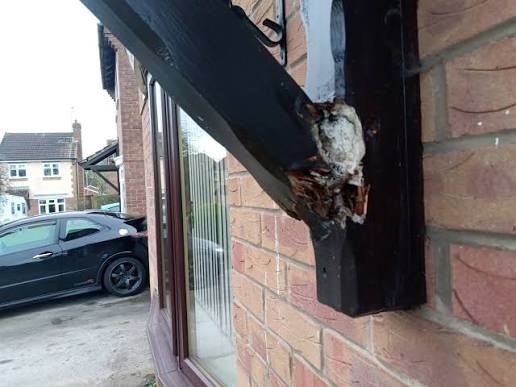
Rot is rarely a surface problem. Job after job, the soft board is only the part you can see, and the joists below it have already gone punky, which is the trade word for wood so far gone you can sink a screwdriver in to the handle. Water wicks down through the end grain and pools where the decking meets the framing, and that hidden joint stays damp long after the top has baked dry in the August sun. By the time a plank feels spongy underfoot, the beam it rests on has usually been wet for years. The damage runs deep. A homeowner sees one bad board, but the framing tells a much longer story. Pull one plank and you find black staining, crumbling fibers, and fasteners backing out of mush.
Patching Soft Framing Wastes Money
Here is the part that quietly drains a homeowner’s wallet. Nailing new decking over soft framing does nothing for the rot, because the trouble was never the board on top. The USDA Forest Products Laboratory pins the whole question on moisture content, finding that wood will not decay below roughly 20 percent and rots readily once it climbs past 30 percent. A patch traps that moisture rather than releasing it, so the framing sits in the danger zone winter after winter. Every dollar spent patching soft framing is a dollar you spend again next spring. You pay for the patch, then you pay when it fails, then you pay a third time once the failure creeps into the posts and the stair stringers. None of it counts as progress.
Skipping Permits Backfires On Old Homes
Old houses bring a permit wrinkle most people would rather skip. A porch on a century-old colonial or a three-decker often rests on framing that no longer meets code, and any honest rebuild has to bring it up to current standard. Skipping the permit to shave a couple of weeks tends to surface later, at resale, when an inspector flags unpermitted structural work and the closing stalls. How long a quiet patch job actually buys you, I genuinely cannot say; I have watched one hold four years and another let go in ten months on the very same street. A permitted rebuild puts the structure on record, which protects you the day you sell. That paper trail is worth far more than the week it costs to file for it.
Composite Ends The Repeat Repair Cycle
Composite decking is what finally breaks the cycle. Boards like Trex or TimberTech do not wick water the way old fir decking does, so the framing underneath stays dry and the assembly stops feeding the fungus that started the whole mess. And people are still spending hard on outdoor space. AOL, citing Yardzen data, reported more than 500 billion dollars in home renovation spending for 2026, plus a 13 percent jump in requests for shade and cooling features. A rebuild lets you frame those features in while the structure is already open.
A rebuilt porch also adds real, usable living space, which a patch never does. Realtor.com data, cited by The MortgagePoint in May 2026, counted nearly 4 million households now running multigenerational, with those homes listing near 709,000 dollars against 429,900 for the rest. Extra square footage that actually holds up pulls real weight at appraisal. That porch was living on borrowed time anyway. Space that survives a New England winter is worth building right the first time.
Rebuild Once And Stop Chasing Damage
Rebuilding once ends the chase. Instead of buying the same fix every April, you spend once on framing, decking, and railings that actually hold, and you stop thinking about the porch at all. Any straight porch repair ma outfit will tell you the same thing, that opening the structure up front and rebuilding in composite runs cheaper over five years than a decade of patching. A three to five day build, permits pulled and the rotted framing hauled off, is not the expensive choice. It is the one that finally ends the cycle. Every patch is really a down payment on the rebuild you will do eventually. Chase the damage long enough and you pay for the rebuild anyway, just in installments, with a worse porch to show for the money.