
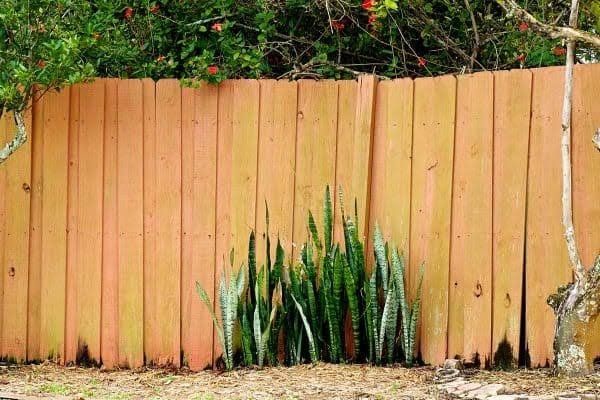

Around here, water is the enemy. Around here, the honest fence contractors gladstone or homeowners trust talk about drainage before they talk about pickets. Around here, a leaning fence is a post problem, not a wood problem. The wet season in the Willamette Valley runs long, and it quietly decides how many years a fence stands. A fence lasts when its posts are set to survive months of standing water, and it fails early when they are not.
Wet Winters Are What Actually Rot Fences
The case we see most often is a post that looks solid at eye level but is rotted through at the dirt line, where nobody thinks to check. That band stays damp for weeks in our winters, and decay fungi feed on it long before the visible part shows trouble. So the lean you finally notice is rarely the fence aging evenly. It is one narrow band of wood at the ground line failing.
Ten years ago most yards around Gladstone went up on builder-grade fir posts and a bag of dry concrete. They held long enough because our summers dried them out between rains. Today the wet stretches run longer and the freeze and thaw swings hit harder, so that same install leans by its third or fourth winter. The wood did not get worse; the weather simply stopped giving posts a chance to dry out.
Material cost is not the reason to wait, either. In January 2026, framing lumber was sitting near $872 per thousand board feet by O.K. Lumber’s price tracker, down a few points from late last year. That makes this a reasonable window to rebuild a fence correctly instead of patching a failing one for one more season.
How Good Crews Set Posts To Last
A post that lasts starts with depth and drainage, not with the panel bolted to it. We set line posts at least two feet down, deeper in the soggy low spots, so the base sits below the layer that freezes and shifts. Then the hole gets tamped gravel at the bottom, not a sealed plug of concrete, because a post standing in a water-filled concrete cup is on borrowed time. Skip that step and even good cedar rots from the bottom up.
Drainage decides everything else about a fence like this. Get the water wrong and no amount of nice cedar will save it.
The wood grade matters just as much as the hole. University of Georgia Extension’s field data puts untreated pine posts at 3 to 7 years in the ground. Pressure-treated pine reaches 25 to 30, and that whole gap comes down to moisture resistance. Cedar buys you looks and some rot resistance above grade, but below the dirt line you still want a post rated to live in soaked soil.
There is an industry line for exactly that. Preserved-wood specifiers rate a fence post as a Use Category 4A component, approved for direct ground contact and fresh-water exposure, not the lighter above-ground treatment on cheap bundles. A good installer knows that ground-contact rating cold and points to it on the tag. When a crew shrugs at the question, that tells you plenty.
How Deep Should Fence Posts Go In Wet Soil?
Deeper than the two-foot minimum most guides quote. In the low, wet parts of a yard we go to thirty inches or more so the base stays below the layer that heaves when it freezes. If water pools where a post will sit, that hole needs gravel and sometimes a drain path before any concrete goes in.
Is Cedar Or Pressure Treated Better For Our Climate?
Cedar looks great and resists rot well above the ground, which is why so many fences use it for the visible boards. Below the dirt line, a ground-contact pressure-treated post wins on lifespan almost every time. Plenty of the fences we build pair treated posts underground with cedar boards up top, and that combination holds up well here.
Can A Leaning Fence Be Saved Without A Full Rebuild?
Sometimes, if the posts are still sound and only the concrete has shifted. More often the lean is the first sign the posts are rotting at the base, and resetting them buys a season at best. We usually pull one suspect post before quoting a repair (and it saves you from paying for the same fence twice).
Getting A Fence Built To Beat The Weather
The style you pick barely moves the needle on how long a fence lasts here. What really decides it is the part buried in wet ground, the depth, the gravel, and a post rated to sit in soil that stays soaked half the year. When you compare fence contractors gladstone or neighbors recommend, ask how they set posts and how they handle drainage before you weigh prices. A cheap install that leans in three winters ends up being the expensive one. Say a mid-sized backyard runs somewhere around $4,000 to $7,000 installed; paying once for posts done right beats paying twice.